Solar energy is booming across Australia — and if you’re thinking about it for your home, you’re not alone. It’s efficient, it’s affordable, and it puts you in control of your own power. You might even imagine that once a few solar panels are on your roof, clean energy will immediately start flowing into your home. But there’s one crucial piece you need: the inverter.
Think of the inverter as the heart and the brain of your solar system. Without it, your panels can’t deliver usable electricity to anything in your home. So what exactly does an inverter do for you? And should you choose a standard model, or go for a hybrid inverter that can work with batteries?
The job of the solar panels on your roof is pretty straightforward. When sunlight hits the cells, it knocks electrons loose, creating a flow of energy. In other words, your panels turn sunshine directly into electricity.
But what happens after that? And why aren’t solar panels on their own enough to power your home? This is where things get interesting. Because while your panels may be doing the hard work, they can’t deliver usable energy without a little help.
So why does every solar system need an inverter? And what exactly is this device usually tucked away in your garage actually doing?
Keep reading — you’ll soon see why not all electricity is created equal… and what this has to do with a world-famous Australian rock band.
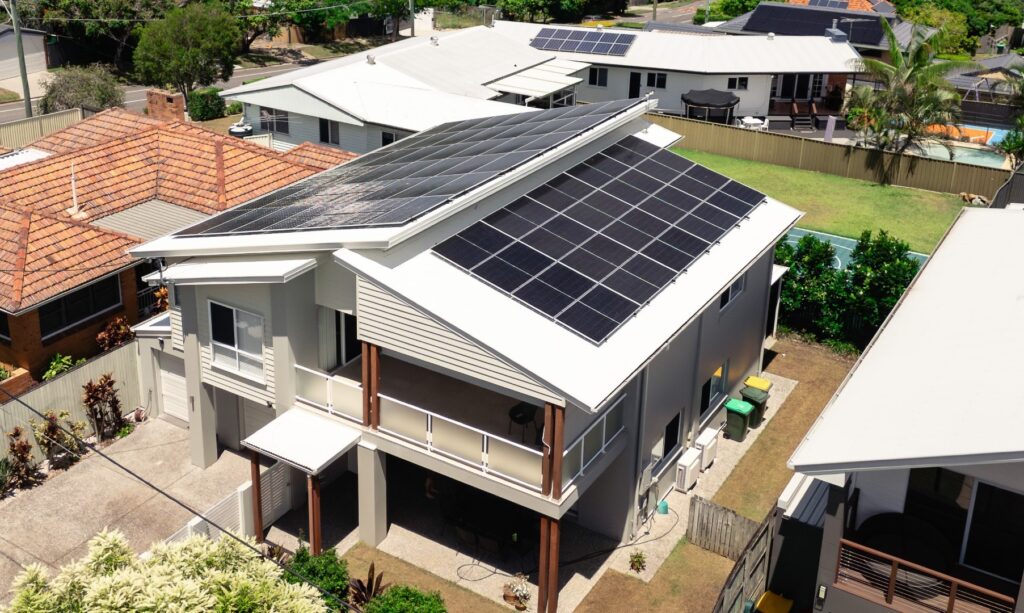
AC/DC isn’t just a Band
You’ve probably heard of AC/DC — and while the band is legendary, their name actually points to two very different types of electricity you use every day.
“AC” means alternating current. This type of electricity constantly changes direction and voltage, which makes it perfect for travelling long distances across the power grid. That’s why your home, the local substation, and big household appliances like your fridge, oven, and air con all run on AC power.
“DC”, on the other hand, stands for direct current. Batteries — including the ones in your phone, laptop, and cordless tools — run on DC because the electricity flows steadily in a single direction. When you plug in a charger, it converts the AC from your wall socket into DC so the battery can store it.
The same thing happens with your solar system. When sunlight hits your solar panels, the cells convert that energy into electricity — but it comes out as DC power. “Because the current doesn’t change direction, the energy your panels create is direct current,” explains Michael Raunigg, a solar expert at Fronius International.
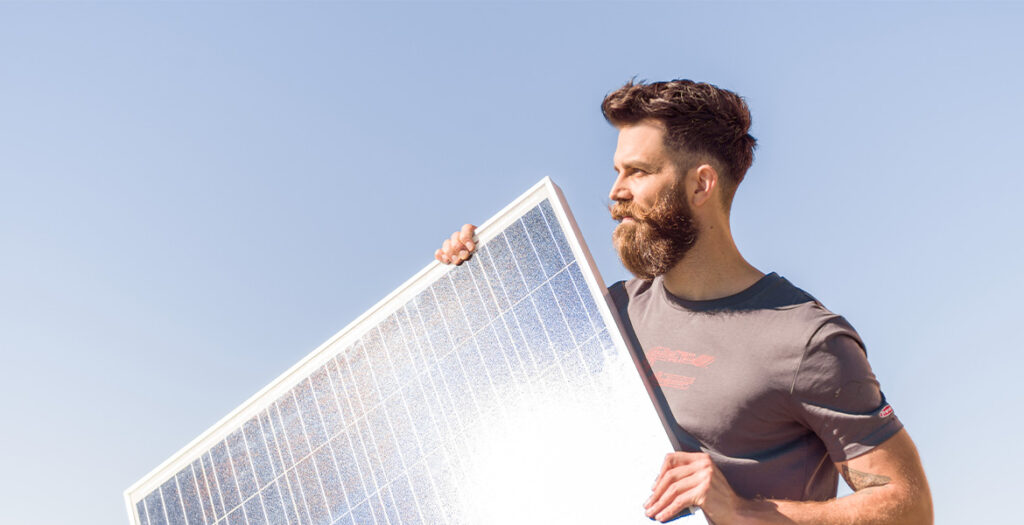
The heart and brain of your solar system
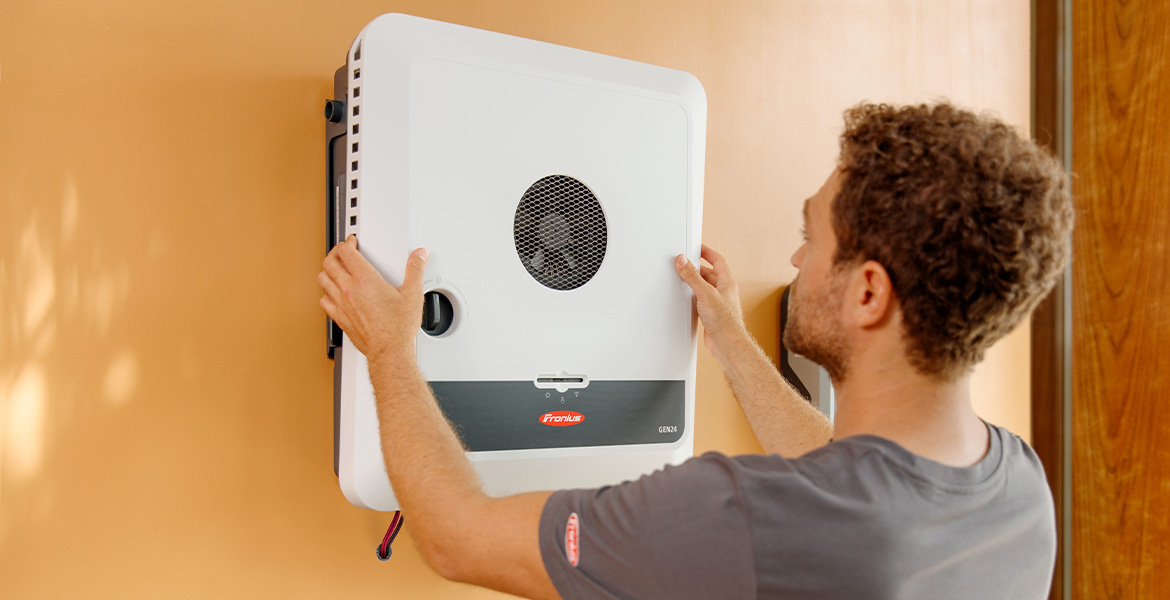
This is where the inverter steps in. “The inverter converts the direct current your solar panels produce into the alternating current your home actually uses — for everything from the TV to the dishwasher. Only then can your solar energy power your household,” explains Michael Raunigg. Any extra energy you don’t use can be sent back to the grid or stored in a home battery through the inverter.
But while converting DC to AC is its main job, your inverter actually does a lot more behind the scenes.
Here are some of the other important tasks it handles:
• Getting the most out of your solar panels
Inside the inverter are MPPTs — short for maximum power point trackers. Their job is to constantly find the “sweet spot” where your solar panels produce the highest possible output, even as sunlight conditions change throughout the day.
• Making your energy easy to understand
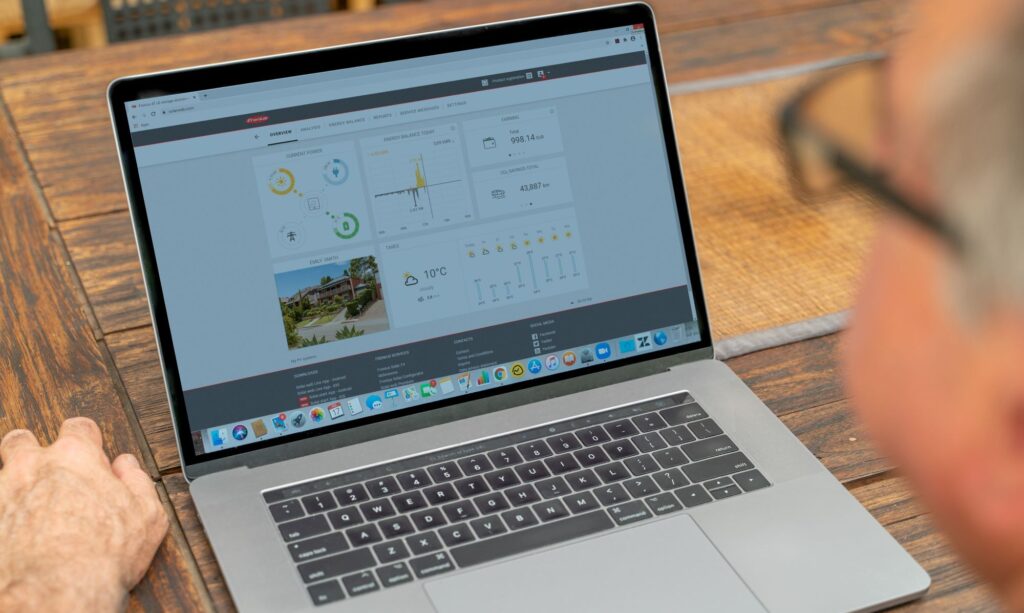
Apps like Fronius Solar.web pull together your system data — power production, usage, battery levels, and how much you send to the grid — and turn it into clear, visual insights. With a smart inverter and a smart meter, you can even adjust certain settings directly from the app.
• Helping you use more of your own solar power
Modern inverters can connect with home batteries, EV chargers, heat pumps, and other smart devices. This lets you increase your self‑consumption and get maximum value from your solar setup.
So now you know what an inverter really does — but the big question remains: Which type of inverter is best for your home?
From micro to hybrid Inverters — Which one’s right for you?
Now that you know the basics, let’s take a closer look at the different inverter types you’ll come across in Australia. We’ll walk through hybrid inverters, string inverters, and microinverters — and also touch on commercial‑scale project inverters. By the end, you’ll have a clearer idea of which option is best for your home and energy goals.
1) Hybrid inverters
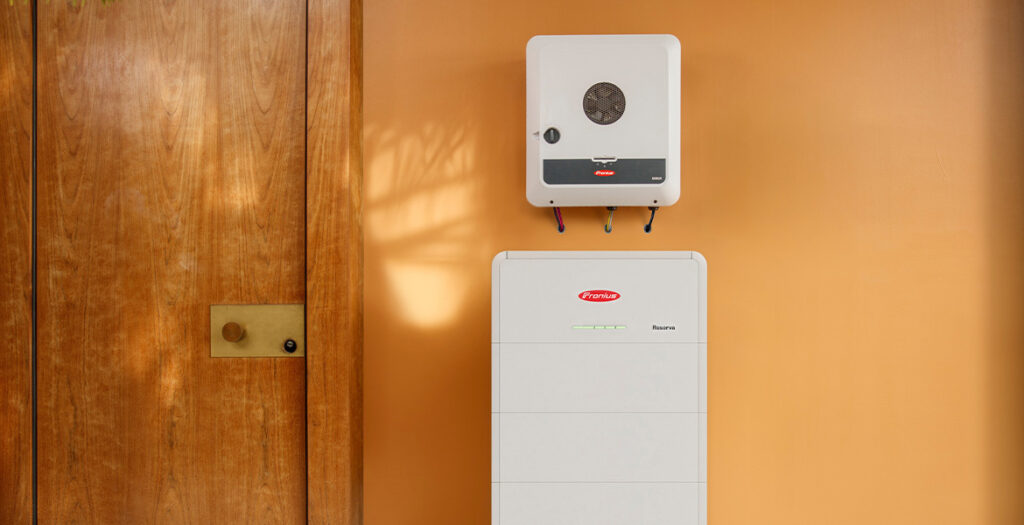
You’ll often hear “backup power”, “full backup”, and “hybrid inverter” mentioned in the same breath. That’s because these features work hand in hand. As solar expert Michael Raunigg puts it: “A hybrid inverter is required for full-backup operation. If the grid goes down — whether from storm damage or maintenance — it keeps the household powered.”

Some non‑hybrid inverters can supply power to a few designated outlets during an outage, but only a hybrid inverter can communicate with a battery system and decide whether to charge or discharge it. To enable full‑backup capability, your system also needs switching components — like the Fronius Backup Controller — which disconnect your home from the grid and allow the inverter to take over seamlessly. With a hybrid inverter, a battery, and the right switching gear, your home can stay powered for hours or even days, depending on:
- available sunlight
- your current electricity use
- the size of your solar system
- the capacity of your battery
2) String inverters
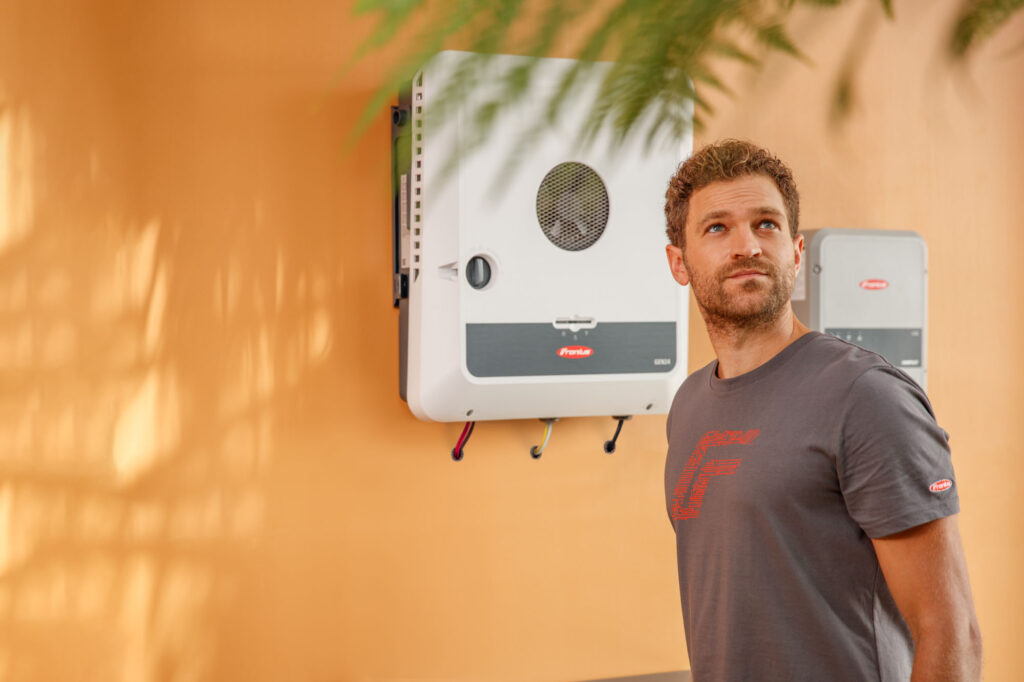
String inverters are the most common choice for Australian homes. They group the output from several solar panels connected in series (a “string”), and most units allow multiple strings — perfect for homes with different roof orientations.
Hybrid inverters are often based on string‑inverter technology, but not all string inverters include hybrid or battery‑ready functions, so it’s worth checking whether you want battery compatibility now or in the future.
3) Microinverters
Microinverters are gaining popularity across Australia, especially for homes with complex roof layouts, multiple orientations, or areas of partial shading. Instead of one inverter doing all the work, a microinverter is attached to each individual panel.
This means:
- each panel performs independently
- shading on one panel doesn’t affect the rest
- system design is more flexible
- performance monitoring becomes far more detailed
Microinverters are also a great option for homeowners who want to expand their system over time or maximise output from limited roof space. While they can be more expensive upfront, they can boost overall energy production in the right scenarios.
4) Project inverters
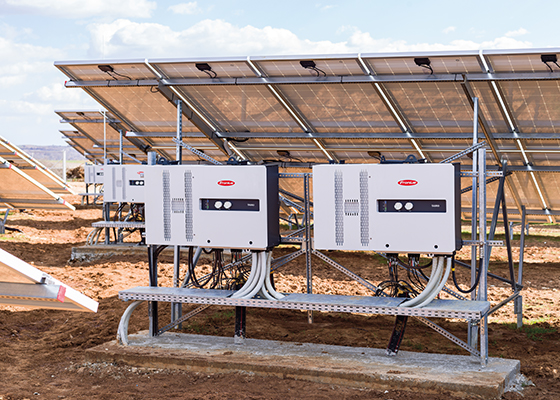
On the opposite end of the spectrum are project inverters — large‑scale units designed for commercial solar systems. These power everything from EV charging hubs and industrial buildings to large agricultural operations. They’re not typically used in homes, but they round out the full range of inverter types available.
Single-phase or three-phase inverters: what do you need?
Now let’s look at the final piece of the inverter puzzle: whether your home needs a single‑phase or three‑phase inverter. It sounds technical, but it really just comes down to how many active power lines your home has. A single‑phase home has one active conductor (plus neutral and earth). A three‑phase home has three active conductors — which simply means it can safely deliver more power at the same amperage. In everyday terms: three‑phase homes can handle bigger electrical loads and run multiple power‑hungry appliances at the same time without strain. The same logic applies to inverters. “At Fronius, we distinguish between our single‑phase Primo and our three‑phase Symo models. Because three‑phase inverters work across all three live conductors, they can feed significantly more alternating current into the home or grid than a single‑phase inverter. This becomes especially important if you’re running energy‑intensive appliances or three‑phase equipment like heat pumps, EV chargers, or large machinery,” explains Michael Raunigg.
Single‑Phase still leads in Australia
Most Australian homes run on single‑phase power, so a single‑phase inverter is the natural fit for the majority of rooftop solar installs.
Across Australia, the typical detached home is supplied by one active (plus neutral and earth) — that’s single‑phase. It’s perfectly capable of running everyday appliances and an efficient all‑electric home, and it keeps install and upgrade costs down. State guidance even notes you don’t need three‑phase to electrify; it’s usually only worth considering if you have very high loads (think big workshops, large machinery) or you specifically want three‑phase gear like a 22 kW EV charger or very high export capacity from solar.
So why bother with three‑phase at all? Some homes — larger properties, places with multiple power‑hungry systems, or households planning fast EV charging — do benefit from three‑phase because it spreads demand across three actives and can deliver more power at the same amperage. But that’s not the norm for suburban households, and upgrades can be costly, which is why the mainstream residential market remains single‑phase.
Regionally, this contrasts with places like continental Europe, where three‑phase connections are common in domestic settings, and North America, where single‑phase dominates homes — which is why you’ll see different inverter line‑ups marketed in different regions.
All clear?
We hope this guide has helped you cut through the confusion and understand the real role of the inverter — the heart and brain of every solar system in your home.
You can also reach out to one of our trusted Fronius partner installers. They’ll assess your home, your energy habits, and your future plans to design a solar system that fits you perfectly — no guesswork needed.
Want to learn even more? Our YouTube channel, is packed with webinars, product walk‑throughs, and practical how‑to videos that show you how to get the most out of your solar system.