If you’ve been researching solar, you’ve probably heard the standard advice: “Point your solar panels to the north.” And yes — in most parts of Australia, north‑facing panels produce the highest overall energy across the year. But that doesn’t mean other directions won’t work. Many homes get fantastic results with east, west, or east–west combinations, depending on their roof design and energy habits.
This guide explains (in simple terms) the best direction for solar panels in Australia, the benefits of east–west systems, how tilt angle works, and how to choose the right setup for your home.
North Isn’t the Only Direction That Works
Not every Australian home has a north‑facing roof. Many older homes were built before solar was common, and some are shaded or shaped in a way that makes a north layout impossible.
The good news?
Modern solar works well on almost any roof direction. Installers today design systems to suit the home, not the other way around.
How Different Panel Directions Compare
Here’s a simple guide to how each direction performs compared to a north‑facing system.
Solar Panel Direction and Performance Comparison
| North‑East or North‑West | ~90–95% of north‑facing output Homes slightly off‑north; almost no loss. |
| East | ~80–90% of north‑facing output Homes with strong morning energy use. |
| West | ~80–90% of north‑facing output Homes using more power after work. |
| East–West Combination | ~80–90% of the maximum north‑facing output All‑day energy spread; no battery homes. |
| South | ~60–75% of north‑facing output Last‑resort option. Still works, but lower output. |
Even if your home isn’t north‑facing, solar is still financially worthwhile in most cases.
Why Choose East–West?
While north‑facing panels give the highest annual energy, an east–west layout often suits the average household better — especially if you don’t have a battery.
Benefits of east panels
- More power in the morning
- Perfect for early appliance use
- Helps reduce morning grid use
Benefits of west panels
- More power in the late afternoon
- Ideal for after‑work home routines
- Helps cut evening electricity costs
A smoother power curve
Instead of one big midday peak (typical with north‑facing solar), east–west systems create a steady stream of energy from morning to late afternoon.
That’s exactly when many Australian families are home and using power.
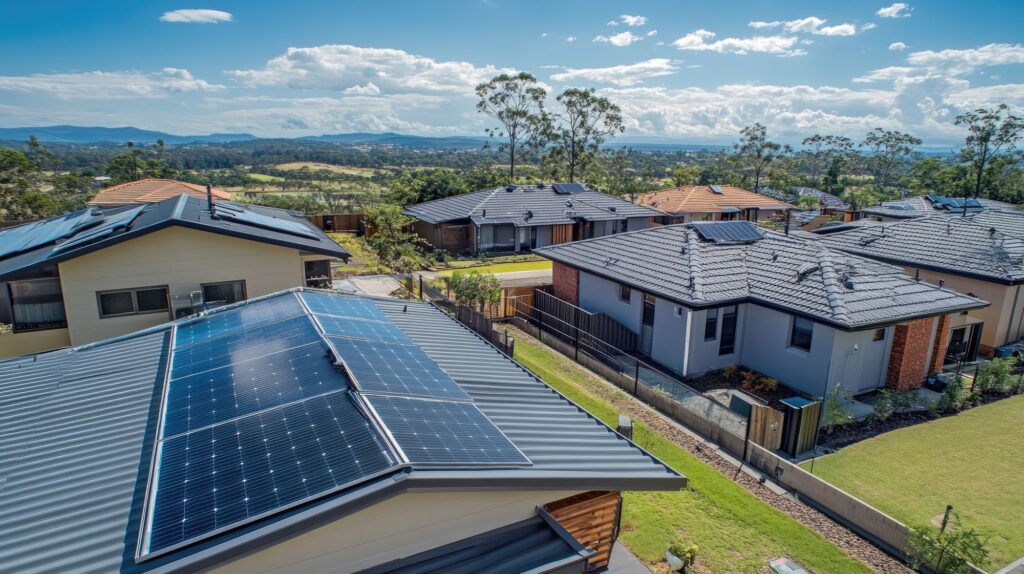
Extra Benefits of East–West Solar Systems
Less heat stress on equipment
East–west systems rarely hit maximum power output, meaning:
- Panels run cooler
- Inverters stay cooler
- Components may last longer
Lower upfront cost in some cases
Because the system spreads its generation more evenly, you may not need the largest inverter size, reducing installation costs.
Understanding the Azimuth Angle
The azimuth angle is simply the compass direction your panels face.
Quick reference guide
180° = South (lowest in Australia)
0° = North (best annual output)
90° = East (morning power)
–90° = West (afternoon power)
Mixed directions
45° = North‑East
–45° = North‑West
135° = South‑East
–135° = South‑West

Choosing the Right Tilt Angle
What is tilt angle?
Tilt angle is simply how steep the panels sit on your roof.
Best tilt angle for Australia
Most homes get ideal results with a tilt of 20–30 degrees.
This:
- Matches the sun’s path
- Maximises year‑round output
- Reduces the need for extra framing
What about winter?
The sun sits lower, so a steeper angle can help slightly — but winter days are shorter, so the gain is usually small. A standard 20–30° tilt is the best all‑round year‑round choice for most Aussie homes.
Which is better: flat or pitched roofs?
There’s no single answer that suits every home. It depends on the roof design and how well it matches the ideal tilt and direction for solar.
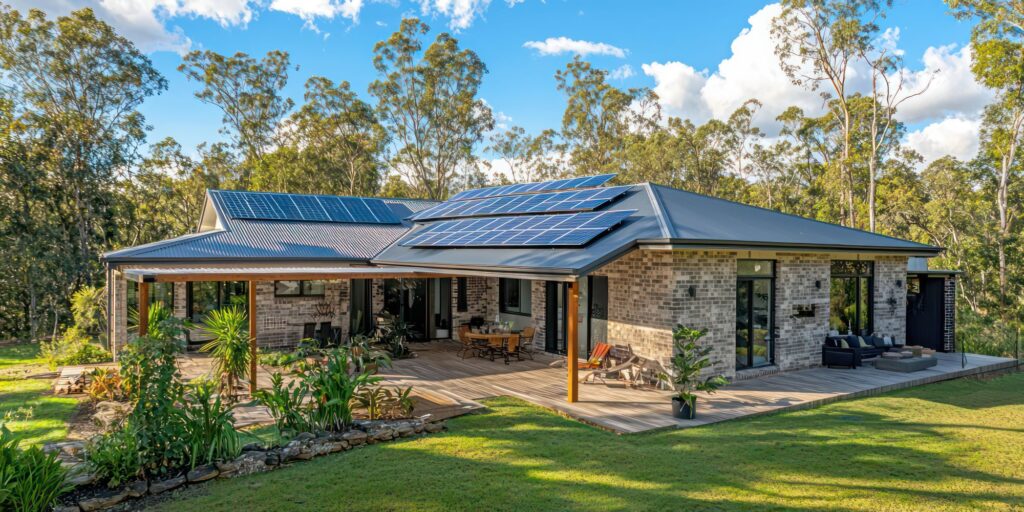
On pitched roofs, the tilt angle matters most. If the roof pitch sits close to the ideal 20–30° range used across much of Australia, it’s an excellent match for solar panels. Steeper roofs can also work well. They may produce slightly less energy across the whole year, but they can perform a bit better in winter when the sun sits lower in the northern sky. A steeper tilt also helps the panels stay cleaner because dust and debris slide off more easily, which can reduce maintenance.
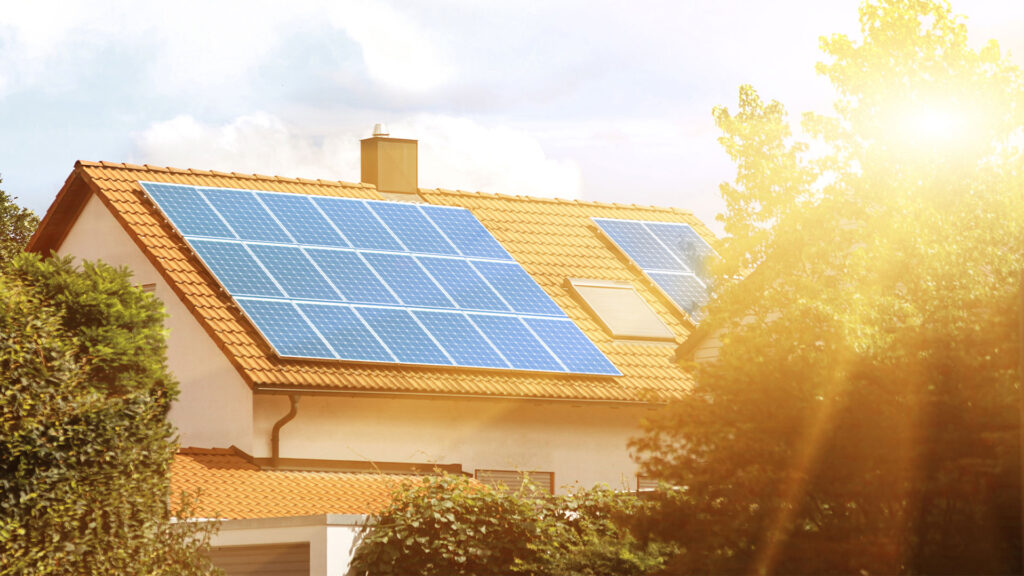
Solar installation on pitched roofs is usually straightforward and often doesn’t need extra mounting frames.
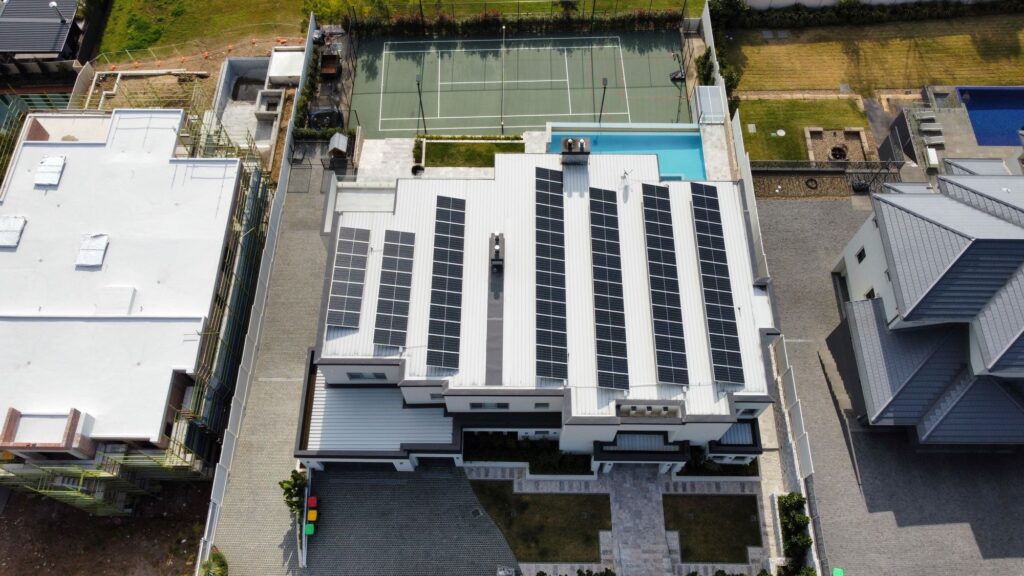
Flat roofs are different. They usually need tilt frames to raise the panels so they catch more sunlight. The best results on flat roofs often come from low tilt angles of about 10–15°. This reduces shading between rows and lowers wind load on the panels. The upside is that flat roofs offer very flexible layout options, which can help maximise total energy production.
East–west layouts work especially well on flatter roofs. With a tilt of around 10–15°, they capture more sunlight in the early morning and late afternoon — perfect for families who use more power at these times.
Which Solar Direction Is Best for Your Home?
Choosing the best direction for your solar panels isn’t the same for every home. It all depends on how you use energy and what you want from your system.
If you want steady solar production from morning through to late afternoon, an east‑west layout works well. It spreads your solar generation across the whole day, which can be great for households without a battery.
But if your goal is to squeeze out the highest possible total energy, a north‑facing setup is usually the best choice in Australia. Most of the day’s strongest sunlight hits north‑facing roofs, so this direction delivers the biggest overall yield. Homes with a battery benefit even more because extra midday energy can be stored for later.
Small shifts away from true north usually don’t cause major losses. But pointing your panels directly south in Australia is rarely worthwhile, as it reduces energy output significantly.
Your ideal direction also depends on where you live. In the Southern Hemisphere, aiming panels north gives the best results. Closer to the equator, you can use a flatter tilt. Further south, a steeper tilt helps catch more sunlight because the sun sits lower in the sky.
Both flat and pitched roofs can work well with solar. Pitched roofs often cost less to install on, while flat roofs allow more flexibility in choosing the perfect panel angle.
No matter the roof shape or direction, modern solar systems can make use of almost any home. Over time, using your roof for solar will save far more than leaving it unused.