

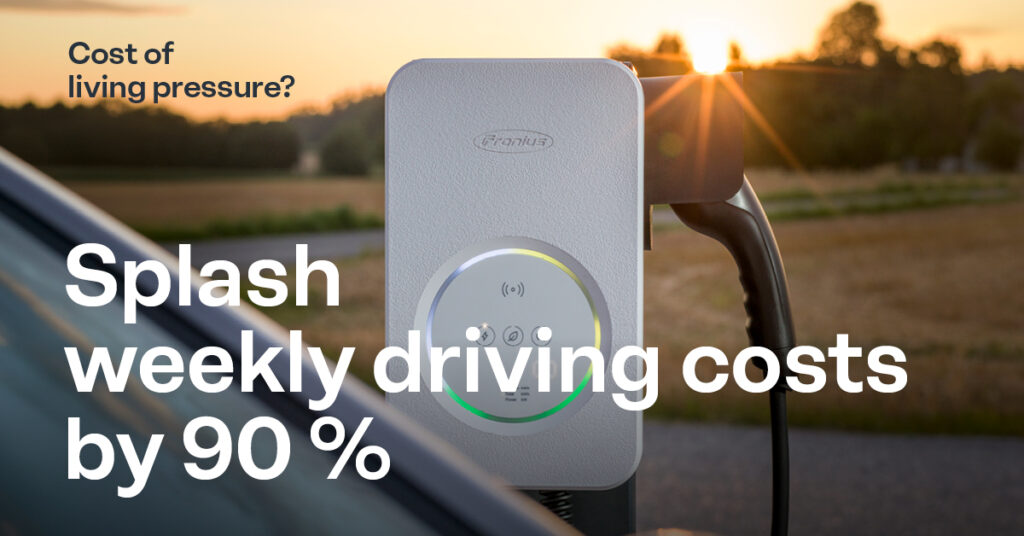
Australian households are feeling the pressure of rising living costs, especially as petrol prices continue to climb. However, solar EV charging in Australia is becoming one of the most effective ways for homeowners to cut their transport expenses. By pairing an electric vehicle with a home solar system, families can dramatically reduce running costs and take greater control of their energy use.
In fact, when an EV is charged using excess solar, its running costs become among the lowest of any transport option in Australia.
Why solar homeowners benefit most from switching to an EV
If your home already produces solar energy, you’re in a strong position to take advantage of an EV. An electric vehicle behaves like a large appliance, yet you have complete control over when it runs. Additionally, its charging time can be aligned with your solar generation, which allows the car to soak up surplus energy that would otherwise be exported for a low feed‑in tariff.
Instead of sending solar back to the grid, you can divert it directly into your vehicle. As a result, your EV’s “fuel” becomes close to free. Moreover, this shift can significantly increase your solar self‑consumption, which further improves the return on your solar investment.
How much does It actually cost to drive an EV in Australia?
Driving costs vary depending on how you charge, but the differences are clear.
A typical petrol car using around 8 litres per 100 km at an average price of $1.75 per litre costs roughly $14 per 100 km. Meanwhile, an EV that uses 18–20 kWh per 100 km costs about $5–$6 per 100 km when charged from the grid at around 30 cents per kWh.
However, when you charge directly from your solar system, the cost often drops to as little as $0–$3 per 100 km, depending on your excess solar. In short, solar charging delivers the cheapest kilometres available, and the difference adds up quickly. Over 15,000 km per year, many households can save hundreds—if not thousands—on transport costs alone.*
EVs are becoming more affordable for Australian families
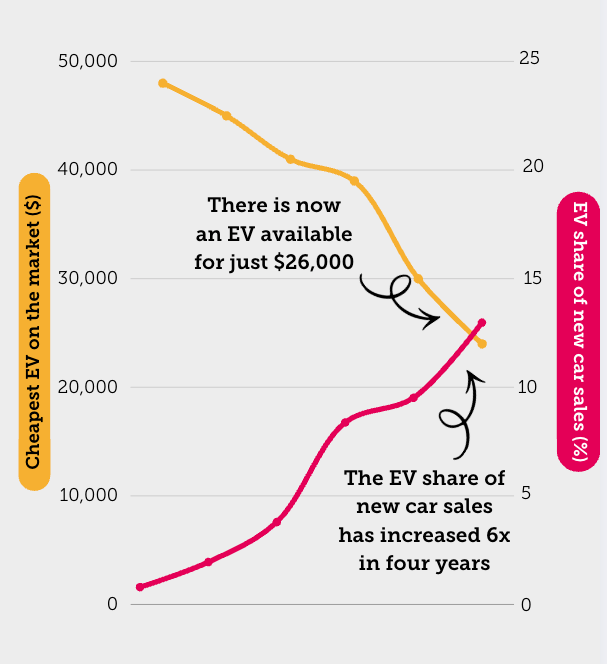
The upfront cost of EVs has been a barrier for some buyers, yet the market has changed rapidly. More affordable models from BYD, GWM, Chery and MG have pushed entry‑level EV prices down to around $26,000. Therefore, the gap between petrol and electric vehicles is narrowing, making EV ownership more realistic for many households.
Moreover, EVs typically cost less to maintain. With fewer moving parts and no engine oil, they have around 40% lower maintenance costs than petrol vehicles. Additionally, surveys of Australian EV owners show that nearly 58% feel less financial stress after switching, largely due to reduced running costs.
How Good Is Australia’s Public EV Charging Network?
Australia’s public charging network is expanding quickly. New reliability standards, government planning tools, and rapid charger installations are improving access nationwide. However, public charging still can’t compete with the convenience—or cost savings—of home charging. Most EV owners prefer to plug in at home because it’s cheaper, easier and more predictable.
Moreover, solar homeowners gain a major advantage: home charging allows them to use the clean energy they already generate, rather than paying retail prices for grid electricity.
Why a Smart EV Charger Makes All the Difference
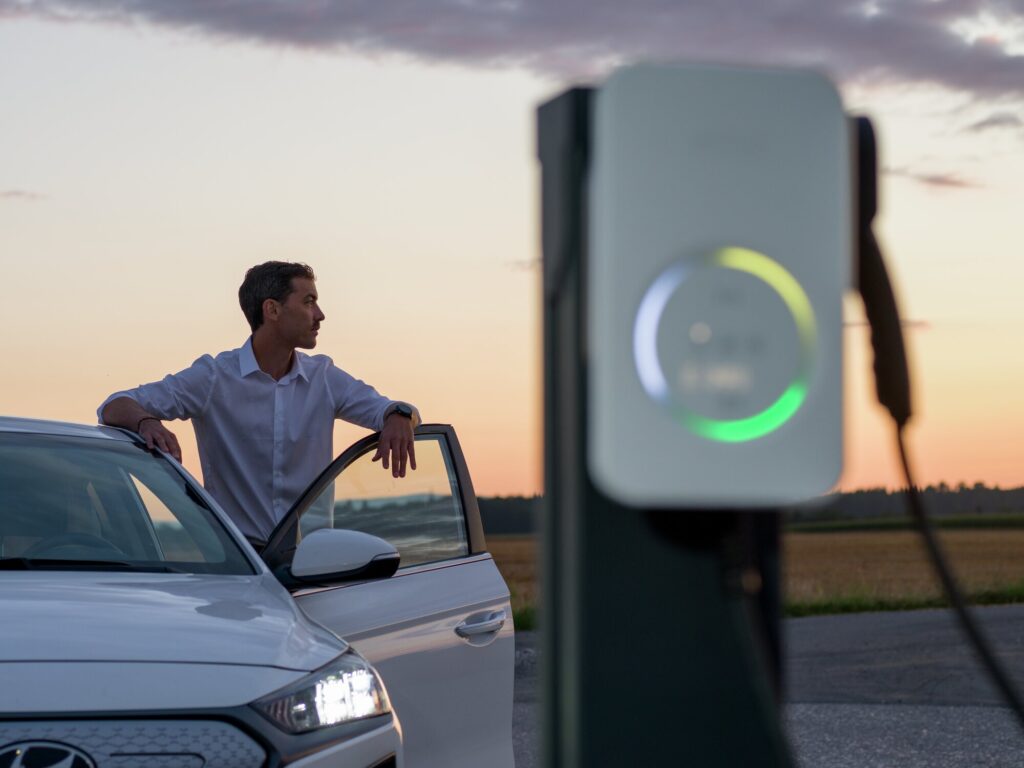
To unlock the full value of solar charging, a smart EV charger is essential. This is where the Fronius Wattpilot Flex stands out. Instead of simply delivering a fixed charging rate, the Wattpilot continuously monitors your solar production. Therefore, it prioritises any excess solar and automatically adjusts the charging power to match the energy your system is generating in real time.
As a result, your EV charges using the cheapest energy available—your own solar. Moreover, the Wattpilot Flex helps you avoid unnecessary grid imports during the day, which keeps charging costs low and increases your solar self‑consumption. Instead of relying on public chargers or paying higher grid rates, you stay in control of when and how your EV is powered.
What the Wattpilot Flex delivers:
- Higher solar self‑consumption
- Significantly lower charging costs
- Smarter use of household energy
- Greater overall savings
- A better return on your solar system
In short, the Wattpilot turns your solar system into a flexible, intelligent, renewable fuel station.
Take Control of Your Transport Costs Using Your Solar System
With living costs rising across Australia, homeowners are looking for long‑term ways to save money. Switching to an EV is one powerful step. Pairing that EV with your solar system is even better. However, combining both with a smart charger like the Fronius Wattpilot Flex delivers the greatest benefit of all.
By turning sunshine into fuel, you can enjoy lower running costs, reduced financial stress and a smarter, more efficient home. For solar homeowners, the path to cheaper transport is already on the roof—now it’s simply a matter of plugging in.
*Consumer‑Compliant Disclaimer: All figures are indicative only. Actual savings depend on vehicle efficiency, driving habits, solar generation, energy tariffs, and local fuel prices. Electricity and fuel prices are based on Australian national and state averages as of 2026.