
Three perspectives. One smarter solar journey.
Solar has never been more popular in Australia. However, with that popularity comes a flood of opinions, products, and “deals” that can make the whole thing feel harder than it should be.
That’s why we created this series — Three perspectives. One smarter solar journey. Instead of adding more noise, we’re sharing real conversations that help you make clear, confident choices.
In this episode, hosts Michael and Carlene Duffy sit down with installer Mark Cavanagh from MC Electrical to unpack what really matters when choosing an installer: from red flags and product quality to after‑sales support and getting “backup” right
Ready to listen?
Dive deeper in the podcast below, where Michael and Carlene Duffy chat with Mark Cavanagh
What You’ll Learn
Meet Mark: The Installer’s Reality Check
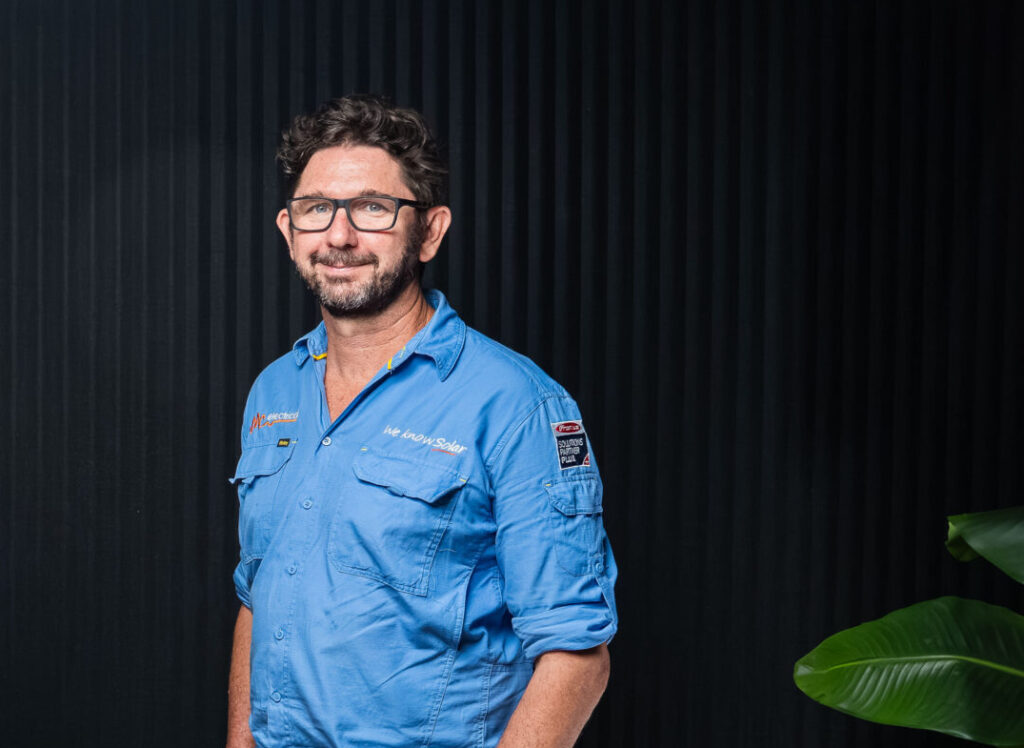
Mark’s story starts with a simple decision. He was already a sparky, working in air conditioning, when solar began gaining traction. Instead of staying in a space he felt was “part of the problem,” he wanted to be “part of the solution.”
He started studying solar early, got accredited, and built his business from there. That matters because Mark isn’t talking from a showroom brochure. He’s talking from years of installs, service calls, and real-world outcomes.
Panels vs inverters: where quality really counts
If you’re comparing quotes, it’s easy to get stuck on panels. However, Mark’s view is refreshingly grounded: these days, panels are often closer to a commodity, especially if you’re choosing from established top-tier manufacturers.
Inverters, on the other hand, are where quality differences can really show up. They don’t just convert power; they have to do it day after day, safely and efficiently, without falling apart down the track. Moreover, when something goes wrong, it’s often the inverter — or the way the system has been set up around it — that becomes the headache.
That’s why Mark pays close attention to heat. His rule of thumb is straightforward:
“Heat is hard on electronics. The more heat you’re asking an inverter to deal with, the shorter its working life tends to be.”
So while specs matter, heat handling matters too. If one inverter consistently runs hotter than another, it’s usually a sign it’s under more stress and that can show up later as reduced reliability.
Shade myths and the “gearbox” that saves your output
One of the biggest homeowner worries is shading: “If one panel gets shade, does the whole system drop?” Mark says that’s a common myth — and it can lead people to panic-buy add-ons they might not need.
What actually matters is how the inverter responds when conditions aren’t perfect. When a roof has partial shade, the system has to “hunt around” to find the best operating point and some inverters do that far better than others. Mark explains it with an analogy that’s easy to picture
“A good inverter adapts when panels are shaded — like a gearbox changing gears — so it keeps finding the best output instead of getting stuck.”
In other words, a smarter inverter can “shift gears” when conditions aren’t perfect. As a result, you can still get strong performance even with partial shade at certain times of day, depending on system design and inverter capability.
Batteries: worth it now, but not one-size-fits-all
For years, batteries were often seen as a nice-to-have rather than a sensible investment. Mark says that’s shifted recently — largely because rebates have changed the maths — and he’s even put a battery in his own home. Still, he’s quick to bring it back to reality: whether a battery is worth it depends on how your household uses power, what you pay at different times of day, how much solar you generate, and what you want the system to do (bill savings, blackout protection, or a bit of both). As Mark sums it up:
“Batteries can make sense now, but it’s still case by case — and the real savings come from using your own solar, not chasing the feed‑in tariff.”
In other words, feed-in credits are a bonus. The bigger win is simply using more of what your roof produces, instead of buying that energy back from the grid later.

Backup in a blackout: what you’re actually buying
“Can a battery power my whole home?” is one of the most common questions — and the honest answer is: sometimes, but only if it’s designed that way.
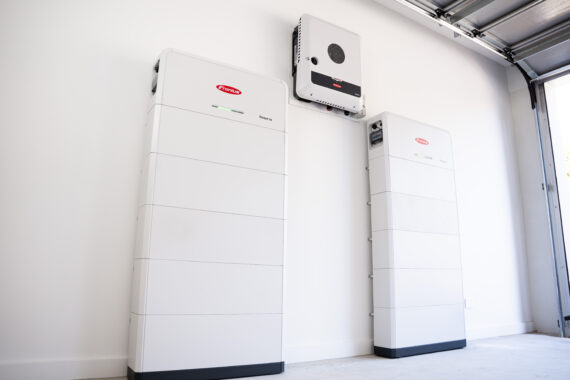
The tricky part is the word backup. In day-to-day use, your battery can help power the whole house at night as normal. However, backup is specifically about what happens during a blackout. When the grid goes down, your system needs to be set up to safely “island” your home — and that usually means choosing which circuits you want to keep running.
As Mark puts it
“Backup is a confusing term — what we really mean is: what stays on during a blackout.”
That’s why good installers plan this upfront. Many households start with the essentials: lights, fridge, a few power points, and the internet modem and then add things like air conditioning if the inverter and battery are sized to handle it. Meanwhile, heavier loads (like ovens, pool pumps, or hot water) are often left off the backup circuits unless you’re going for a larger, whole-home setup.
The takeaway is simple: if blackout comfort matters to you, don’t assume it’s automatic, ask your installer what will and won’t be backed up, and get it designed properly from the start.
How to choose the right installer
If there’s one message Mark comes back to, it’s that the product matters — but the installer matters even more. Or, in his words:
“Getting the installer right is more important than getting the product right.”
So how do you do that without becoming a solar expert? Start with a few quick checks. First, look for a business that’s been around a while. Mark suggests at least five years, and ten if possible. Next, check whether they operate like a real business. Do they have an office, warehouse, or showroom? Or do they look like a “van and a phone” setup? Mark’s best advice takes minutes. Search the company online. Then look up their address on Google Street View. You’ll quickly see whether they seem established.
Finally, do his favourite test. Call and ask for after-sales support. If nobody answers now, you’ll struggle later. And when something goes wrong, you’ll want help fast.