You can use the solar power you make during the day, but what happens at night or during a blackout? To have energy around the clock, you need to look at a few things. That includes how many solar panels you have, the type of inverter you use, and what battery size will give you the best value. Your choice also depends on whether you’re installing a brand‑new solar system with a battery included, or adding a battery to an existing setup.
Table of content
Adding a battery to your solar system is becoming more popular than ever. It makes sense, stored energy lets you use more of the power your home produces, even when the sun goes down. With a battery, the solar energy you make during the day is still available in the evening and at night. This is when most households use the most electricity, so having your own stored power can make a big difference to comfort and savings.

A battery also gives you extra protection during a blackout. Power outages can happen anywhere, and more homeowners want to be prepared. That’s why full‑home backup — the most complete backup option for a solar system — is becoming more popular than ever.
How Much Battery Storage Do You Really Need?
A simple way to start is by asking yourself three key questions:
- How many kilowatt‑hours does my household use each year?
- How much of that energy is used in the evening or overnight?
- How big is my current solar system, or how big will my new one be?
These answers help you understand how much stored energy you’ll actually use, and what size battery will support your needs.
As Fronius energy expert Maximilian Schett explains, “It stands to reason that the more electricity generated on your own roof and the more of it that is needed in the evening and at night, the larger the energy storage device should be.”
A bigger battery can mean more independence, but it also costs more upfront. Oversizing your battery can stretch out the payback time. Many households aim for a setup that reaches around 60% self‑consumption, as this is generally seen as a sensible balance between cost and benefit.
Schett also points out another common situation: “If a household consists exclusively of working people who are out during the day and only come home in the evening, more storage capacity is certainly useful. In this scenario there is nobody at home to consume the electricity while it is being generated. Instead there are power peaks in the evening and morning, such as when cooking dinner or charging an electric car.”
In short: Your lifestyle, your energy habits, and your system size all shape the ideal battery size for your home.
How to estimate the right battery size
Here are some simple rules of thumb to help you work out roughly how much battery storage you may need based on your yearly energy use:
| If you use a fair amount of electricity during the day: | If your daytime use is low and most energy is used in the evening: |
| Annual energy use (kWh) ÷ 1000 × 1.2 = estimated battery size (kWh) | Annual energy use (kWh) ÷ 1000 × 1.5 = estimated battery size (kWh) |
Please note: These numbers are only a general guide. Your installer will look at your home’s actual energy use and design a system that suits your needs.
When a larger battery can make sense
If your solar system often produces more power than you use during the day and you use a lot of electricity at night, a larger battery may give you better value. This is especially true for homes with evening peaks, big appliances, or electric heating and cooling.
But bigger isn’t always better. A larger battery does not automatically mean higher independence. The goal is to match the battery to your usage so it charges fully most days and empties at the right rate.
Example: How battery size affects energy independence
Let’s look at a simple example of a home with a 10 kW solar system, a heat pump, and yearly electricity use of 7,500 kWh.
- With no battery, the home can cover about 43% of its yearly power needs using solar alone.
(This lines up with typical Australian homes, which reach about 25–40% self‑consumption without storage.) - With a 6.3 kWh battery, self‑sufficiency jumps to more than two‑thirds of total usage.
- Upgrading to a 9.5 kWh battery lifts this to over three‑quarters.
- Going bigger again, to around 12.6 kWh, adds only a small extra gain.
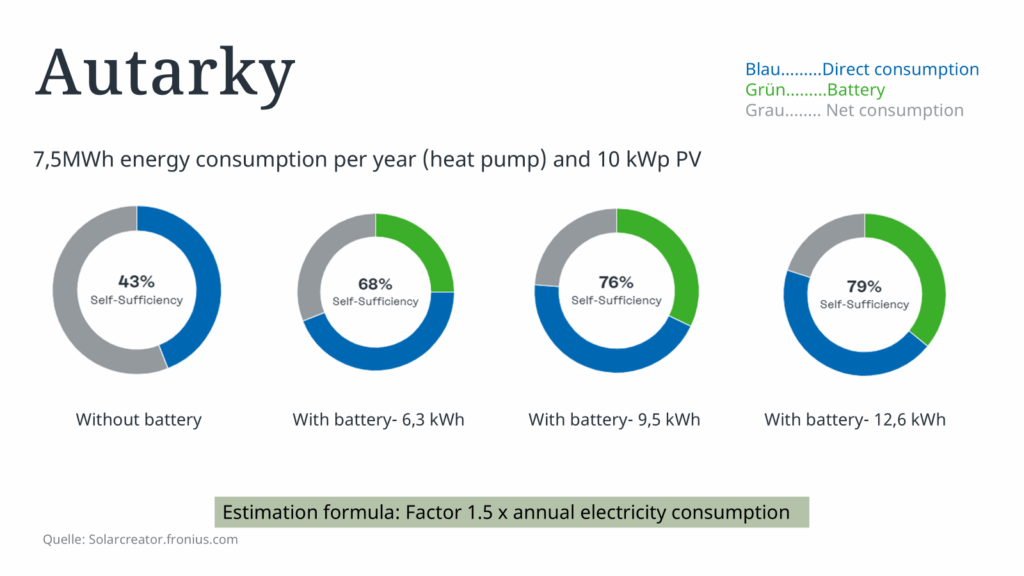
So as you can see, while a small and, strictly speaking, undersized solar battery can significantly increase the level of self-consumption on its own, the degree of independence increases only slightly with an adequately or oversized storage solution and ultimately, from a certain number of kWh, there is no further improvement at all.
Adding a battery to an existing solar system
If your solar system often produces more power than you can use and you’ve got no way to store it, you’re not stuck. In many cases, you can add a battery later using today’s modern solar technology.
Most homes usually have two main options for retrofitting a battery:
- Add a battery that works alongside your existing inverter
- Upgrade to an inverter that’s designed for solar and battery systems
Your installer can tell you which option fits your home, your current setup, and your goals for backup power and savings.
DC‑Coupled Batteries
DC‑coupled batteries sit on the solar side of your system, before the inverter. This means they can charge directly from the energy your panels produce, without extra conversions.
When paired with a hybrid inverter, these batteries allow full system monitoring and often support backup power. Many setups can keep your home supplied with stored solar energy during a blackout, and some can even restart themselves without help. If you’re unsure what “Full Backup” or “black‑start capability” means, don’t worry, we’ll explain these terms in this article.
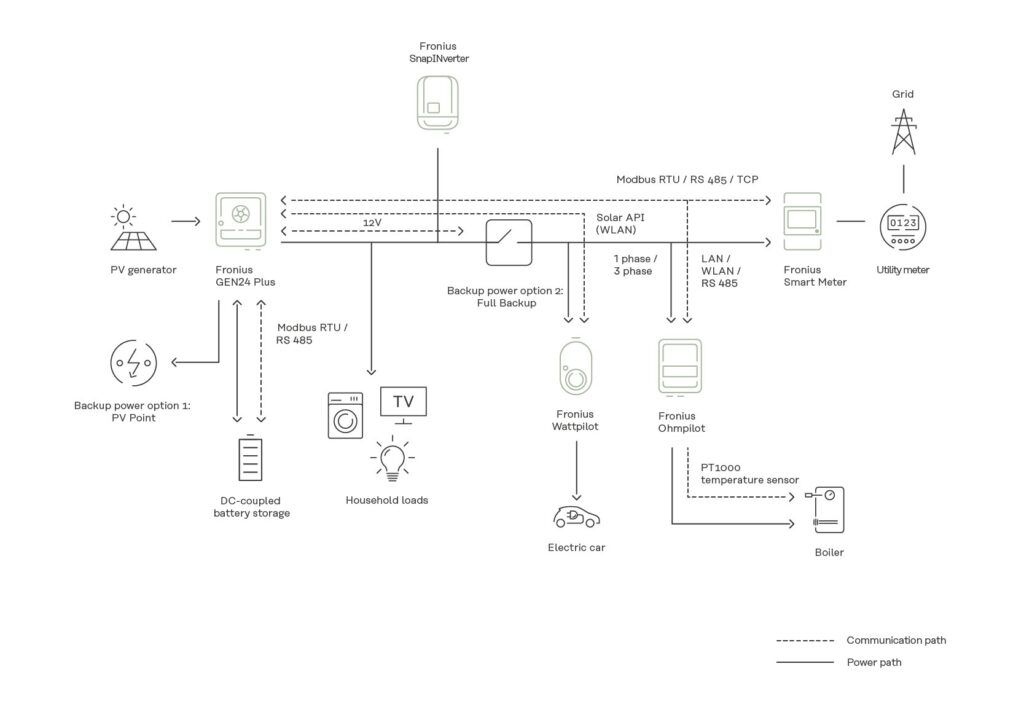
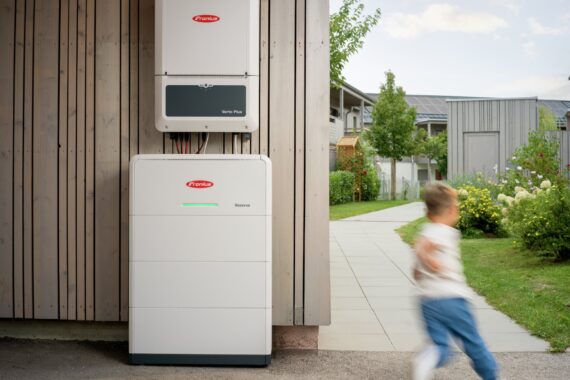
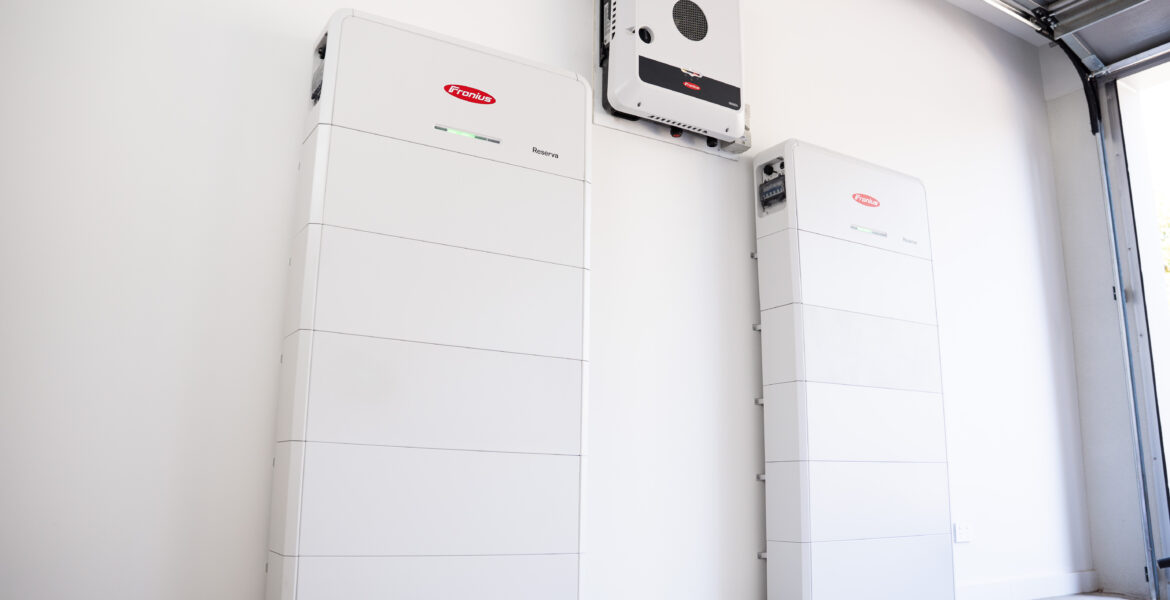
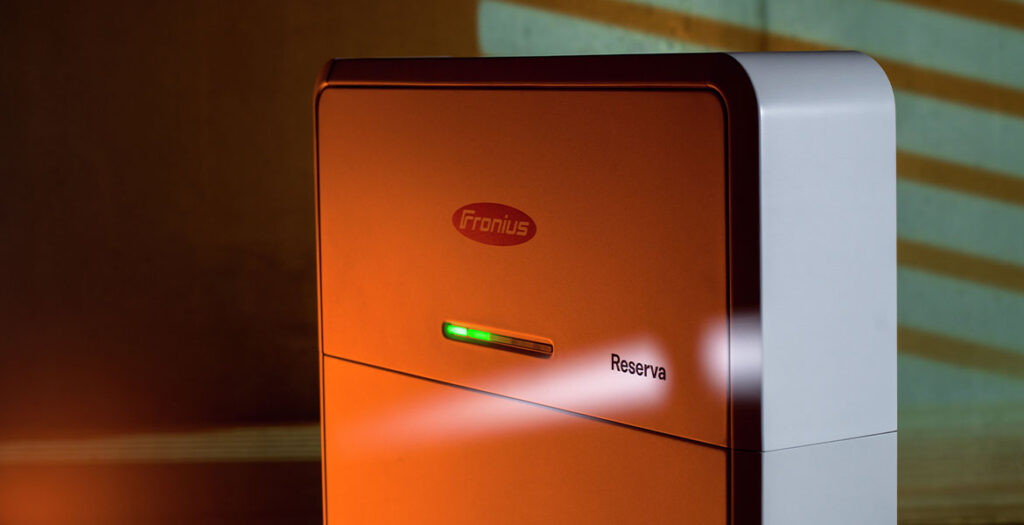
“Solar storage devices of this type communicate best with a hybrid inverter and optimise self‑consumption. One example of a DC‑coupled storage solution is our Fronius Reserva,” says solar expert Schett.
The Fronius Reserva also offers extra benefits, including a ten‑year performance guarantee, black‑start capability, and strong data protection.
AC‑Coupled Batteries
AC‑coupled batteries are connected on the AC side of your solar setup, after your existing inverter. Because of this, the power from your panels is first converted to AC by your solar inverter, then converted back to DC again so the battery can charge.
This double conversion means there are small energy losses each time, usually around two percent with every conversion step. AC‑coupled batteries also come with a few limits. They can’t provide full‑home backup, and they often can’t integrate with advanced monitoring software.
The big advantage?
You don’t need to replace your existing inverter, which makes AC‑coupled batteries a popular choice when retrofitting storage to older solar systems.
Upgrading to a hybrid inverter
If you want to add a battery to your solar system but your current inverter isn’t battery‑ready, you have two main options.
One option is to install an AC‑coupled battery, which can work with almost any existing solar setup. The other option depends on the inverter you already have. If you own a Fronius GEN24, you can upgrade it through software instead of replacing the whole unit. The Fronius UP.storage upgrade unlocks hybrid features and turns the inverter into a GEN24 Plus, making it ready for battery storage.
As Maximilian Schett puts it: “This eliminates the need to replace the inverter, which saves costs and resources. Fronius UP.storage is available in our Fronius Solar.web monitoring tool.”
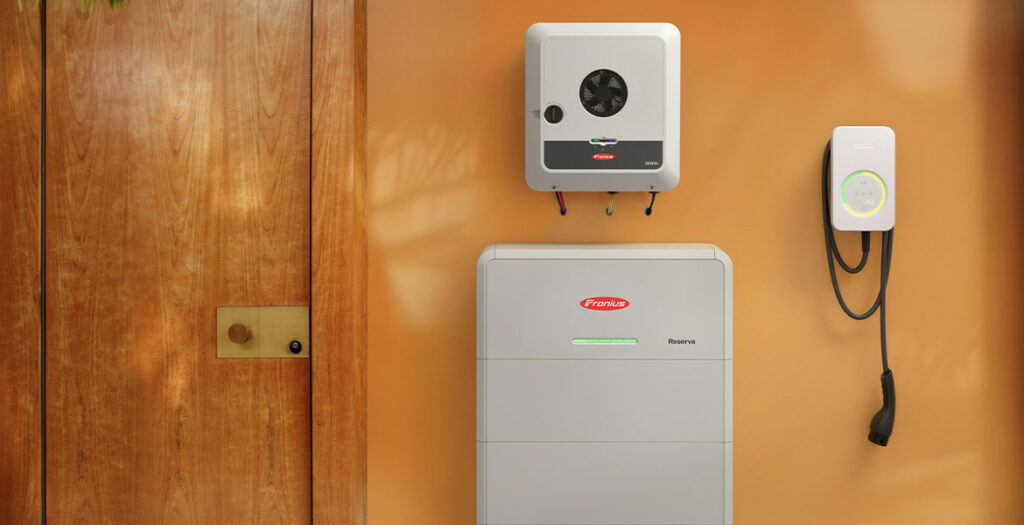
Are you interested in Fronius UP.storage? Further information is available in the Solar.web store and from your installer.
Summary
A battery can lift your self‑consumption and make your home far more self‑sufficient. But it’s also a major investment, so it’s important to choose the right size from the start. The best battery size depends on your yearly energy use and when your home uses the most power. Getting this right ensures you have enough stored energy to cover your needs and make the most of your solar system.
Homes get the best results when a DC‑coupled battery is paired with a compatible hybrid inverter. This setup delivers high efficiency and can help new solar systems reach self‑consumption levels of around 60%, depending on household habits. A battery like the Fronius Reserva is one example of a system designed for this kind of setup.
If you’re adding a battery to an older system and don’t have a hybrid inverter, an AC‑coupled battery is still an option. It works with almost any inverter, but you won’t have access to advanced monitoring or full‑home backup features.