
Three perspectives. One smarter solar journey.
Getting solar can feel like a big leap. However, once the system is on the roof, the real learning begins. That’s when you find out what actually changes day to day, what you’d do differently, and which decisions really mattered.
That’s why we created this series — Three perspectives. One smarter solar journey. Instead of adding more noise, we’re sharing real conversations that help you make clear, confident choices.
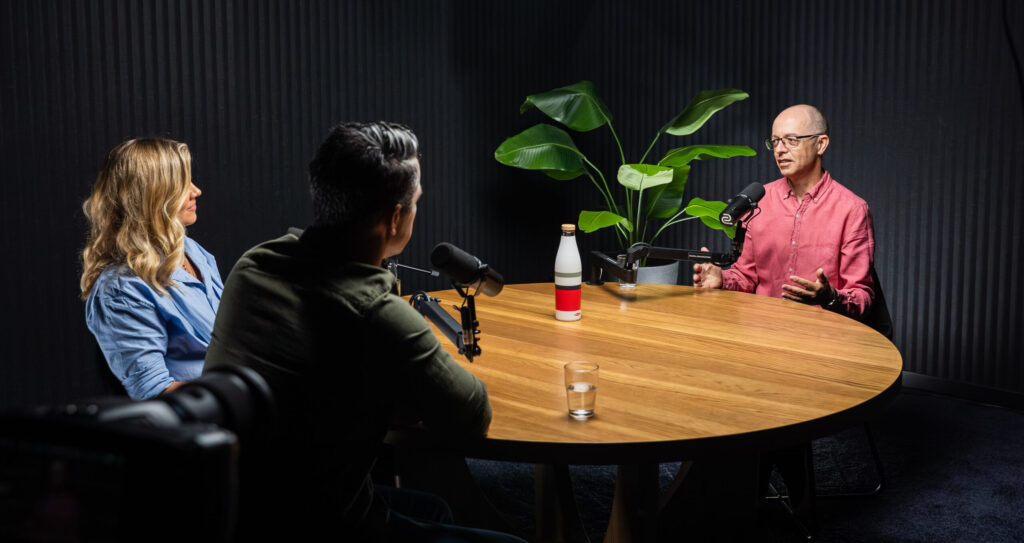
In this episode, hosts Michael and Carlene Duffy chat with Greg Spedding, a homeowner who’s lived with solar for several years. Greg isn’t in the solar industry. Instead, he’s a real-world example of what happens when you plan well, install thoughtfully, and then actually live with the system.
Estimated read time: 4–5 minutes.
Ready to listen?
Dive deeper in the podcast below, where Michael and Carlene Duffy talk with Greg Spedding about what it’s really like living with solar.
What You’ll Learn
Meet Greg: His Real-Life Solar Story

Greg’s home isn’t a shiny new build — it’s a typical 1970s Aussie brick, three-bedroom with a home office. Like many households, he’s also got a couple of energy-hungry extras: an in-ground pool and an EV, which can quietly push bills up.
Solar wasn’t a last-minute decision either. Greg has been fascinated by it for years: “I just thought it was amazing that you can make electricity from the sun.” When the EV arrived — and a pool heat pump followed — getting solar simply became the practical next step.
Greg’s solar set-up
Greg installed his system in 2021. He went for roughly a 10–10.5kW solar array paired with an 8kW inverter. At the time, he considered that a large setup. Because the home is single phase, he also sized it to suit what that supply could handle. What’s interesting isn’t just the size. It’s the result.
Greg says the system has been “absolutely perfect,” and he estimates it paid for itself in around three and a half years. He also shares a real performance snapshot that puts things in perspective:
“Since mid‑2021 we’ve generated about 60 megawatt hours — and we’ve used about 20 megawatt hours of that ourselves.”
And when asked what his bill looks like now, he delivers the line most people hope for:
“At the moment, we basically don’t have a power bill.”
Still, he adds a reality check. Feed-in tariffs and energy plans change. So what worked brilliantly in 2021 may look different today. That’s especially true if you’re comparing solar-only versus solar-plus-battery.
The habit changes that made solar work harder
Greg’s biggest lesson is simple, and it’s one many people skip. Before you pick products, understand how your household uses energy. He puts it plainly:
“Start with your usage patterns. Know how much power you use — and when you use it.”
From there, his approach is straightforward: do what you can while the sun’s out. That might mean shifting the dishwasher or washing machine into the day. It might mean using timers and scheduling features on appliances. Either way, you don’t need to overhaul your whole lifestyle to see a benefit.
Here’s the key idea Greg returns to: exports are a bonus, not the main win. The bigger saving comes from using your own solar first, instead of buying that same energy back from the grid later.
Choosing an installer: the “cookie cutter” warning
Greg is clear on one thing: a good experience starts with a good installer. And the biggest danger sign, in his view, is pressure and templated sales. He says it like this:
“The last thing you want to do is go with these guys that have cookie cutter systems… you’ve got to sign today because tomorrow the deal’s off.”
Older homes often need extra work, too. Greg’s is a good example. His system came in just over $10,000 in 2021. Part of that cost came from upgrading an older switchboard. His roof layout also meant extra mounting, risers, and cable runs.
A good installer talks about those things early. A risky installer avoids them until the last minute.
Quotes and red flags: what to look for
Greg’s advice on quotes is refreshingly practical. Ideally, you’ve had a real conversation before the quote is final. As a result, the quote should reflect your home — not a template. He also says a good quote should clearly name the key hardware
“Check the ‘brains’ of the system — the inverter and the panels. Don’t accept vague descriptions.”
That matters because a line like “400W panel” could mean almost anything. It also makes it harder to compare quotes properly. When it comes to red flags, Greg doesn’t hesitate:
“If they say you must sign in 48 hours, bin it and walk away. Get two or three quotes. Six is usually too many.”
Too many options can create confusion. Two or three good comparisons usually create clarity.
Blackouts, batteries and the “solar is useless” surprise
This is one of the biggest misconceptions Greg highlights. People often assume solar will keep the lights on in a blackout. However, that’s not how most standard systems work. Greg explains it in a way that sticks
“If the grid goes down and you don’t have a battery, your solar won’t keep powering the house.”
The reason is safety. When the grid is down, systems shut off to prevent feeding power back into lines while crews are working.
Even with a battery, you still need to ask about backup configuration. Otherwise, you can end up with a battery installed, yet nothing backed up when the power goes out. Greg warns this is where homeowners get caught, especially if the backup conversation wasn’t clear up front. So when does a battery make sense? Greg’s answer stays grounded. A battery becomes more compelling when:
- you can’t shift enough usage into the day, or
- you live in an area with frequent outages, or
- you want emergency power for essentials.
On the other hand, if you can use most of your energy while the sun’s out, you can still get strong results without a battery — at least until your needs change.
What Greg would do differently next time
Greg is happy with the big decisions: sizing, product choice, and overall reliability. He describes it as a “set and forget” investment for most people, even though he admits he’s the type to check the app often.
His main hindsight lesson is surprisingly simple: plan equipment placement with the future in mind:
“I’d rethink where some of the gear went, because adding a battery later could be trickier.”
In other words, solar isn’t just about what you install today. It’s also about leaving your future self a clean path to upgrade, especially if a battery is likely later.