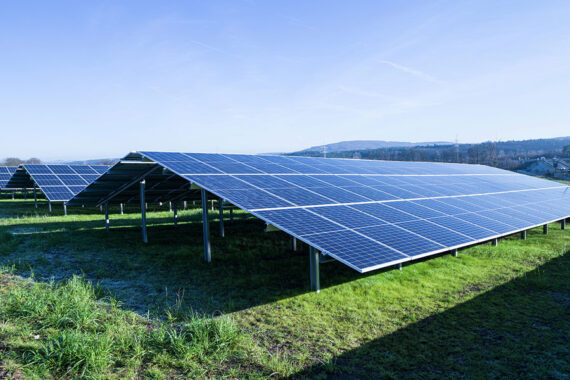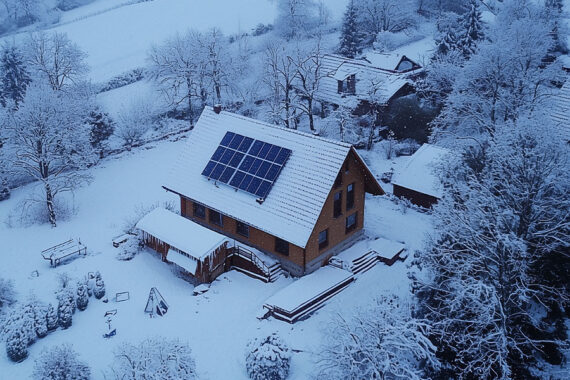

The PV system on the roof generates more electricity than is needed. The son studies 250 km away and pays high electricity bills. How convenient it would be to share your own energy! What was once unthinkable is now easily possible thanks to community energy. In this interview, energy expert and co-founder of the Fronius Energy Community Michael Schubert explains the advantages and challenges of setting up an energy community and why renewable energy communities will shape the future of our energy supply.
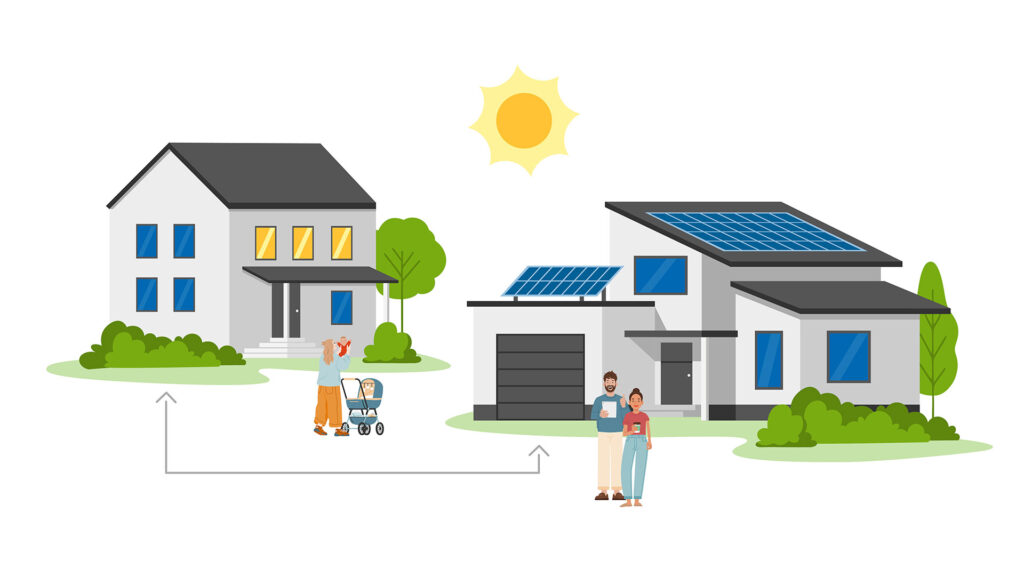
Generating, consuming, and sharing renewable energy—the principle of an energy community is simple: those who produce their own electricity with a PV system on their roof make the surplus energy available to those who need it. In addition, all participants benefit from fair fixed prices, both for feeding in and for purchasing. This makes green electricity not only accessible to everyone, but also cheaper. The Fronius Energy Community, a citizen energy community that connects participants throughout Austria, has been in existence since the beginning of 2026.
How did the idea of founding a Fronius Energy Community come about?
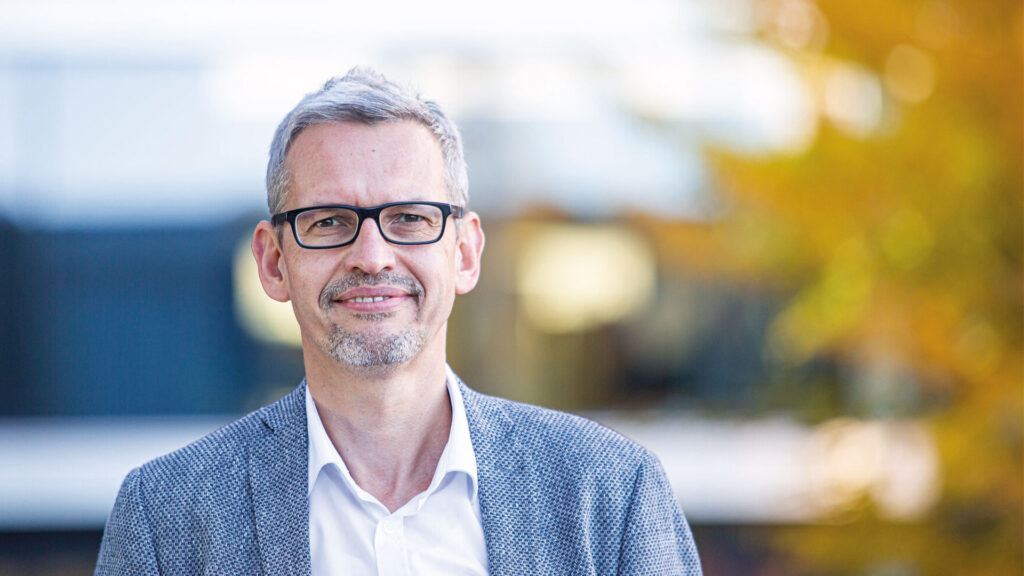
At Fronius, the first considerations for an energy community arose when our customers, as well as our Fronius Solutions Partners, increasingly asked us about it. Many of our Fronius customers already use our products and solutions to use their PV surplus as efficiently and with maximum profitability as possible.
Energy expert Michael Schubert works in the Business Development section at Fronius and has been involved in the establishment of the Fronius Energy Community from the very beginning.
That’s why we took the idea a step further: our goal was not only to share green energy with each other, but also to make it available to as many people as possible – regardless of whether they own a PV system and feed electricity into the grid or “only” want to purchase electricity.
“I can’t join an energy community anyway because I don’t have a PV system.” I’ve heard this sentence many times. But an energy community is all about balance: in addition to those feeding electricity into the grid, you also need loads that use electricity. It doesn’t work any other way. This means that everyone can contribute to the energy transition – in the city and in the countryside, in a house and in an apartment.
Who is behind the Fronius Energy Community?
To establish a renewable energy community or a citizen energy community, you need your own legal entity—for example, an association, a cooperative, or another form of organization. It is important that the main purpose is not financial gain. Rather, the focus should be on the use of renewable energy and local benefits.
The Fronius Energy Community is a non-profit association in which the company Fronius participates and contributes its expertise: we ensure the professional operation and member management of our citizen energy community on behalf of the association.
Why was a citizen energy community (CEC) chosen?
We wanted to offer the Fronius Energy Community throughout Austria right from the start, so a BEG was the best choice. This allows us to operate across regions and even include medium-sized and large companies if necessary. Another major advantage is that a citizen energy community can also be expanded to include other green energy sources such as wind and hydropower. This is definitely one of our medium-term goals, particularly for planning security.
Incidentally, the alternative to the BEG would have been to establish regional renewable energy communities (EEG) for each substation—and there are over 400 of them in Austria. That would have meant enormous organizational effort and less flexibility.
How do you ensure that there is always a balance between feeders and consumers in the energy community?
We have deliberately made access to the Fronius energy community very simple and open: as a participant, you can either feed electricity into the grid, consume it, or do both. To ensure that as much energy as possible is exchanged and used, we want to appeal not only to prosumers (editor’s note: people who produce and consume energy at the same time), but also to involve many loads. To this end, we have the Energy Balance Manager and an entire team from various sections that performs specific monitoring of the data for this purpose.
This results in fair and transparent pricing. In our community, you don’t pay any basic fees or running costs, but only what you actually consume.
Were there any initial hurdles in cooperating with utilities or energy suppliers?
Utility companies are legally obliged to enable energy communities. (Editor’s note: based on the EU RED II directive) In this respect, we are well positioned in Europe, and there are also clearly assigned roles: utility companies are responsible for the infrastructure, while energy communities are responsible for organizing members and handling transactions. The associations of the respective energy communities conclude contracts with the utilities so that they can provide the billing data. Austria is a pioneer in Europe in this regard: almost every household here already has a digital electricity meter or an EVU smart meter, which forms the technical basis for this.
For energy suppliers, on the other hand, energy communities are naturally an exciting topic. Some have not dismissed the idea of energy communities as competition but have instead integrated it into their business model. Furthermore, energy demand cannot be met entirely by an energy community – so we still need energy suppliers. However, I am convinced that energy communities have a very positive influence on free competition, fair pricing of energy costs, and the energy awareness of each individual.
In short: complaining about energy costs is one thing, but there are now alternatives, and it is easy to join an energy community. The figures speak for themselves: in Austria, there are currently around 5,500 energy communities with more than 200,000 registered metering points (as of 18 September 2025), and the trend is rising sharply. Energy communities are definitely here to stay.
Do energy communities have a negative impact on the power grid?
On the contrary: energy communities can relieve the burden on the grids or reduce transmission losses through local generation and consumption. Above all, however, energy communities promote adjusted consumption behavior and better load management. What does that mean? Generation and load are better synchronized, optimally coordinated, and energy consumption is encouraged or consciously planned at the right time: For example, this means running washing machines and dishwashers when the sun is shining and a lot of solar power is being produced. This has a positive effect on both energy resources and your own electricity costs—and, last but not least, on the energy transition.
Finally, what does “energy community” mean to you in three words?
Only three words? Democratic—everyone can participate; individual—you have a lot of freedom to shape things, such as deciding what percentage you want to feed into the Community; and independent—as a member of a Community, you are significantly less dependent on large energy structures.
Did you know?
Not all energy communities are the same – a brief overview
Community generation plant – independent energy supply for multi-party buildings
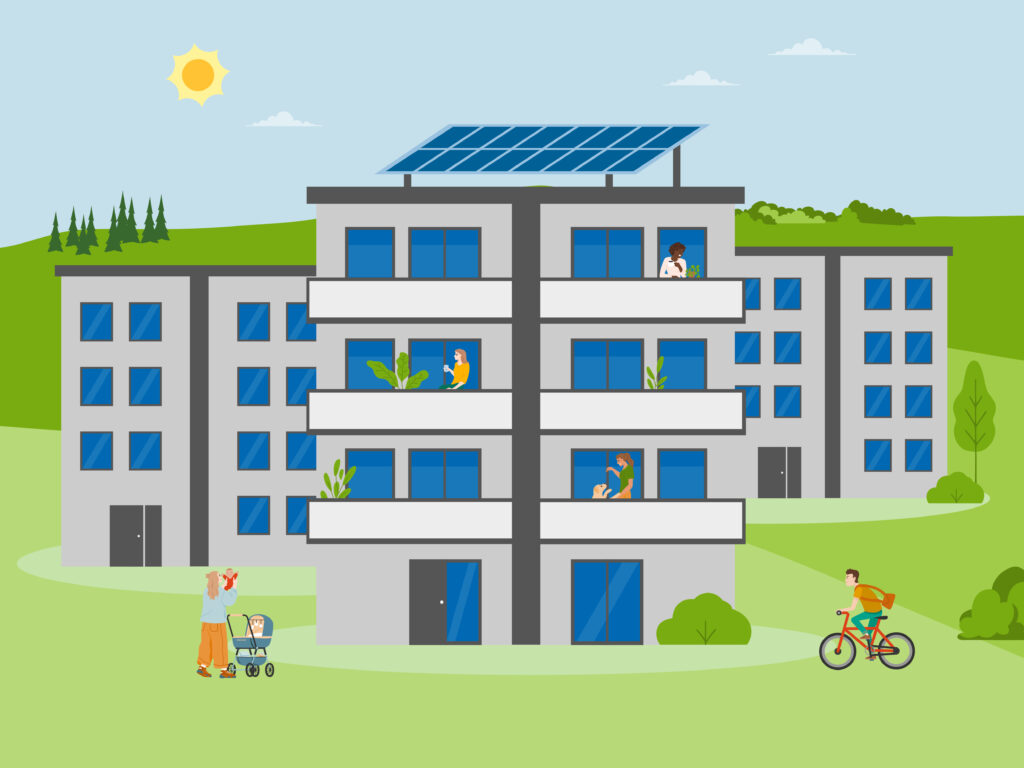
A community generation plant is an association of several parties within a building who jointly use electricity from their own generation plant – usually photovoltaics. The electricity generated is consumed directly on site without using the public grid. The prerequisite is that all participants are connected to the same main line. Community generation plants have been possible in Austria since 2017 and do not require a separate legal form, but only a contract in accordance with Section 16a ElWOG. They increase self-consumption, reduce energy costs, and also eliminate grid fees for internally consumed electricity.
Renewable energy community (REC) – decentralized energy supply in the grid network
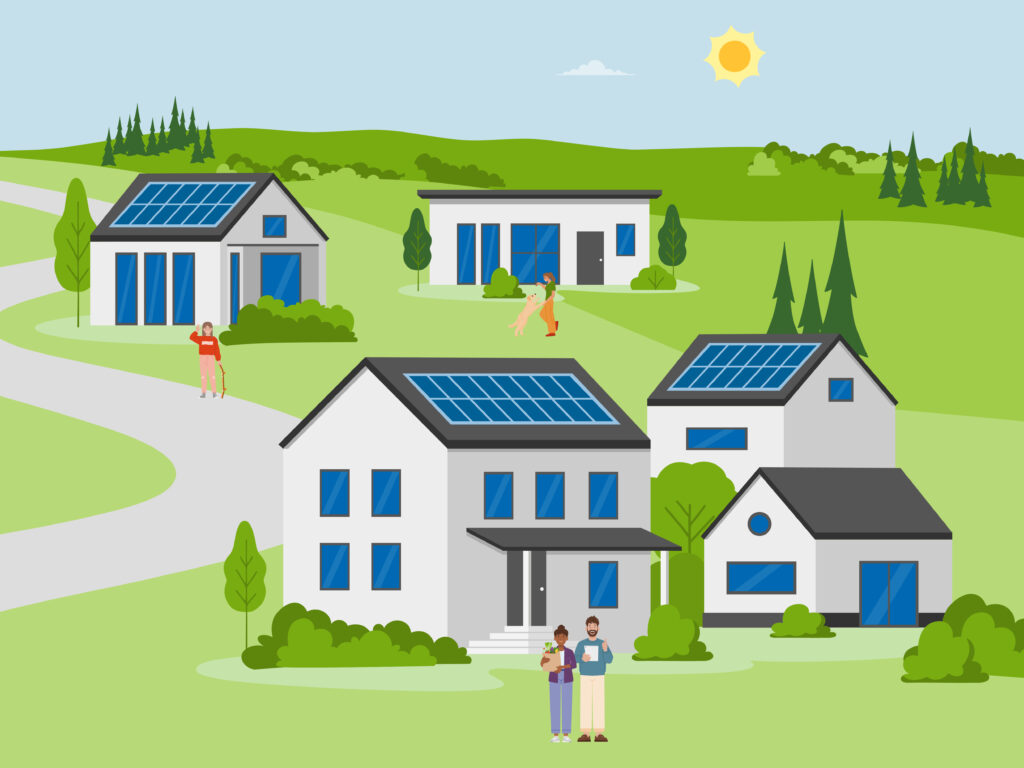
An REC is an energy community that extends beyond property boundaries and is geared towards the shared use of renewable electricity and heat. It can be organized locally or regionally and comprises at least two participants, including natural persons, municipalities, or small and medium-sized companies. A separate legal form, such as an association or cooperative, is required for its establishment. Renewable energy communities benefit from reduced grid fees and levies, which increases their profitability. They have been enshrined in law since 2021 and promote the regional energy transition.
Citizen energy community (CEC) – decentralized energy supply across multiple grid areas
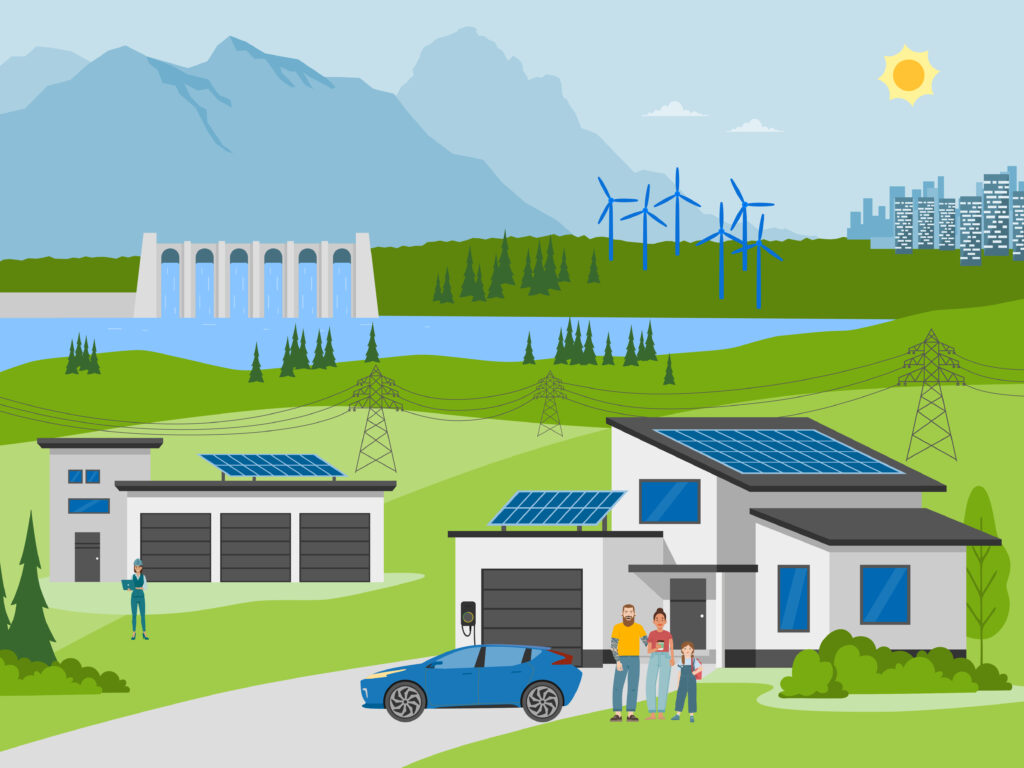
The CEC is the largest form of energy community and can operate throughout Austria without geographical restrictions. It enables the joint generation, storage, use, and sale of electricity. All natural and legal persons may participate, but only natural persons, municipalities, and small companies may exercise control. A separate legal form is also required for its establishment. In contrast to EEGs, there are no financial benefits in terms of grid fees, but as a supraregional platform, the CEC offers more flexibility and freedom of design.
With the passage of the Electricity Industry and Organization Act (ElWG) at the end of 2025, further forms have been added: the “self-supply facility” and “peer-to-peer.” These essentially make it possible to exchange energy without having to establish a separate legal entity such as an association.
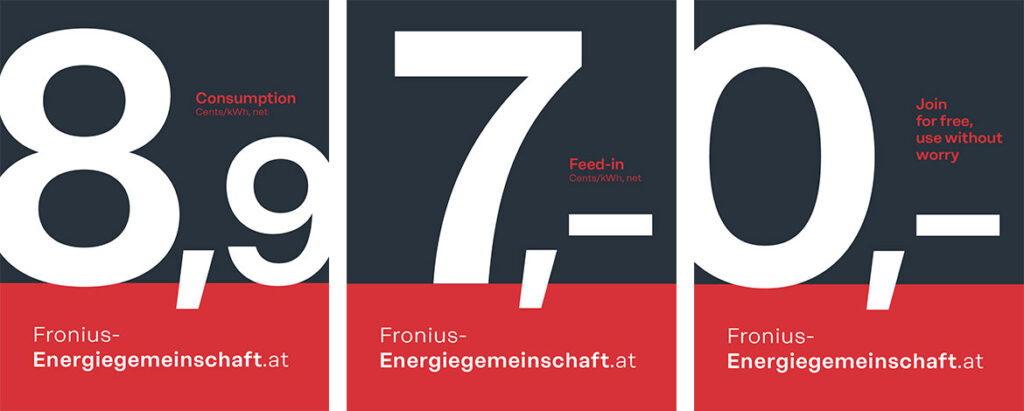
Fronius Energy Community: Join free of charge and use without any worries
All information about the Fronius Energy Community – find out more now (Available in Austria only)!