

The electrification of the home is reshaping how we produce, store, and use energy. Solar PV, batteries, and electric vehicles now form interconnected systems. Together, they support greater self-sufficiency and control.
Solar photovoltaic (PV) systems combined with battery energy storage systems (BESS) offer homeowners a comprehensive solution. They address the intermittency of solar power, maximize self-consumption, and enhance energy independence. By storing excess solar energy for later use, batteries ensure that users utilize more generated power on-site rather than exporting it at low tariff rates.
How Bidirectional Charging Works
Standard EV charging is unidirectional. Electricity moves from the grid to the car. Bidirectional charging adds a new capability: Vehicle-to-X (V2X).
V2X includes several different applications:
- Vehicle-to-Load (V2L): The car provides power to external devices via a plug.
- Vehicle-to-Grid (V2G): The car sends energy back to the electrical grid.
- Vehicle-to-Home (V2H): The car powers your home appliances during a blackout or peak times.
The mobility of EVs, combined with exceptional storage capacity, enhances the overall adaptability and value of the home energy ecosystem. This enables new opportunities for grid services, energy trading, and resilience during outages. Electric vehicles are rapidly evolving beyond their traditional role as just transportation tools. They are emerging as essential components of the modern energy ecosystem.
However, unlocking the full potential of bidirectional charging involves overcoming hurdles. These include standardized communication protocols, regulatory frameworks, and cross-industry collaboration. Experts are actively addressing these challenges around the world. This includes progress here in Australia, which continues to pave the way for a smarter, more sustainable energy future.
Understanding Bidirectional Charging
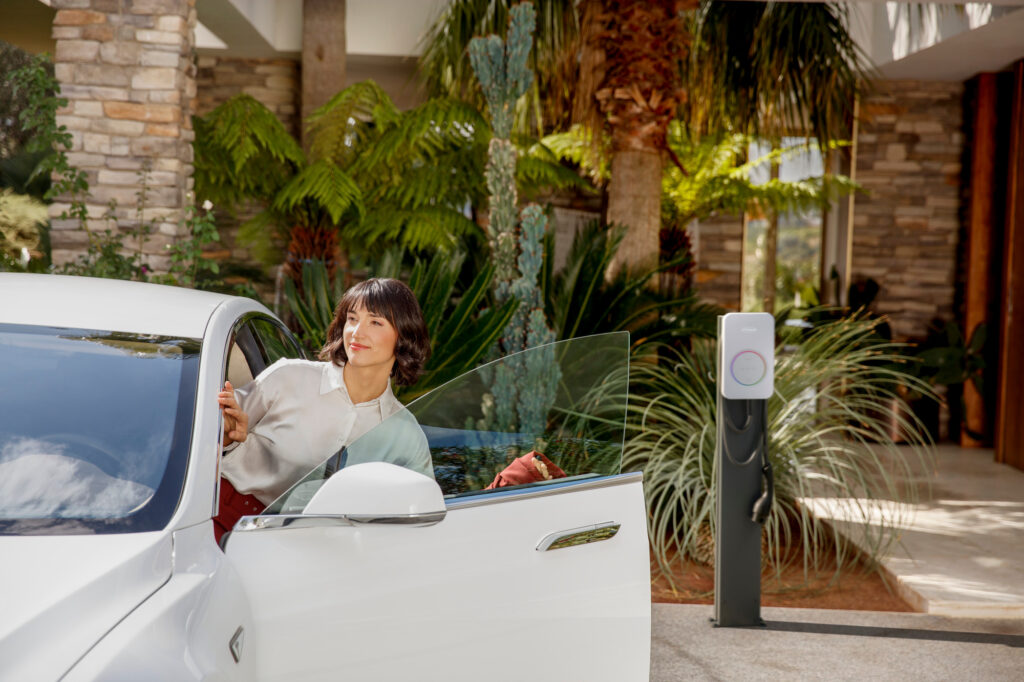
Bidirectional charging allows EVs to charge and discharge power. This effectively turns EVs into mobile energy assets. There are two primary approaches: DC bidirectional charging and AC bidirectional charging. In both cases, the system must transform the EV’s stored battery energy from Direct Current (DC) to Alternating Current (AC) to discharge it into the energy grid.
When using AC bidirectional charging, the manufacturer builds the needed DC-AC inverter into the car. In contrast, DC bidirectional charging locates the DC-AC inverter within the charging station.
The Dominance of DC Bidirectional Charging
DC bidirectional charging is the more widely adopted method for V2G applications. It enables a charging station to interface directly with an EV’s battery for both charging and discharging. This primarily happens through one of two DC charging standards: CHAdeMO or CCS2.
CHAdeMO has historically led the way for bidirectional DC charging worldwide. Japanese automakers drove this standard in collaboration with equipment manufacturers to enable V2G functionality. However, CCS2 is now the dominant global charging standard. Most new EVs adopt it, including those from Japanese manufacturers.
Despite this shift, CCS2 still trails CHAdeMO in terms of proven V2G capability and interoperability. CHAdeMO included bidirectional capability from the start. CCS2 requires software updates to facilitate interoperable bidirectional power flow. Significant industry efforts are now underway to close this gap. Ongoing advancements in standardization and interoperability continue to drive progress.
Advantages of the DC Approach
DC bidirectional charging offers a key advantage in its standardized approach to grid connection. This approach is similar to solar inverters and therefore grid operators already welcome it (like Fronius solar inverters).
DC chargers also relocate the power conversion hardware to the charging station. This shift reduces the size, weight, and complexity of the vehicle’s onboard charger. Consequently, the electric vehicle remains cheaper, lighter, and more efficient when commuting. It also stays independent from changing grid requirements and remains interchangeable within the homeowner’s ecosystem.
Furthermore, the DC charging station can accommodate larger, more powerful, and efficient converters. These are not constrained by the physical limitations of a vehicle interior (for example, they don’t need coolant flow from HVAC). Using rugged offboard electronics, similar to a Fronius solar inverter, reduces wear and tear on onboard electronics. This also opens possibilities for future power-saving improvements within the car.
The Potential of AC Bidirectional Charging
AC bidirectional charging leverages an EV’s onboard charger to manage both the charging and discharging processes. AC Vehicle-to-Grid (V2G) is still in its early stages. Related standards for the grid, communication, and safety are still in draft form. However, this is a crucial feature that will likely gain momentum following the development of DC bidirectional charging.
This method is also a potentially more cost-effective solution. It benefits from vehicle-scale production economies and simpler installation processes. However, the costs of this feature would ultimately be embedded in the price of every equipped EV.
At the same time, requirements are still evolving from a regulatory and standards perspective. Clear frameworks are not yet established. This may lead to further complexities and unforeseen hardware changes in AC bidirectional charging. A key challenge is that the system must fulfill grid operator requirements if energy from the EV feeds back into the house or grid. In the case of an AC charger, an EV must distinguish between different grid requirements depending on where the vehicle is plugged in.
Overcoming Key Challenges in Interoperability
Achieving widespread adoption requires addressing several factors. Technological readiness is central to Fronius as a technology provider. The ability of EVs and EV chargers to work seamlessly, their interoperability, is a key piece of the puzzle.
A core element in interoperability is the communication standard used by CCS, specifically the ISO 15118 series. ISO 15118 governs the communication between EVs and chargers within the CCS framework. The series comprises two key versions: ISO 15118-2 and the more recent ISO 15118-20.
ISO 15118-2: The Foundation
ISO 15118-2 introduced features such as Plug & Charge. This enables automated authentication and billing processes, which EV manufacturers are already implementing. However, the framework lacks the specifications required for seamless and interoperable bidirectional charging.
Even though ISO 15118-2 does not address bidirectional charging, technicians found “tricks” to make it possible outside of the specification. Additionally, manufacturers can leverage proprietary communication via the included VAS (value added services). Therefore, implementations vary among manufacturers. This leads to the development of OEM-specific bidirectional charging solutions. Some EV OEMs are also pursuing proprietary solutions, which further limits interoperability across brands. However, this is likely only an intermediary solution.
ISO 15118-20: Advancements and New Hurdles
ISO 15118-20 enhances its predecessor by fully supporting V2G functionalities. It provides a more robust framework for bidirectional energy integration. This standard is well-defined for DC bidirectional charging, but it left out AC bidirectional charging. Draft amendments aim to fix this currently.
ISO 15118-20 also introduces advanced security measures. It enforces data security protocols such as TLS 1.3 to protect communication between EVs and chargers. This is especially important in the public charging domain.
However, cars have not yet adopted ISO 15118-20 widely. Its implementation is still evolving. Moreover, ISO 15118-20 is not backward compatible with ISO 15118-2. This means that EVs and chargers will need to support both versions to ensure seamless functionality.
For manufacturers like Fronius, this roadmap highlights the immense potential of bidirectional charging in Australia, presenting opportunities to develop and deploy innovative charging solutions that align with Australia’s national objectives.
Geordie Zaphiris, Solutions Engineer Fronius Australia
Why Australia Leads the Way
Australia acts as a lead market for handling renewable energy. The Australian Renewable Energy Agency (ARENA), in partnership with the RACE for 2030 Cooperative Research Centre, recently released the National Roadmap for Bidirectional EV Charging in Australia. This created a strategic framework to integrate bidirectional EV charging into the country.
The paper outlines that supportive national policies can make Australia a global leader in this field. The country can leverage its leadership in renewable energy to deliver economic and environmental benefits nationwide.
The roadmap outlines clear milestones. By 2030, Australia aims to have over 300,000 V2G-capable electric vehicles. This will enhance grid stability and reduce electricity costs for consumers. The roadmap also targets the commercial availability of multiple bidirectional charging solutions by 2027. This will enable new energy services for households and businesses. For manufacturers like Fronius, this roadmap highlights the immense potential in Australia. It provides opportunities to develop innovative solutions that align with national objectives.
Fronius: Driving the Innovation
Fronius is actively involved in the Austrian research initiative called “car2flex”. We focus on advanced research and development of bidirectional EV charging technologies. Within the car2flex project, our R&D team integrated GEN-technology (the power behind our GEN24 Inverter) for bidirectional electric vehicle charging. After this milestone, Fronius decided to continue the project to take the next steps toward a final consumer product.
The Innovation of Transformerless Charging
A reasonable price is crucial for the success of a bidirectional charger. To make this possible, we adopted an efficient transformerless design. This design is long-proven in Fronius products, but it is a true innovation in the EV charging space.
Leveraging decades of experience in PV inverter technology, the Fronius team is taking a bold step forward. This pioneering approach breaks the mold and embodies the spirit of innovation that defines the Fronius DNA.
We have successfully completed simulations and are now testing hardware for our concept. We are certain these tests will succeed. We are eager to bring our product to market readiness. Many EV manufacturers are curious about our new approach. Current product standards (IEC 61851-23) do not yet contain specific requirements for transformerless DC charging devices.
The Fronius Wattpilot Flex
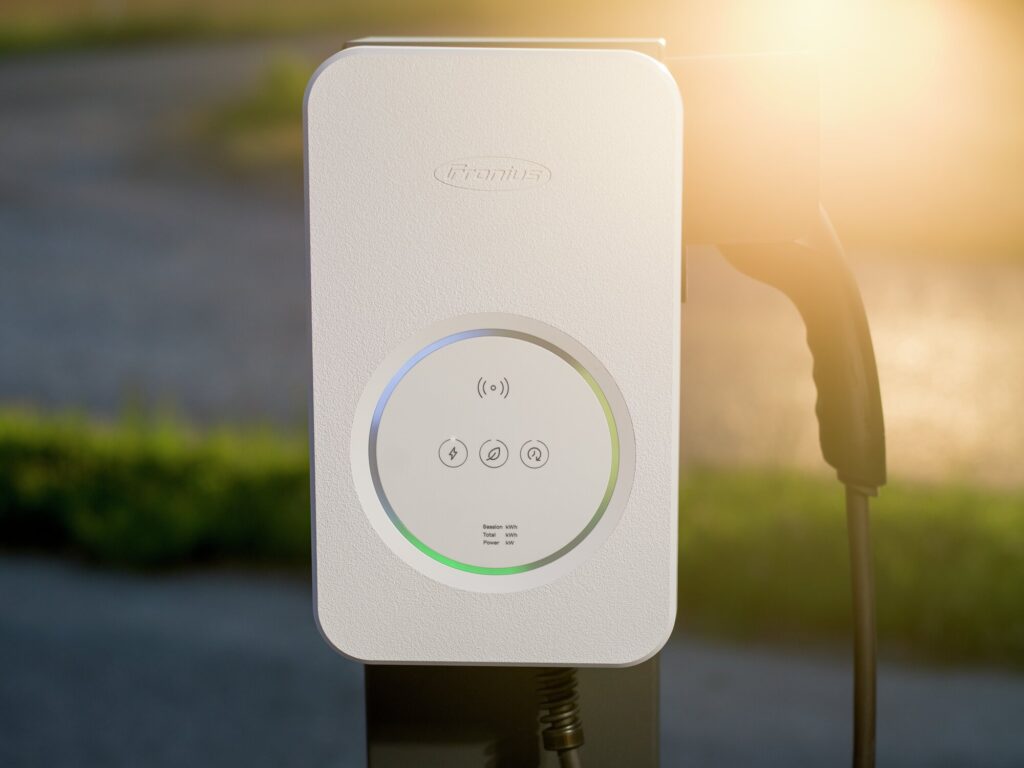
Additionally, the new Fronius Wattpilot Flex AC charger uses future-proof technology. It incorporates an ISO 15118 chip, which is essential for many new features, including AC bidirectional charging. While the hardware supports bidirectional functionalities, full Vehicle-to-Grid (V2G) capabilities depend on evolving standards, regulations, and especially vehicle compatibility.
Fronius is at the cutting edge of bidirectional charging technology. We are working on both AC and DC solutions. Our solar inverter technology is integral for this use due to its non-isolated topology. This creates a solution that is safe, cost-effective, proven to be reliable, lighter, and more efficient.
Our Commitment to Interoperability
Fronius is at the forefront of EV charging technology. We are a member of the Charging Interface Initiative (CharIN), a global organization advocating for interoperability based on the Combined Charging System (CCS). Through CharIN, Fronius aligns with leading EV manufacturers, utilities, and technology providers. We ensure our solutions are future-proof and adhere to global standards.
We are currently in talks with many EV OEMs regarding interoperability. These discussions show us that bidirectional charging is on the doorstep of becoming available to the broad public.
Conclusion
Bidirectional EV charging is a pivotal element of the worldwide energy transition. It supports renewable energy integration, grid resilience, and energy optimization. Fronius is at the forefront of cutting-edge technology in this field. We look forward to bringing high-quality products, fit for our energy ecosystem, to the market.