

If you are comparing solar quotes, the most useful question is not simply, “How much do solar panels cost?” It is, “What does this installed price actually include?”
A rooftop solar quote covers more than the panels. It can include the modules, inverter, mounting hardware, design, electrical work, installation, connection tasks, commissioning, monitoring setup and support. Site conditions and extra electrical work can also change the final price.
Australian Government guidance on solar quotes recommends that quotes clearly identify the system, equipment, installation costs, rebate deductions and additional work.
Latest Australian solar price index – as of July 2026
For context, the July 2026 Solar Choice index shows 5 kW systems from $4,250 in Perth to $8,470 in Darwin, 6 kW systems from $5,070 in Perth to $9,890 in Darwin, and 10 kW systems from $8,130 in Adelaide to $14,930 in Darwin. Its “All” row across the eight listed cities is $5,520 for 5 kW, $6,330 for 6 kW and $9,720 for 10 kW. These figures include GST and the upfront STC discount.
Solar Choice Residential Solar PV Price Index
These are indicative July 2026 market figures, not quotations or guaranteed prices. A homeowner’s actual quote may differ because of the property, location, chosen equipment and work required.
What determines solar panel costs in Australia?
System capacity is one obvious driver. A larger system needs more panel capacity and may require different electrical and installation work. However, capacity alone does not explain why two quotes for the same nominal kW can differ.
Location and site conditions matter. Roof access, pitch, material, shading, inverter location and electrical infrastructure can all affect design and installation effort. The Australian Government’s Solar Consumer Guide notes that switchboard or mains-wiring work may be required and recommends identifying such costs in the quote.
Equipment choices also affect the total. Different solar panels, inverters, mounting systems and optional components can have different specifications and warranty arrangements. The useful comparison is therefore not simply the price of one component but whether two quotes describe equivalent complete systems.
If you are still deciding what capacity may suit your household, read our guide to solar system sizing for your household. That article covers the sizing decision in detail, so we will keep the focus here on cost.
A good solar quote describes a complete piece of work, not only a collection of panels. Australian Government guidance says a quote should show the total cost, deductions from government rebates, equipment and installation costs, extra work, warranties and full terms and conditions.
There is no reliable universal percentage that says a fixed share of every residential solar quote must go to panels, the inverter, labour or another component. The mix changes with the system and property, so it is more useful to understand each category qualitatively.
| Cost component | What you are paying for |
|---|---|
| Equipment | Panels, inverter, mounting hardware, cabling and related components |
| Design and engineering | Site-specific layout, equipment selection, cable routes and connection requirements |
| Installation labour | Roof work, mounting, cabling, inverter installation and electrical connection |
| Commissioning | Testing, set-up and required handover or connection tasks |
| Monitoring | Set-up of included monitoring tools and customer access where applicable |
| Support | Warranty administration and after-sales support included in the offer |
Solar panels and other hardware
The panels are the most visible part of the system, but they are only one hardware category. A complete installation also requires mounting equipment, cabling and other balance-of-system components.
Panel choice can influence price through power rating, technology and warranty. However, panel price alone does not tell you the installed cost or establish the value of the complete system.
The inverter and system architecture
The inverter converts DC electricity generated by the solar panels into AC electricity for use in the home. Different inverter architectures can also lead to different system designs, so homeowners should compare the actual inverter configuration rather than assuming equal panel capacity means equal system scope.
When comparing quotes, check the exact make and model shown. The Australian Government recommends that quotes identify the make and model of the panels and inverter or microinverters.
System design and engineering
Design work can cover panel layout, inverter placement, cable routes, shading, equipment compatibility and connection requirements.
The Solar Consumer Guide recommends a site-specific design as part of the quote. It also notes that a design can change after a site visit, more detailed design work or distribution-network requirements. Where a change affects cost or expected generation, it should be communicated, explained and agreed.
This is an important part of cost anatomy because design work may be less visible to the homeowner than the equipment arriving on installation day.
Installation and labour
Installation can include mounting, cabling, inverter installation, switchboard connection and approved additional works.
A straightforward roof is not the same job as difficult access, long cable runs or a switchboard upgrade. The Solar Consumer Guide specifically identifies roof access, switchboard condition and other site complications as factors worth establishing before the work starts.
If the quote raises broader questions about who will carry out the work, our separate article covers choosing a qualified solar installer. This article stays focused on how installation scope affects price.
Commissioning and connection
The job does not necessarily finish when the panels are attached.
Depending on the state, territory and network, the overall process can involve electrical work, a distribution-network connection agreement and smart-meter installation or configuration. Australian Government connection guidance explains that the process depends on arrangements in the relevant area of the electricity grid.
When comparing prices, ask which commissioning and connection tasks are included and whether any separate charges could arise.
Monitoring, warranty and ongoing support
Where a system includes monitoring, its setup and the homeowner’s access to system information form another part of the ownership experience.
Warranty terms and post-installation support should also be read as part of the complete offer rather than considered only after the system is operating.
For broader guidance on quality, warranties and longer-term considerations, see what matters when choosing a solar system.
Why the inverter and energy system matter to long-term value
The inverter is not simply another line item in a solar quote. Its architecture can influence how the system is monitored, serviced and expanded, so it is worth asking what the selected inverter allows you to do after installation.
As one current Australian example, Fronius Solar.web enables compatible Fronius systems to display PV yield and, with a Fronius Smart Meter, household energy consumption. Fronius also uses Solar.web for eligible inverter product registration and warranty arrangements.
Warranty conditions vary by product and region, and warranty length should not be treated as a statement of product lifespan.
Serviceability is another ownership consideration. The practical question is not only how long a written warranty runs, but what support, monitoring and service processes sit behind the equipment if attention is required.
Future integration deserves attention at quote stage as well. Fronius’s current GEN24 Plus product guidance documents battery integration, system monitoring, backup functions, product registration and compatible batteries. Fronius also documents the ability to activate battery operation later on certain GEN24 configurations through its UP.storage software upgrade. Compatibility and available functions are model and configuration-specific, so homeowners should ask what future battery, backup or energy-management options their proposed inverter supports rather than assuming any battery can be added later.
Patrick Pragasam, who leads installer education for Fronius Australia, makes a useful distinction when considering warranty support:
“You’ve also got to remember a warranty is just a piece of paper.”
His broader point is that homeowners should consider who will support the warranty as well as what the written term says.
Should your quote allow for a battery now or later?
A battery-ready design may be worth discussing even if you are not buying storage immediately. Battery value depends on household consumption patterns, available surplus solar, electricity and feed-in tariffs, backup requirements, system cost and applicable incentives. It is therefore not automatically better to add a battery now, or to pay more for future capability you may never use.
For the detailed Australian battery-value analysis, see our guide to whether a solar battery is worth it in Australia. That article covers the battery decision in detail, so we will keep the focus here on how future compatibility can affect the scope of today’s solar quote.
The Australian Government’s Small-scale Renewable Energy Scheme provides incentives for eligible small-scale renewable-energy systems through small-scale technology certificates, or STCs.
Clean Energy Regulator STC guidance explains that eligible renewable-energy systems can create STCs and that the number of certificates depends on factors including geographical location, installation date and the amount of electricity generated or displaced.
For homeowners, this matters because the STC benefit can affect the upfront amount shown in a solar quote. The discount is not one fixed dollar amount for every rooftop solar system.
This is why price comparisons need to state whether the STC discount has already been deducted. The Solar Choice figures mentioned at the start of the article use July 2026 data and already include the STC discount and GST.
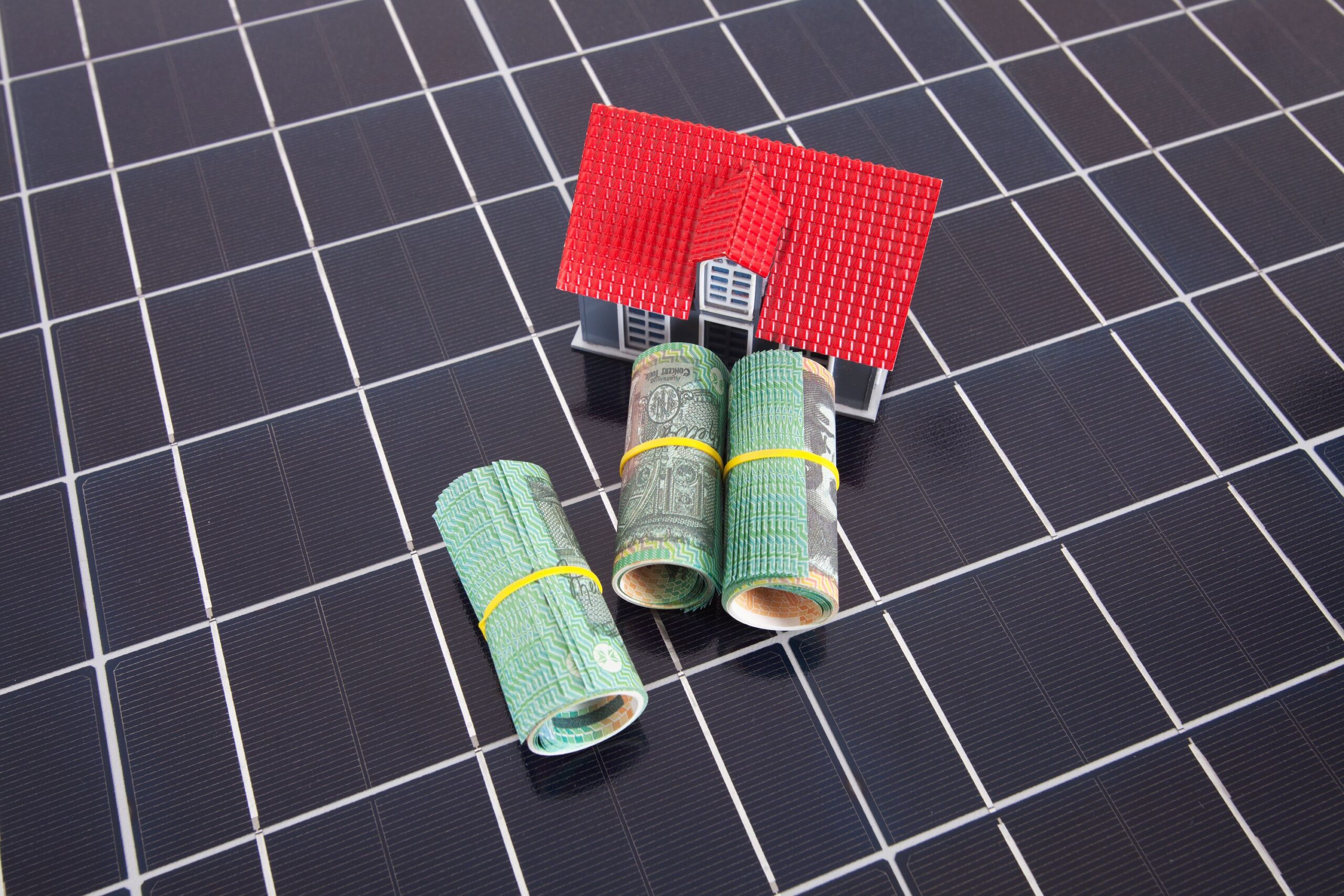
The simplest way to compare solar system prices is to establish whether you are comparing the same job. Australian Government guidance recommends obtaining multiple quotes and checking system size, equipment, site-specific design, total cost, rebate deductions, extra work, warranties and payment terms.
Compare equivalent system scopes
Start with capacity, but do not stop there.
Check whether the quotes specify the same or genuinely comparable panels, inverter configuration, mounting scope, monitoring, electrical work and connection responsibilities.
Before comparing prices, make sure you’re comparing like for like. Look at what’s included in each offer and identify any differences in scope, quality, features, terms, or services.
Check inclusions and exclusions
Look for costs that may sit outside the headline figure.
Examples can include switchboard upgrades, mains wiring, difficult access, long cable runs and other site-specific electrical work. Government guidance recommends that extra work and responsibility for completing it be clearly identified.
Also check whether the displayed total includes GST and whether the STC discount has already been applied. That reduces the risk of comparing figures calculated on different bases.
Understand what a lower price may omit
A lower quote may represent good value, or it may represent a different scope.
The difference could sit in equipment, design, electrical work, monitoring, commissioning, warranty terms or support. A higher price is not automatically better either. The difference needs to be understood.
Questions to ask specifically about the quoted price
Before accepting a quote, establish:
- whether the displayed total includes GST and the STC discount;
- exactly which equipment and installation work are included;
- whether site-specific electrical work has been allowed for;
- whether connection and commissioning tasks are included;
- what circumstances could cause the price to change; and
- which items are specifically excluded.
These questions stay focused on quote composition and price. Broader installer-selection and general solar-buying considerations are covered in the dedicated Fronius articles linked above.
Frequently asked questions about solar panel costs in Australia
Does a solar quote normally include installation?
The quote should make this explicit. Australian Government guidance recommends showing equipment and installation costs, extra work and the total price. Do not assume every advertised solar price represents the same scope.
Are STCs already included in advertised solar prices?
Not necessarily. Solar Choice’s July 2026 index includes the upfront STC discount, but individual advertisements and quotes may be presented differently. Check how the actual quote treats STCs before comparing prices.
Why can the same size solar system have different prices?
The nominal kW capacity does not describe every part of the job. Equipment, roof access, electrical upgrades, design, commissioning, connection work and support can differ even where two systems have the same capacity.
Is a more expensive solar system always better?
No. Price alone does not establish quality. A price difference should be supported by clear differences in equipment, scope, design, warranties, installation requirements or service.
Should I compare solar quotes by dollars per watt?
Dollars per watt can provide a quick way to normalise price against system capacity, but it does not show whether equipment and installation scopes are equivalent. Use it as context rather than the sole basis for a decision.
What should I ask if one solar quote is much cheaper?
Ask what is included and excluded, whether GST and the STC discount are reflected, what equipment is specified, what electrical work has been allowed for and what could trigger a price variation.
Solar panel costs in Australia make more sense when you compare like-for-like system scopes rather than isolated headline figures. Use current, dated price benchmarks as context, then check the equipment, design, installation, commissioning and support included in each quote. The best comparison is the one that makes clear what you are paying for, what is excluded and what could change before installation.