

When something goes wrong with a solar system, the logo on the component does not automatically tell you who should deal with the problem.
In Australia, the starting point often depends on who sold you the system and how the products and installation were contracted. The ACCC’s current solar-specific guidance says that where a consumer paid one business for both the solar products and installation, that business is generally responsible for providing a remedy if something goes wrong, even if it subcontracted the installation. If the consumer paid one business for the products and another for installation, the retailer generally deals with product problems and the installer with problems caused by the installation.
That is general ACCC guidance, not a determination of liability in every individual case. The cause of the fault, contract, applicable consumer rights, warranty terms and individual circumstances can still affect the outcome.
The practical question is therefore not simply, “Who is responsible?” It is:
Who should I contact first, what evidence should I gather, and what determines where the issue may go next?
Solar system warranty problem? Start here.
Use this pathway when a system stops working, an inverter shows a fault, generation drops unexpectedly or you suspect installation work:
- In most cases, the same installer company both supplies the products and completes the installation. If you experience an issue with your solar system, simply contact the installer who sold and installed the system, as they are generally your first point of contact for support and warranty assistance.
- Contact the product supplier for product-related concerns and the installer for installation-related concerns if you purchased the products and installation from different businesses. If you are unsure of the cause, describe the issue to either party and they can help determine the appropriate next steps.
- Gather your records. Keep the contract, invoice, product details, serial numbers, photographs, monitoring information and correspondence together.
- Ask for the diagnosis and proposed remedy in writing where possible.
- Identify which protection may be relevant. This could be a product warranty, performance warranty, inverter warranty, workmanship commitment or Australian Consumer Law rights.
- Escalate through the appropriate complaint pathway if the matter remains unresolved.
The key is to keep symptoms, diagnosis, warranty and ultimate responsibility separate. ACCC guidance specifically states that the responsible business may depend on whether one business supplied both the products and installation, or whether separate businesses supplied each service. In most cases, you would engage a single installer who both supplies the products and completes the installation as part of one transaction.
Who is responsible for what in an Australian solar system?
A residential solar system can involve several different parties. Their roles can overlap, but they are not interchangeable.
| Party | Typical role | Why it matters when there is a problem |
|---|---|---|
| Installer | Sells the system or equipment to the homeowner | If this business supplied the products, it is a key contact for product-related consumer issues |
| Installer | Carries out the physical and electrical installation | Installation-related problems may need to be assessed and addressed through the installer |
| Solar installation business (with subcontracted installers) | Sells the products and installation under one transaction to homeowners | ACCC guidance says this business is generally responsible for providing a remedy if something goes wrong, including where installation was subcontracted |
| Equipment supplier or distributor | Supplies equipment through the commercial supply chain | May participate in a manufacturer or product-warranty process, depending on the arrangements |
| Panel manufacturer | Manufactures the modules and may issue product and performance warranties | Its written warranty may be relevant, but it does not replace automatic consumer rights |
| Inverter manufacturer | Manufactures the inverter and may offer its own warranty and support process | May become involved when diagnosis and the applicable warranty pathway point to the inverter |
| Battery manufacturer | Manufactures the battery and may offer its own warranty and support process | May become involved when diagnosis and the applicable warranty pathway point to the battery |
| Homeowner | Holds the purchase, warranty and system records | Clear records can make it easier to establish what was bought, from whom and what has happened |
| Consumer-protection or dispute body | Provides information, conciliation or another dispute pathway | May become relevant if the business does not resolve the issue |
The ACCC reinforces this contractual distinction through its current guidance for solar systems and home batteries.
If you are still choosing a provider rather than dealing with a post-sale problem, our guide to how to choose a solar installer covers that earlier decision.
What is a Product warranty, performance warranty, workmanship warranty or consumer guarantee?
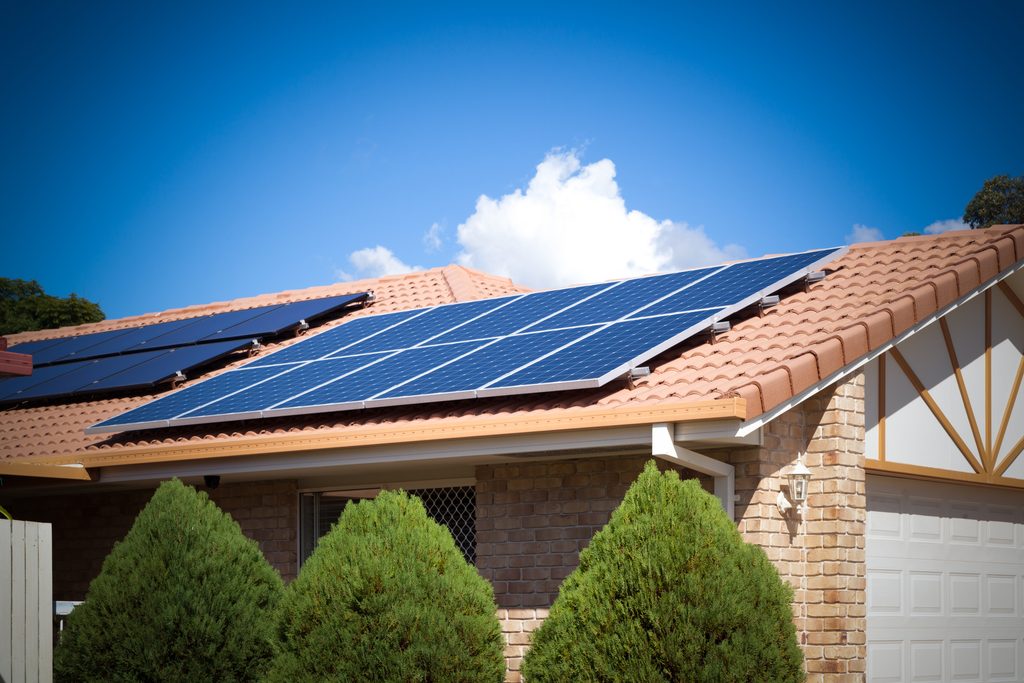
Solar panel product warranties
A solar panel product warranty is a written promise from the manufacturer or other warranty provider covering the panel according to stated terms and conditions meaning it covers defects in materials or manufacturing.
Coverage, exclusions, claim requirements and duration vary by product. Keep the warranty documents for your actual system rather than relying on a generic industry figure.
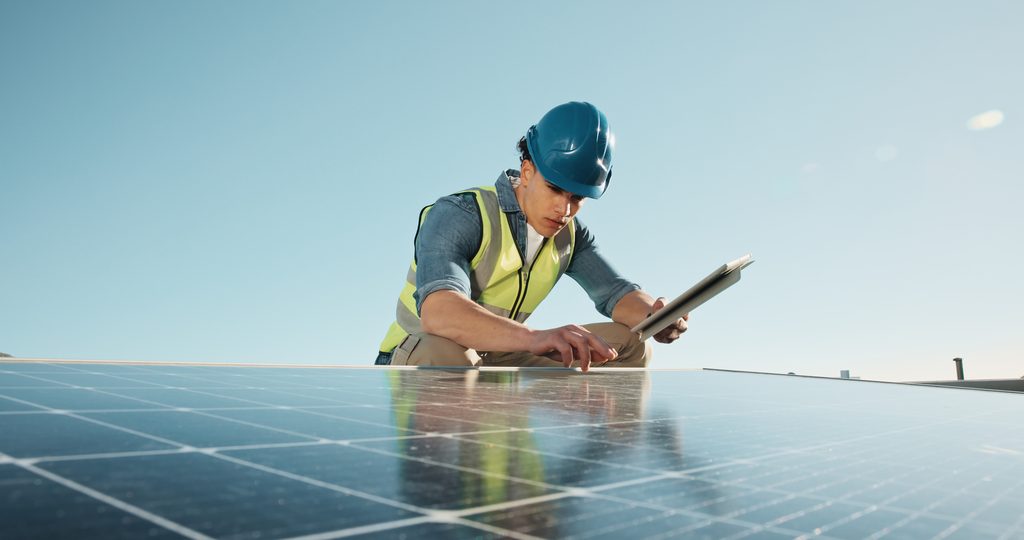
Solar panel performance warranties
For example: A performance warranty may promise that a solar panel will retain a certain percentage of its original power output after a specified period, such as 84-90% after 25 years.
The Australian Government Solar Consumer Guide distinguishes product warranties from panel performance warranties and notes that performance warranty claims can be difficult to enforce. A performance warranty sets expectations for a solar panel’s output over time, but it does not guarantee that a solar system will produce the same amount of energy every year. Weather conditions, shading, system design and maintenance can all affect generation.
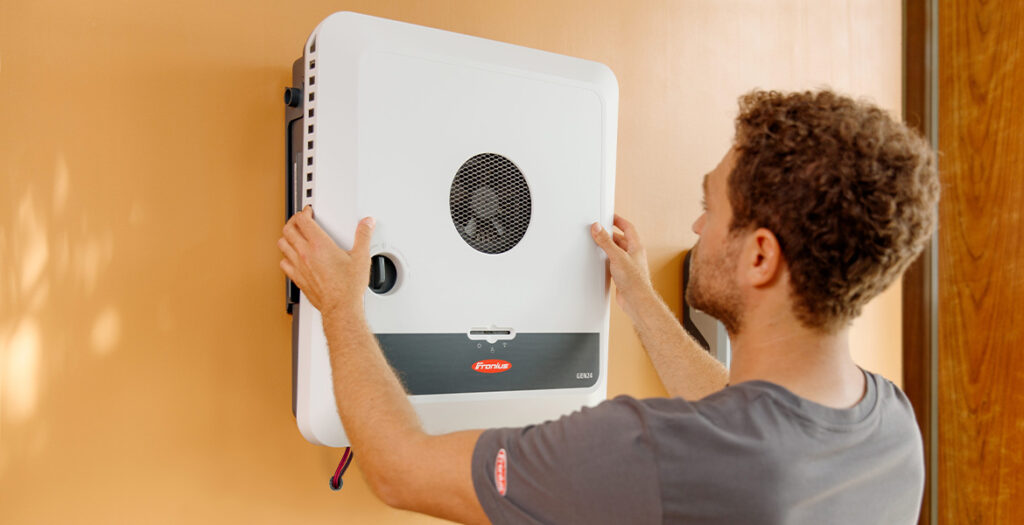
Solar inverter warranties
The inverter has separate warranty terms from the panels. A solar inverter warranty may contain its own registration, coverage and claim conditions. An inverter fault code does not by itself prove that the inverter is defective or determine who is legally responsible. Diagnosis comes first.
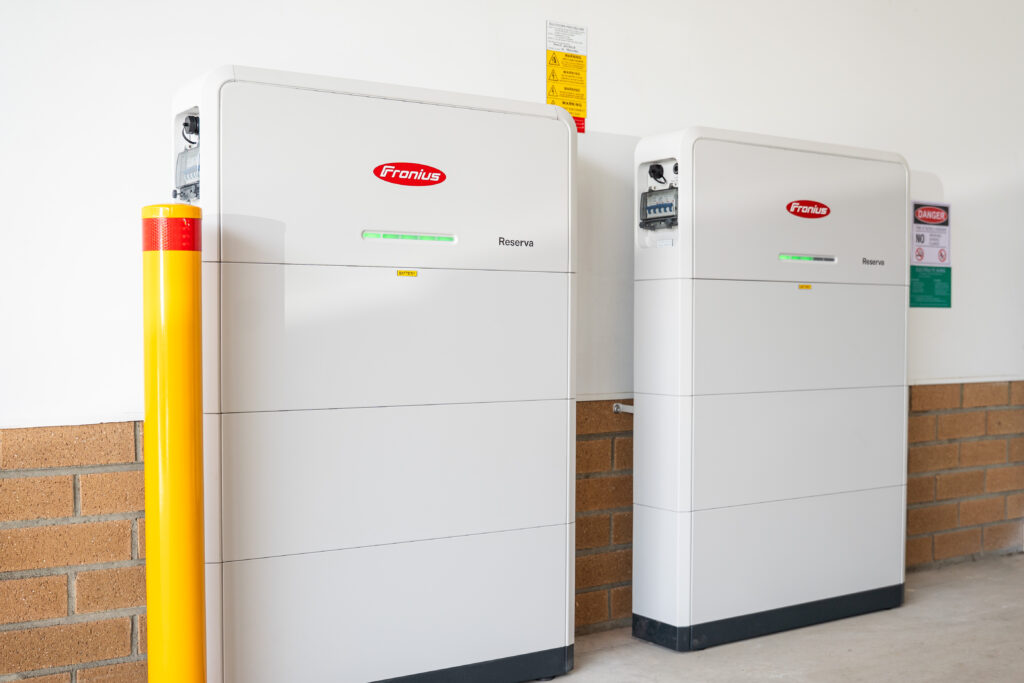
Solar battery warranties
Each solar battery comes with its own warranty terms and conditions, separate from other solar system components. Diagnosis comes first.
Installation and workmanship warranties
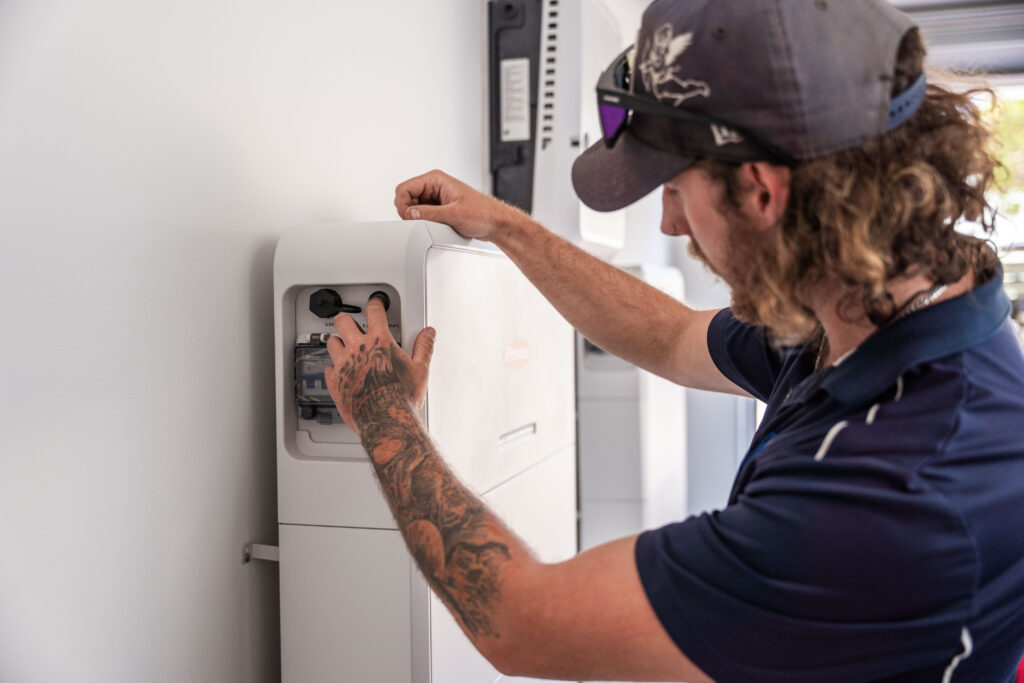
A solar installation warranty or solar workmanship warranty relates to the installation work according to its terms. It is different from a manufacturer’s product warranty.
Roof penetration, cabling issue or other installation concern may therefore follow a different practical pathway from a defective panel or inverter.
A written warranty and your automatic consumer rights are not the same thing
Under Australian Consumer Law, eligible products and services come with automatic consumer guarantees. ACCC guidance states that these rights are separate from warranties and cannot be excluded by a warranty or contract.
For solar specifically, the ACCC says that if you paid one business for both the products and installation, that business is generally responsible for providing a remedy if something goes wrong, even where it subcontracted installation. If you paid one business for the products and another for installation, the retailer generally deals with product issues and the installer with issues caused by installation.
Consumer Guarantees vs Manufacturer Warranties
Having a manufacturer’s warranty does not take away your consumer rights. If something goes wrong, you can contact the business that sold you the product. They cannot simply send you to the manufacturer and refuse to assist. While it may take some investigation to work out what caused the issue and who is responsible for fixing it, the seller must still help you with any claim covered by Australian Consumer Law.
The expiry of a written warranty also does not automatically prove that every possible Australian Consumer Law remedy has expired. Consumer guarantees are separate from voluntary warranties, and whether a particular remedy applies depends on the circumstances.
For broader pre-purchase guidance about system quality, warranties and long-term support, see what matters when choosing a solar system.
What happens when something actually goes wrong?
Use the following map as a practical starting point, not a declaration of legal liability:
| Scenario | Where to start ordinarily | Evidence to gather | What may determine the next step |
|---|---|---|---|
| A component (panel, inverter, battery, etc.) appears faulty | The Installer who installed the system | Invoice, contract, product details, serial number, photos, monitoring history | Diagnosis, contract structure, product warranty and ACL rights |
| The inverter reports a fault or stops operating | The Installer | Inverter model and serial number, fault information, monitoring records, purchase and commissioning records | Technical diagnosis and applicable inverter warranty/support terms |
| The system generates less than expected | The Installer | Monitoring history, dates, system design information and relevant generation records | Whether the cause is equipment, installation, environmental conditions or another factor |
| Installation workmanship is suspected | The Installer | Contract, installation records, photographs and chronology | Technical assessment, contract and workmanship/consumer rights |
| Original installer has ceased trading | Reconstruct the transaction and identify the product and warranty issuers | Invoice, contract, product identity, warranty documents and correspondence | Which business closed, type of fault, manufacturer warranty terms and available consumer pathways |
| Manufacturer says installation caused the problem | Return to the installer with the response | Manufacturer correspondence, installation records and technical evidence | Further assessment, contract arrangements and dispute pathway |
| Installer says equipment caused the problem | Ask for the diagnosis in writing, as the installer is your first point of contact he is responsible to deal with the manufacturer | Installer diagnosis, serial number, fault records and proof of purchase | Product retailer/manufacturer process and supporting technical evidence |
| Documentation is missing | Reconstruct the record before assuming a claim cannot proceed | Emails, bank records, photos, serial numbers and monitoring account | What evidence can establish the sale, equipment and warranty |
| Claim is delayed, disputed or rejected | Ask the business/installer for a written reason | Full correspondence and chronology | Formal complaint and the appropriate state, territory or industry pathway |
The table gives practical starting points. It does not determine legal liability in an individual dispute.
What to have ready before making a solar warranty enquiry
A clear evidence file can make a warranty or consumer complaint easier to follow. Where available, gather:
- sales contract, invoice or other proof of purchase;
- name and contact details of the business that sold the system or equipment;
- installer details;
- installation and commissioning records;
- panel and inverter make and model;
- product serial numbers;
- warranty documents and registration records;
- photographs of visible issues where they can be taken safely;
- inverter fault or error information;
- monitoring records showing when the problem began;
- relevant generation records if underperformance is the concern;
- previous emails, letters and other correspondence; and
- a dated chronology of the problem and the steps already taken.
Keeping purchase records and complaint correspondence is consistent with Australian consumer-agency guidance on resolving disputes.
Do not climb onto the roof, open electrical equipment or perform electrical testing simply to collect evidence. Use information that can be obtained safely and engage an appropriately qualified person where technical inspection is required.
A Fronius example: registration and system records
For some Fronius products, additional steps are required to access certain warranty benefits. For example, eligible Fronius inverters commissioned on or after 1 June 2026 must be registered in Fronius Solar.web to qualify for a free warranty extension. Solar.web uses the inverter’s serial number and, for compatible Fronius systems, can also provide access to historical system information.
Different products may have different warranty requirements. For example, Fronius Smart Meters and Fronius Ohmpilots cannot be registered for an extended warranty through Solar.web. For these products, your purchase invoice serves as proof of warranty. Batteries supplied by other manufacturers are covered by their own warranty terms and conditions.
Registering a product or keeping proof of purchase does not automatically guarantee that a warranty claim will be approved. We assess all warranty claims against the applicable warranty terms, product conditions and the specific circumstances of the claim.
The key takeaway is simple: keep your invoices, registration details and warranty documents, and make sure you know which manufacturer or business provides the warranty for each product in your system. Doing so can make the warranty process much smoother if you ever need to make a claim.
What if the installer is no longer trading?
Do not assume that the equipment manufacturer automatically inherits every obligation of a closed installer.
The pathway depends on who sold the products and services, which business has closed, the type of problem, the warranties that still apply and any consumer-law remedies available. The ACCC itself notes that obtaining a remedy can become more difficult when a solar business has closed or become insolvent.
South Australian consumer guidance gives one practical example:
If an installer business has closed down, consumers can contact the manufacturer directly. That is a possible route to explore, not a rule that makes the manufacturer responsible for every problem previously handled by the closed installer business.
If a solar business disappears, gather the purchase documents first. Identify who sold the system, who installed it, the panel and inverter manufacturers and the issuer of each written warranty. Then use the applicable state or territory consumer-protection pathway for guidance.
What if the installer and manufacturer disagree about the cause?
If the installer says the equipment is faulty and the manufacturer says the installation caused the issue, you have a disputed cause.
Ask each party to put its assessment in writing. Keep fault codes, monitoring records, photographs, reports, inspection dates and correspondence together.
Monitoring data can show what the system was doing and when a problem appeared. It should not be treated as proof of the legal or technical cause unless an appropriate assessment supports that conclusion.
What if a claim is rejected or keeps being delayed?
Ask for the decision or delay to be explained in writing.
Set out:
- what you bought;
- when you bought it;
- what has gone wrong;
- what action has already been taken;
- what response you have received;
- what evidence you hold; and
- what outcome you are seeking.
If the matter remains unresolved, the next step depends partly on where you live and the type of business involved. Current Australian Government solar guidance sets out different pathways for different jurisdictions and for authorised electricity retailers.
Where can Australian homeowners escalate an unresolved solar dispute?
The Australian Government Solar Consumer Guide separates the pathways according to jurisdiction and, in some cases, the type of business that sold the system.
NSW, Queensland, South Australia and Victoria
If you bought the system from a solar retailer or installer that is not an authorised electricity retailer, the Solar Consumer Guide says to:
- contact the solar retailer or installer and explain the problem;
- make a written complaint if the issue is not resolved; and
- approach the relevant state fair trading or consumer affairs office if the company still does not resolve the issue.
The relevant agencies are Fair Trading NSW, Queensland Office of Fair Trading, Consumer and Business Services South Australia and Consumer Affairs Victoria.
If the business that sold the system is an authorised electricity retailer, the pathway is different. Contact the electricity retailer first. If you remain unhappy with its response, the Solar Consumer Guide directs consumers to the relevant energy and water ombudsman in NSW, Queensland, South Australia or Victoria.
ACT, Northern Territory, Tasmania and Western Australia
For systems bought in the ACT, Northern Territory, Tasmania or Western Australia, the Solar Consumer Guide says to contact the solar retailer or installer first. If the issue is not resolved, the relevant ombudsman may be able to assist depending on the nature of the complaint. The guide then provides a further pathway to the relevant fair trading or consumer affairs office if required.
For the Northern Territory specifically, Northern Territory Consumer Affairs provides a complaints-and-disputes pathway. Its current guidance says Fair Trading officers may be able to help through conciliation where a consumer cannot resolve a problem directly with a business.
Complaints about a NETCC Approved Seller
If the business is a New Energy Tech Consumer Code Approved Seller, the Solar Consumer Guide says a complaint can also be lodged through the Clean Energy Council. The Clean Energy Council administers the NETCC program and states that its complaint capacity applies to retailers participating in its programs.
This is an additional industry pathway. It does not replace applicable consumer-law or state and territory complaint options.
Complaints about a Solar Accreditation Australia accredited installer
Solar Accreditation Australia accredits individual installers and designers. It does not have general authority over a retailer or company simply because that company sold a solar system.
SAA provides a complaints and non-compliance process for relevant issues involving accredited people and solar or battery installation non-compliances. SAA also states that where a report falls outside its responsibilities, it provides information about alternative complaint pathways.
This distinction matters. A complaint about a retailer’s sales conduct, contract or general company behaviour is not automatically an SAA installer-accreditation matter. The issue must relate to an accredited person or conduct within SAA’s remit.
The appropriate pathway depends on the contract, business type, issue and jurisdiction, so use these organisations for guidance and dispute resolution rather than assuming a particular outcome.
Frequently asked questions about solar warranties
Who should I contact first if my solar system stops working?
Your installer is normally your first point of contact. Start by identifying the business that supplied your solar system and carried out the installation.
ACCC solar guidance states that a business that supplied both the products and installation is generally responsible for providing a remedy if something goes wrong, even where installation was subcontracted.
Is the installer responsible if my inverter fails?
Not automatically. A fault code does not establish whether the cause is the inverter, installation or another issue. The contract structure and diagnosis help determine the appropriate practical and legal pathway.
Is a solar panel performance warranty the same as a product warranty?
No. They cover different promises. The Australian Government Solar Consumer Guide distinguishes the two and notes that performance-warranty claims can be more difficult to enforce.
Does an expired written warranty mean I have no consumer rights?
Not necessarily. ACCC guidance says consumer guarantees are automatic and separate from voluntary warranties. Those rights may continue beyond the written warranty period depending on the product, service and circumstances.
What if my installer blames the manufacturer?
Ask for the diagnosis in writing. If the manufacturer disagrees, retain both responses and the technical evidence. The next step may involve further assessment, the seller, the relevant product-warranty process or a dispute-resolution body.
Does registering an inverter guarantee a warranty claim?
No. Registration can be a requirement for particular warranty arrangements, but claim acceptance remains subject to the applicable warranty terms, product, regional conditions and circumstances.
Know where to start before deciding who is responsible
A solar warranty problem is easier to navigate when you separate four things: the symptom, the diagnosis, the warranty or legal right that may apply, and ultimate responsibility.
First identify who sold you the products and installation. Then document the problem and establish what appears to have caused it. From there, follow the relevant retailer, installer, warranty or consumer-protection pathway.
The goal is not to guess who is at fault from the component that stopped working. It is to start with the right contractual relationship, gather evidence and move the issue to the appropriate next step.
General information only: This article provides general Australian consumer and solar-warranty information. It is not legal advice.