“Look to the south!” is always the guiding principle when installing solar modules. Or is it? It is true that south-facing solar panels are the most productive for generating solar power in the northern hemisphere, but it’s not the only option. In this blog you will learn all about the best orientation for solar panels, the advantages of alternative system designs, what the so-called “azimuth angle” is all about, and what role the module tilt angle plays in the energy production.
Anyone building a house today is often planning a solar power system at the same time. And while each home is unique, one question remains the same: what is the best orientation for my solar panels to optimize the yield? As we have already mentioned, south-facing modules are ideal for fully exploiting the system’s potential. As the sun rises higher and higher over the course of the morning, it reaches its highest radiation intensity in the south at around midday.
Homeowners can often prepare their properties for later installation of a photovoltaic system and, if necessary, keep space free on the roof for south-facing solar modules. However, not every new building—and certainly not every existing building—can have a south-facing roof surface. What’s more, they don’t have to.
South is not the only direction for solar panels
So what alternatives are there for buildings that were constructed several years or even decades ago? Back then no one was considering the possibility of homeowners one day harnessing the power of the sun to generate energy. In some cases building regulations even prevented a south-facing roof surface entirely. And even if there is one, neighboring buildings and trees can partially or completely shade the roof and thus significantly reduce the energy output.
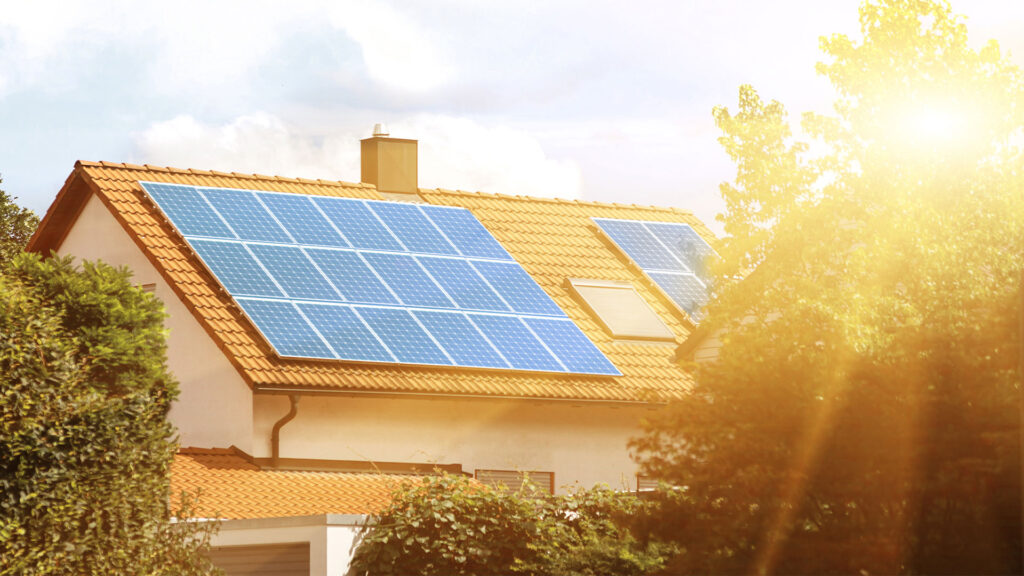
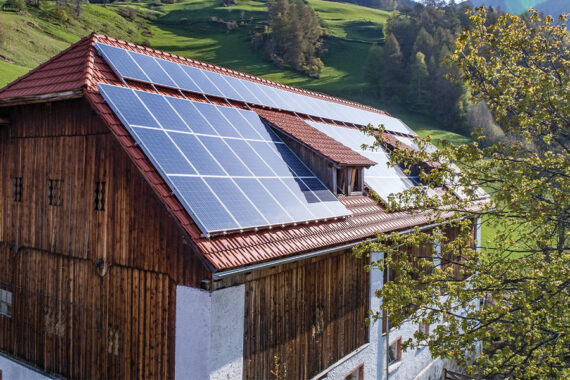
This is why many buildings have a pitched roof facing east and west—the predominant roof shape in large parts of Europe. “However, that doesn’t mean that homeowners have to do without solar power entirely,” explains Robert Reinbrech, solar expert at Fronius International. “Even if a south-facing orientation delivers the highest yield, most other PV orientations also make economic sense.”
The following table illustrates the different orientation options for solar panels:
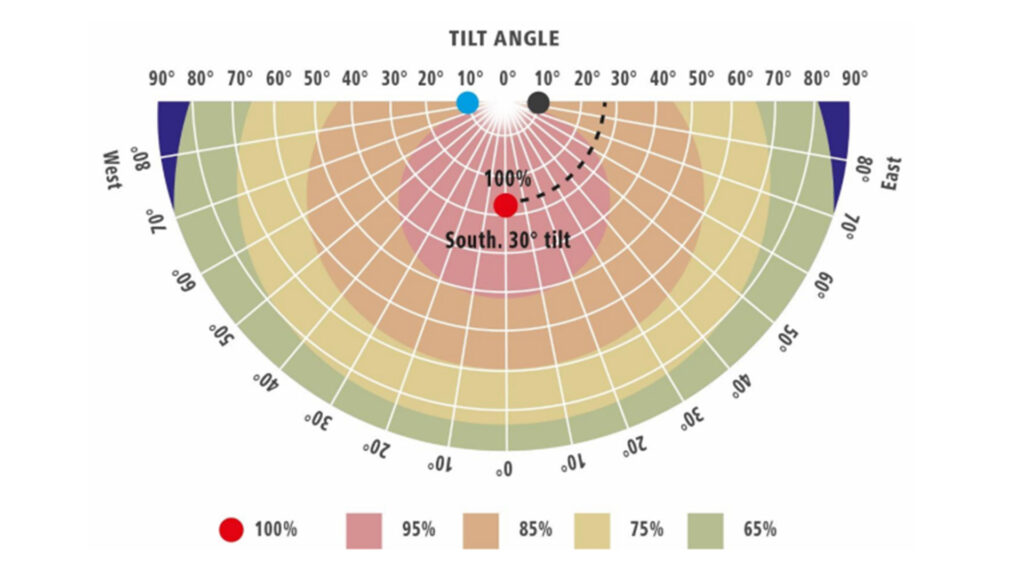
| South-west or south-east | These systems generate 95% of the maximum yield and thus only 5% less than south-facing systems. |
| East | Compared to a southern orientation, PV systems facing east produce around 20% less solar power. |
| West | The story here is the same as with the east-facing systems mentioned above: they generate around 80% of the maximum yield. The difference here is that more electricity is generated in the second half of the day than in the morning. |
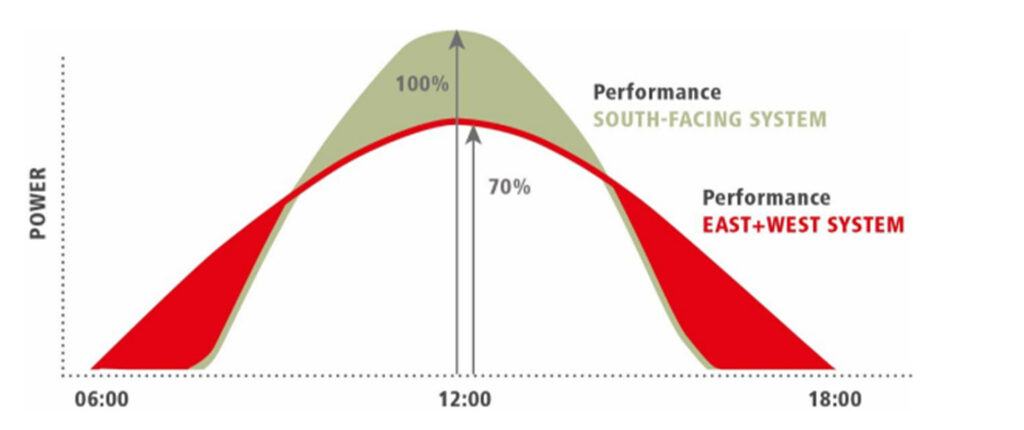
| Combination of east and west | A combination of modules facing east and west (often referred to as an east-west orientation) also leads to a yield loss of around 20%. The losses are particularly noticeable in winter, when the sun rises later and is further south. |
| North | Does a north-facing PV make sense? Between 30 and 50% less solar power can be generated from north-facing solar panels than from southern ones. This makes PV systems of this type uneconomical in many cases. |
Opting for an east-west solar panel orientation
As shown in the table above, east-west oriented solar panels are associated with yield losses, but they also offer significant advantages.
While solar modules facing south reach their peak output around midday and thus potentially generate large PV surpluses, an east-west orientation offers much more even power generation from sunrise to sunset. Reinbrech adds: “Even if the components rarely or even never reach their maximum potential output in this constellation, the continuous supply of solar power often reduces the financial burden on households more than a south-facing system—especially in homes without a battery storage solution. East-west systems ensure a moderate amount of energy is available for self-consumption throughout the day, including in the mornings and evenings when the energy requirements for many families peak. After all, this is usually when we get the coffee machine brewing, load the washing machine, or put the TV on.”
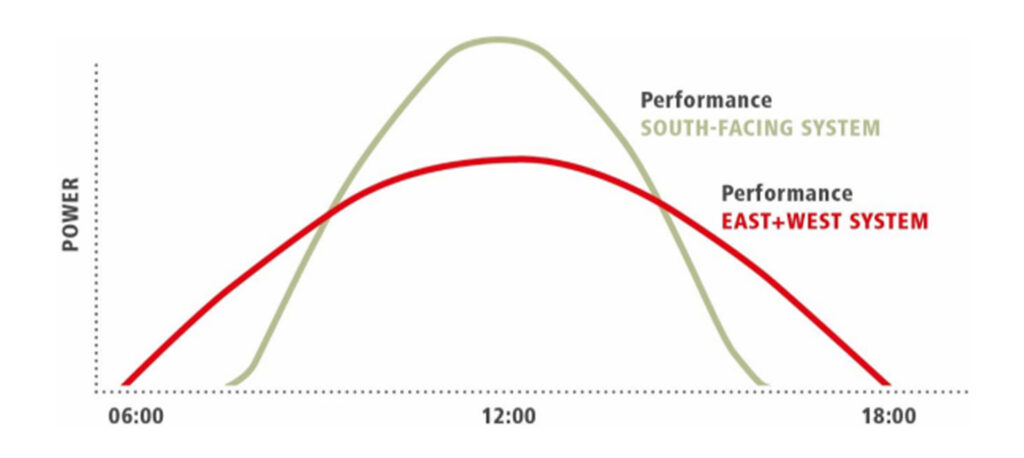
There is a further advantage of east-west systems that should not be underestimated: if solar modules and inverters are not running at full load, their components will not reach critically high temperatures. This not only protects the components themselves but increases their service life. It may even be worth opting for an inverter with a lower output to reduce the purchase costs.
What is the azimuth angle and why is it important for solar panels?
Whether a solar power system is aligned to the south, east, or west can be easily determined by the azimuth angle. But how? All is revealed below.
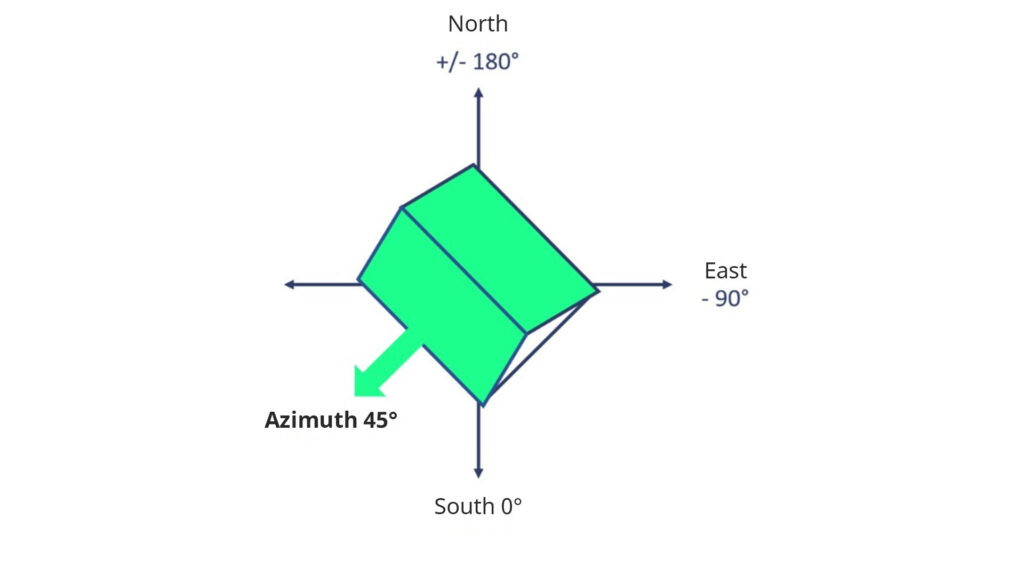
The azimuth angle determines the deviation from the horizontal and can be a maximum of 180 degrees on a sphere such as the Earth. In applications such as cartography and astronomy, it indicates the deviation from true north. For photovoltaic systems, on the other hand, it denotes the deviation from “true” south.
The combination of azimuth and tilt angle ultimately determines how much of the theoretical maximum yield a PV system can generate.
In concrete terms, this means:
/ The azimuth angle at the exact south is 0 degrees—and this is where the maximum solar power is generated.
/ An azimuth angle of 90 degrees indicates an orientation to the west, while -90 degrees is to the east.
/ A 45 degree angle means an orientation to the south-west and -45 degrees is south-east.
/ North corresponds to an azimuth angle of 180 degrees.
Optimum tilt angle for solar panels means optimum energy output
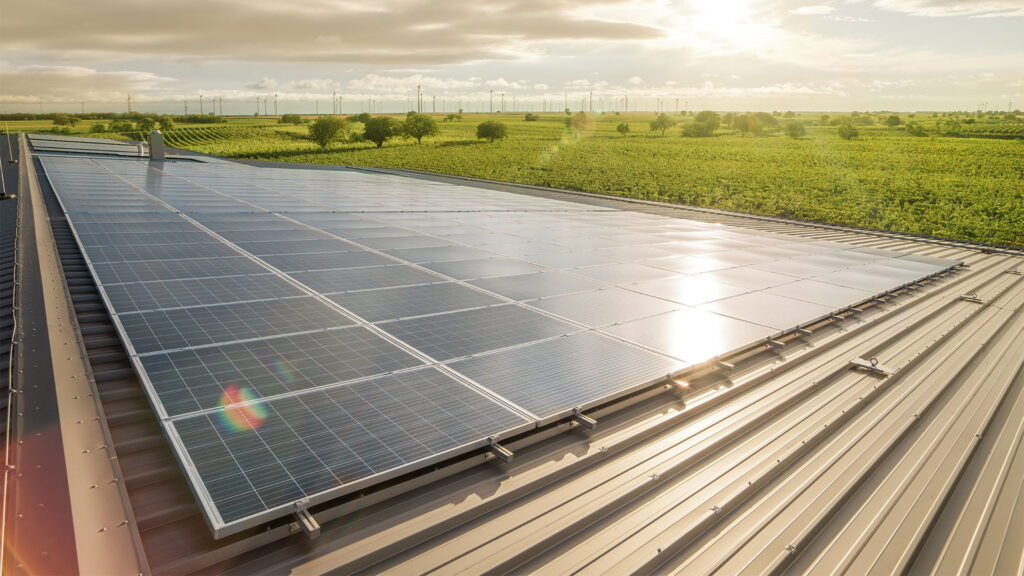
Let’s move on from the azimuth angle to the tilt angle. After all, the sun’s rays should not only hit the PV modules for as long as possible, but also at the right angle. In central Europe, a tilt angle of around 30 degrees is ideal for extracting the most power from your photovoltaic system.
Attentive readers might now be asking themselves: doesn’t the irradiation angle change over the course of the year? After all, the sun is much lower in winter than in summer. “This observation is absolutely correct. In winter, a greater tilt angle of more than 60 degrees would be advantageous in order to generate the maximum yield. The suboptimal tilt angle causes yield losses of a few percentage points in the colder months of the year. Yet in terms of actual kWh, this loss is quite limited due to the fewer solar hours and low irradiance during winter,” says the Fronius solar expert reassuringly.
Which is better: flat or pitched roofs?
There is no general answer to this question. With pitched roofs, the most important thing is how steep they are. If the tilt angle happens to fall within the optimum range for the latitude in question, it is the best option. However, steeper pitched roofs can also be used for solar panels with a slight loss of yield over the year and even supply slightly more solar power in winter than roofs with a lower pitch. An additional advantage of steeper tilt angles is that it’s harder for dirt to adhere to the PV module surfaces, which reduces maintenance costs and increases yield. Installing solar modules on pitched roofs is uncomplicated and usually does not require any roof stands.
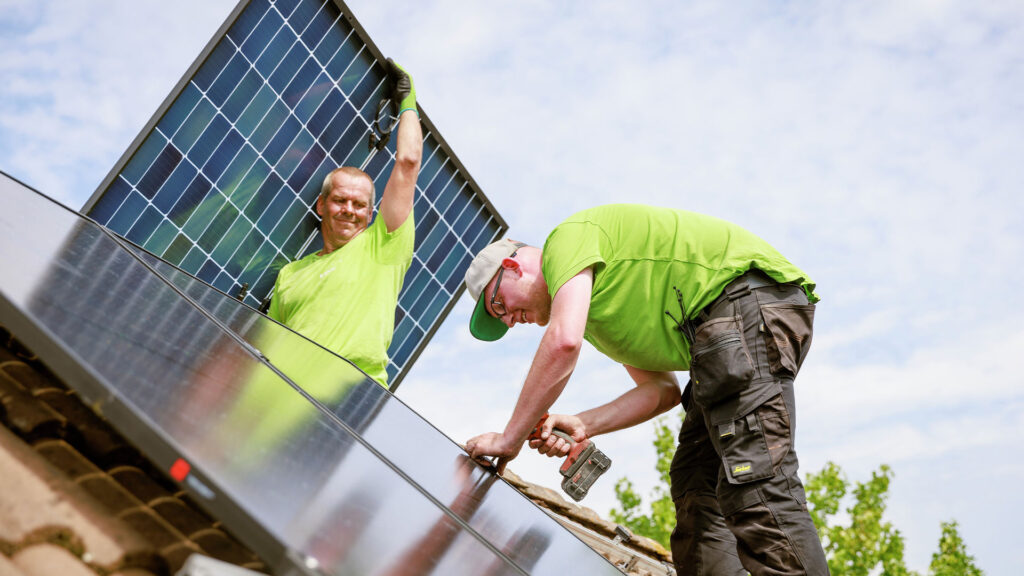
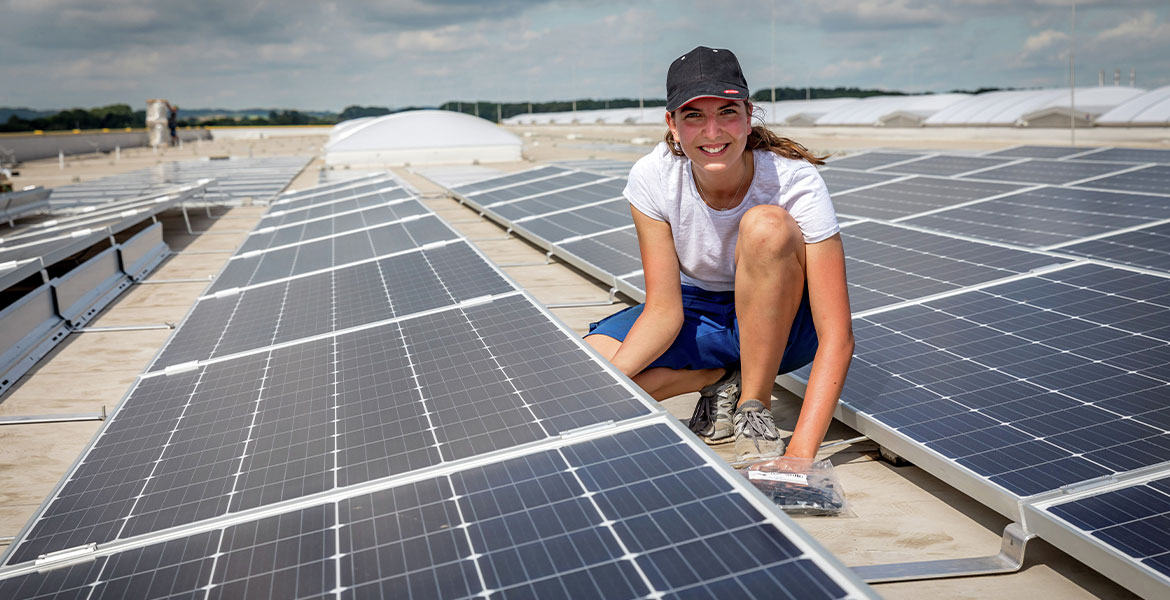
With flat roofs, on the other hand, costly stands are usually required to increase the tilt angle and thus the PV yield. Flatter stands of 10 to 15 degrees have proven to be the best solution here, reducing both shading from other modules as well as the surface area exposed to the wind. The advantage of flat roofs lies in the flexible alignment and orientation options, meaning that potentially higher yields are possible.
East-west systems in particular work extremely efficiently on flatter roofs with a tilt angle of 10 to 15 degrees. At this angle, the solar modules capture more of the early morning and late evening sun, which hits the earth at a flatter angle.
In this article, we have focused exclusively on rooftop and in-roof systems. Find out how you can benefit from façade systems and PV fences here.
The right solar panel orientation? It’s all a question of perspective
So, as you can see, if a continuous supply of a moderate amount of solar power is required from morning to evening, an east-west orientation is ideal for most households—especially those without a battery storage solution.
However, if you want to get the absolute most kilowatt hours out of all the components in your PV system, you are better off with a south-facing setup (provided that the structural conditions allow it, of course). It should be noted that the largest amount of solar power is generated around midday and the yield in the morning and evening is negligible, so households with a battery can really benefit from the extra solar power.
Slight deviations from exact south do not result in dramatic yield losses. Only north-facing solar panel systems can be uneconomical.
The direction in which the solar modules should be aligned naturally also depends on the geographical location of the planned PV system. In the northern hemisphere, south-facing systems offer the maximum potential solar yields. In the southern hemisphere, however, the situation is exactly the opposite. Here, the modules need to face north to maximize the potential PV yield.
The ideal tilt angle also varies from region to region. At higher latitudes, higher tilt angles are better because the sun is “lower” in the sky. The closer a PV module is to the equator, the smaller the tilt angle should be.
Flat and pitched roofs are equally suitable for photovoltaic systems. While installation costs are lower on pitched roofs, the flexible system design possible on flat roofs allows for potentially higher yields.
One thing is certain: with today’s solar technology, a PV system can be installed economically on almost any house. Failing to exploiting the potential of your own roof will cost homeowners more in the long term than a one-off investment in a photovoltaic system.