Twenty-seven years ago, 30 of the first Fronius solar inverter, the Fronius Sunrise, were installed in Vorarlberg, Austria. Since 1999, they have formed the core of an extraordinary photovoltaic system with a facade construction. This is a statistical outlier, as the average lifespan of a solar inverter is half that. Why do some power converters last longer than others? What factors play a role, and how can you extend the the service life of your own device? Discover our essential tips for longer solar inverter lifespan.
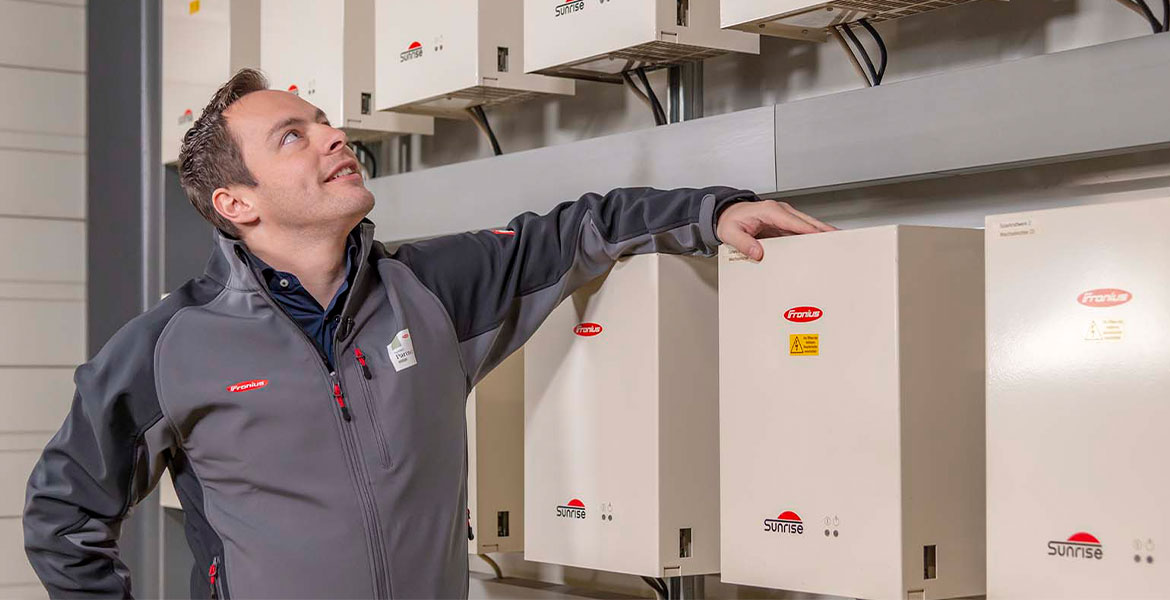
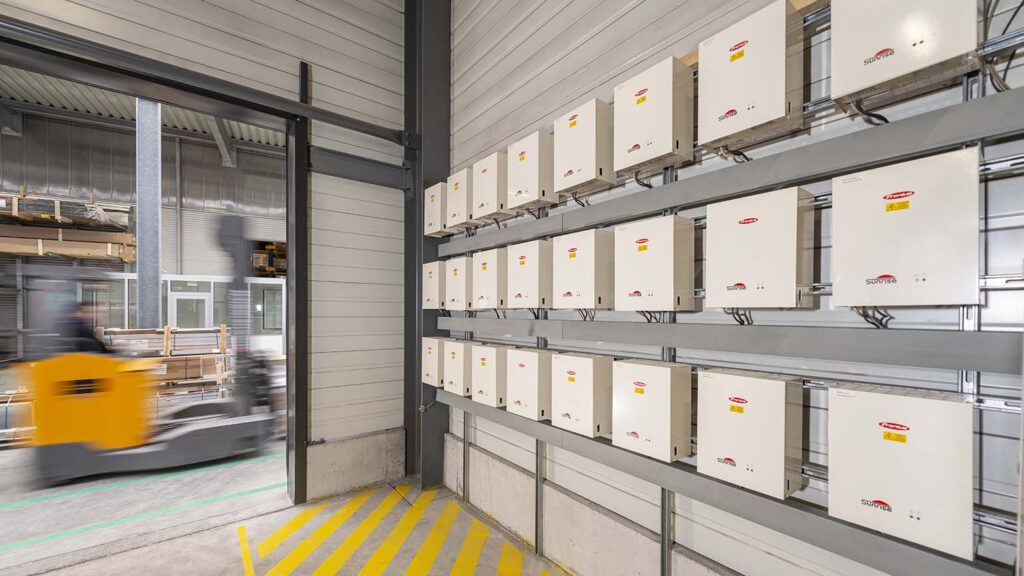
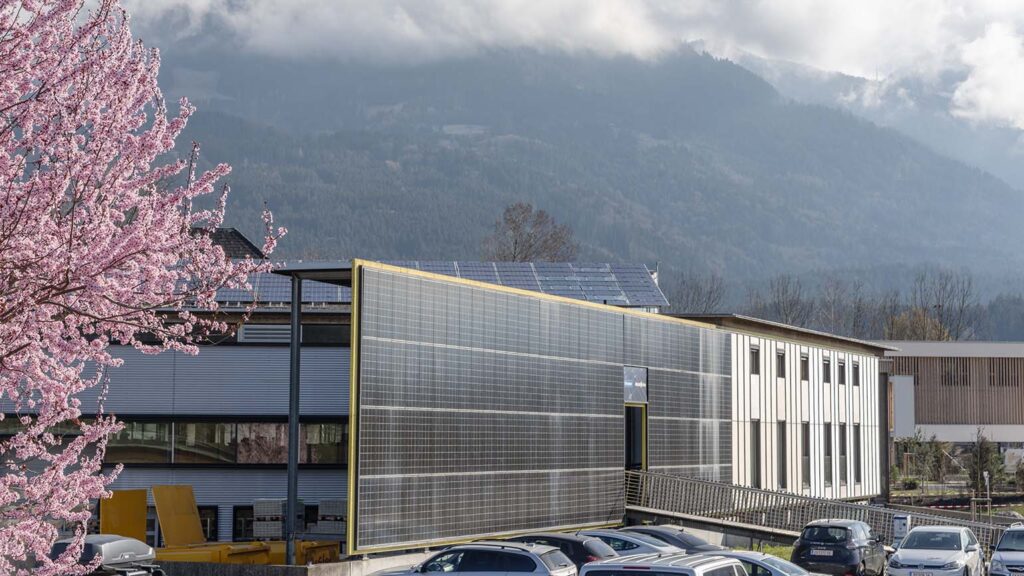
In the late 1990s, the two sister companies doma vkw Energietechnik and Ernst Schweizer GmbH seemed to have struck gold. As a photovoltaic system installer and now a Fronius partner, doma vkw Energietechnik independently commissioned the 49 kWp facade-mounted system at its own site in 1999. Its core components—more than 30 solar inverters—are still providing affordable solar power today, 27 years later. And this is despite the fact that the average service life of an inverter is only 10 to 15 years.
Only two solar inverter issues in 27 years
Martin Frick, the current managing director of doma vkw, says: “We deliberately opted for Fronius. At that time, the Sunrise was still a very new product, but the quality has convinced us over the years. Two inverters have failed in 27 years, but that’s not a big deal as we’d bought three in reserve. The third spare inverter is still knocking about, waiting for the chance to replace one of the other inverters.”
Replacement inverters are now an outdated concept. Instead, leading manufacturers are offering more sustainable, repairable solutions. But where does the resilience of the power converters installed in Vorarlberg come from? It is true this is no mere coincidence. Here are five practical tips to help you optimize the lifespan of your inverter in your own home.
1. Keep the right temperature of your solar inverter
One of the most important factors determining how long your inverter will last is temperature. Generally speaking, inverters prefer to be kept cool. This is due to the sensitive power electronics: capacitors and transistors are sensitive to changes in temperature. While heat accelerates the chemical reactions inside the device, maintaining a moderate temperature extends the service life of electrical components.
A rule of thumb is:
+50 °F = half the component service life vs. -50 °F = double the component service life
The amount of electricity flowing through a solar inverter affects its operating temperature. This is because every time electricity is converted—whether from direct current to alternating current or vice versa—losses occur that generate heat. The higher the load, the greater the losses and, consequently, the higher the component temperature. Under full load, an inverter can reach housing temperatures of up to 158 °F (=70 ° C).
Ambient temperature also plays a key role for the inverter. Higher temperatures make heat dissipation through the built-in cooling fins harder and, at the same time, increase electrical resistance. Conversely, a cooler ambient temperature facilitates the dissipation of waste heat. To protect their components, many devices automatically reduce their operating power when the internal temperature reaches approximately 122 °F—a feature known as power derating. In doing so, the solar inverter reduces its output to keep its internal temperature within a moderate range and protect the electronics.
2. Invest in high-quality components
It stands to reason that products designed to last and manufactured with care are more durable than those whose sole aim is to maximize profits. A single substandard component—such as a capacitor—is enough to significantly shorten the device’s lifespan. For this reason, comprehensive quality awareness and precise workmanship at the component level are crucial. Long-lasting capacitors, rugged semiconductors, and high-quality transformers, along with comprehensive endurance tests, are key to ensuring a long solar inverter lifespan.
Our example system in Vorarlberg, which features more than 30 Fronius Sunrise units, demonstrates that investing in high-quality PV components pays off in many ways. Not only has the PV system been generating electricity for 27 years, but it has also been awarded the European Solar Prize. Managing director Martin Frick is convinced: “Our facade system, combined with the Fronius Sunrise, was already a very innovative solution back then. Today we are still committed to offering our customers only the best, the latest, and the most innovative products. That’s why we rely very strongly on our partner Fronius.”
Often, less is more: those who use complex power electronics efficiently are less likely to experience failures. The explanation is simple: fewer components mean fewer potential sources of error. Did you know that photovoltaic systems equipped with power optimizers are more prone to malfunctions? One more reason why manufacturers like Fronius advise against using optimizer systems. You can learn more about this in this blog post.
3. Correct utilization and sizing of your solar inverter is key
How hard a solar inverter has to work affects its operating temperature and, consequently, its expected lifespan. The more electricity that flows through the inverter and is converted, the more waste heat generated by conversion losses, which causes the power electronics to heat up.
However, it is not only sustained peak loads that put a strain on the inverter; constant fluctuations in power output also have a negative impact on the device’s condition. Why is that? Solar expert Robert Reinbrech from Fronius International explains the reasons: “If the inverter’s utilization fluctuates significantly, the operating temperature changes automatically. As a result, the components are constantly expanding and contracting—the main cause of wear. Eventually, material fatigue sets in, for example, in the form of microcracks.”
There’s nothing that can be done about clouds that block the sun and cause fluctuations in equipment utilization. What homeowners can do, however, is ensure that the system is properly sized. As a general rule: the maximum module power should not exceed 150% of the inverter power. For a 10-kWp inverter, you should install modules with a total capacity of no more than 15 kWp. If the output of the module arrays exceeds this threshold, the solar inverter will operate continuously under a heavy load on sunny days, which could cause long-term damage.
In addition, minimizing shading on the roof modules makes the inverter’s job easier and extends its lifespan. This is because shading of individual modules alters the power curve of the entire photovoltaic system. The solar inverter must determine the ideal voltage point for optimal power generation at regular intervals. For some inverters, this isn’t a major problem. This also includes Fronius systems, which use their Dynamic Peak Manager to get the most out of the system even in shaded conditions. Other devices, however, are not able to withstand the increased thermal and electrical stress over the long term.
Here, too, the facility operated by Ernst Schweizer GmbH and doma vkw Energietechnik sets a good example. The PV system installer ensured optimal irradiation conditions and avoided shading.
4. Choose a suitable location for your solar inverter
Not every location is equally suitable for housing an inverter. As described in point 1, the conversion of electricity generates waste heat that must be dissipated. As a result, solar inverters prefer cooler temperatures. The ideal location should also be dry and well-ventilated. The device protection class, indicated by its IP rating, specifies whether an inverter can withstand dust and moisture. “IP” stands for “Ingress Protection”. Devices with a protective class of IP 65 or higher are protected against dust and water jets from any direction and are suitable for outdoor use.
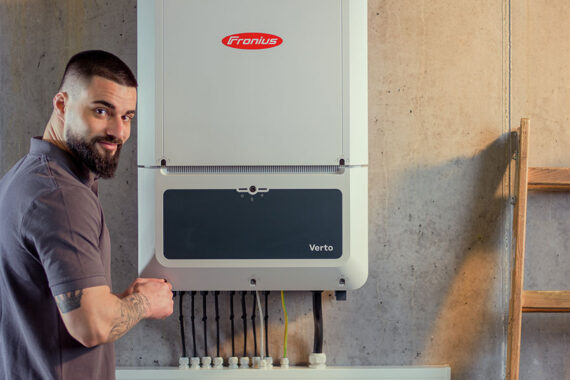
For example, solar inverters from some manufacturers, such as Fronius, can be installed outdoors. The efficiency of virtually all inverters is reduced only when exposed to direct sunlight, resulting in the derating described above. One exception is the Fronius Verto, an inverter designed for apartment buildings and small to medium-sized commercial businesses, featuring a sunshade and active cooling system, in which internal fans direct warm air out of the unit.
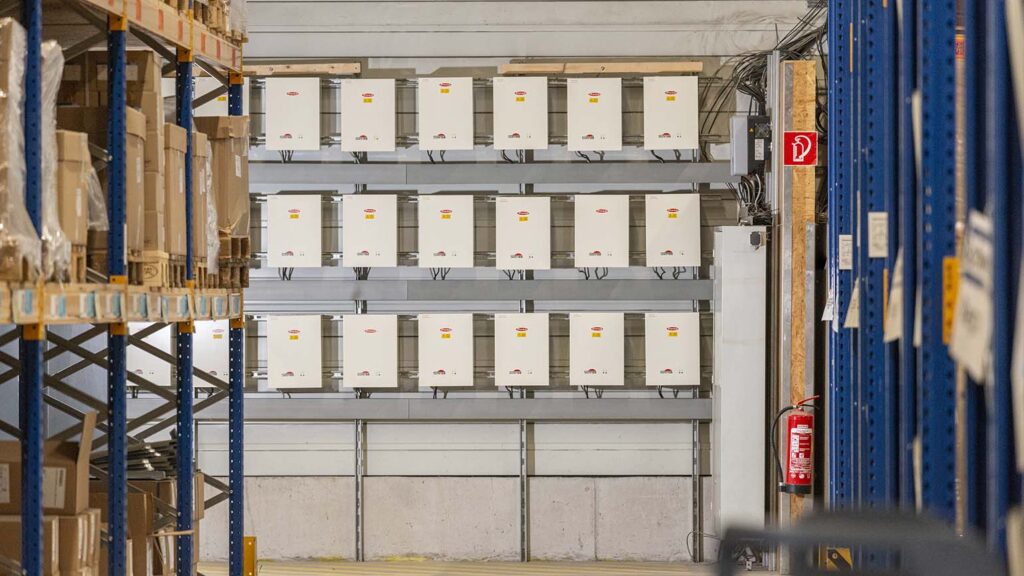
The Fronius Sunrise inverters in our demonstration system in Vorarlberg do not feature such advanced cooling technology. They date back to a time when passive cooling was the industry standard. “In this process, natural convection—that is, the rising of warm air and the sinking of cooler air—carries away the heat. If space is limited and multiple inverters are arranged closely together—especially one on top of the other—this can lead to heat build-up. The operating temperature increases and the long lifespan suffers,” explains Robert Reinbrech. However, doma vkw positioned the Fronius Sunrise devices cleverly: there is enough space between the individual units to allow for proper air circulation.
5. Solar inverter maintenance
Let’s start with the good news: solar inverters require little maintenance. They do their job for many years without the system owners having to pay them much attention. However, with just a few simple steps, you can further extend your solar inverter’s lifespan.
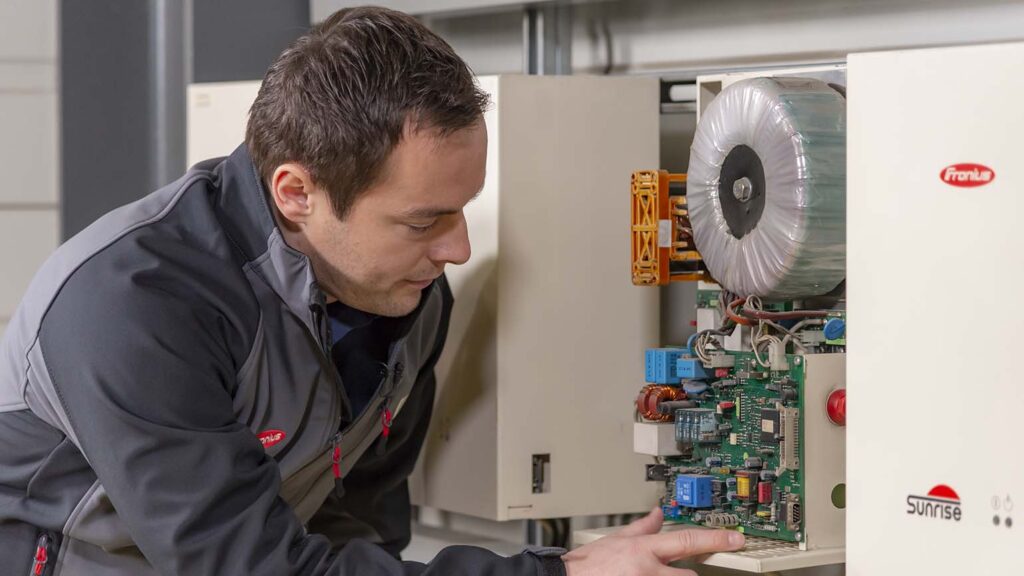
Solar expert Robert Reinbrech has a few useful tips to share: “As with all electronic devices, it’s a good idea to check the fans and cooling slots from time to time and clean any dust off them if necessary. This makes it easier for the inverter to dissipate heat. It is important to proceed with caution. If in doubt, leave the maintenance to a professional.” Because solar inverters contain sensitive components, the use of harsh cleaning agents is strictly prohibited. The next recommendation also concerns temperature management: checking all connections. However, this must be done by a qualified professional, as failure to do so could result in a life-threatening electric shock. “During routine maintenance, the installer briefly checks to make sure all cables are securely fastened to the bottom or rear panel of the unit. Because loose terminals act as a resistor and cause more heat to build up,” says the Fronius solar expert.
Users of monitoring tools can easily identify any changes or issues in their PV system directly in the app and take proactive action. If the system suddenly starts generating significantly less solar power than usual despite sunny weather, you can consult the installer to get to the bottom of the problem. With regular professional inspections, you can be on the safe side. This is a good opportunity to discuss system optimizations or possibly retrofitting energy storage, e-mobility, or heating solutions.
With some solar inverters, however, you can perform updates yourself, typically via apps. It is essential to perform these promptly to ensure the equipment functions properly and remains safe.
If you stay alert, you’ll only benefit: unusual noises and odors, as well as warning lights, are clear signs that something is wrong. In such cases, you should always consult a qualified electrician. This is also to prevent potential consequential damage and equipment failures.
It goes without saying that doma vkw has a huge home advantage here. What inverters could be better maintained and in better working order than those that are actually in use at the PV installer’s site?
Summary: This is how you can extend your solar inverter’s lifespan
No inverter lasts forever—but by carefully selecting the right product, following a few simple tips, and paying a little attention, you can significantly extend the service life of your power converter.
Solar inverters operate most efficiently in a cool, well-ventilated environment. This is because an excessively high internal temperature puts a strain on their sensitive power electronics, reduces efficiency, and causes long-term damage to the device. It is just as important to choose the right inverter for the solar system. If, over the long term, the modules generate more solar power than can be converted, this leads to an overload of the inverter and, in turn, to high operating temperatures. If a PV system has multiple inverters, they must be placed at a sufficient distance from one another. Otherwise, heat can build up—resulting in the device overheating.
Keeping the fans and cooling fins clean, ensuring that cables and terminals are securely fastened, and keeping the device software up to date will help your inverter last longer.
Last but not least: all that effort is in vain if one key factor is missing—quality. There is hardly any other investment where the saying “You get what you pay for” applies more than when choosing an inverter. A one-time, higher investment that allows you to enjoy your own solar power for a few more years with peace of mind and minimal maintenance is definitely worth it. Martin Frick, managing director of doma vkw, knows this too: “Sustainability is, of course, a top priority for us here at the company. It’s very important that we not only think about today and tomorrow, but also about the future beyond that. That’s why we seek out sustainable partners that we can rely on for years and decades to come. And that is where Fronius is number 1 by a margin!”