Picture this: strangers remotely controlling your photovoltaic system without you ever knowing it’s happening. It may sound like something from a movie, but unfortunately it’s not. Modern PV systems equipped with inverters, energy storage units, and energy management systems are now constantly online. While this brings added convenience and full transparency to your energy consumption, it also makes your system part of a networked home infrastructure that’s long been on attackers’ radar. Many homeowners aren’t aware of this. Read on to learn what matters most in terms of components, installation, and operation so you can ensure your system is truly secure.
When technical safety measures meet cybersecurity in PV systems
Fire protection, arc fault detectors, surge protection devices; when it comes to photovoltaic systems, planning teams, installation companies, and system operators have long been aware of the relevant technical safety requirements. But while buyers usually pay close attention to certifications and protective classes, one threat often slips their minds: the cyber security of networked inverters. Yet it’s precisely these digital entry points that are increasingly becoming the focus of attackers, and a successful attack is rarely an isolated event. If a large number of systems are tampered with at the same time, this can jeopardize the stability of the entire grid.
Your photovoltaic system is firmly integrated into a strictly regulated grid and is therefore part of a shared infrastructure. This means that certain interventions are defined and clearly regulated; for example, when the utility controls the power of feeding in as needed, or when your system automatically disconnects from the grid in the event of critical deviations. At the same time, inverters actively stabilize voltage and frequency, while battery storage systems and measures such as peak caps also help to reduce feed-in peaks and relieve the strain on the grid.
It is important to note that even though similar technical interfaces are used, you must clearly distinguish between these controlled, legitimate interventions and unauthorized interference by attackers.
While legal provisions such as Section 9 of the Renewable Energy Sources Act (EEG) and Section 14a of the Energy Industry Act (EnWG) provide for controlled and grid-friendly management by authorized parties, a cyber attack is carried out by unauthorized individuals and aims to manipulate, disrupt, or shut down systems in an uncontrolled manner, ultimately harming their operators.
How to detect unauthorized access to your PV system: Typical signs of unauthorized access include unexplained performance drops, changes to settings (such as battery charge times that don’t match actual usage), and unusual network activity including a significant increase in data usage or unknown connections. If you notice any of these symptoms, you should immediately change your passwords, disconnect the system from the internet, and contact your installer.
Security starts with component selection: how to choose cybersecure equipment
To ensure your PV system remains protected, you should consider cyber security from the outset, i.e., from the point at which you select the components. After all, modern photovoltaic systems have long since become more than just power generators: the inverter, storage system, and energy management system are interconnected, can be controlled via an app, and are part of the home network. Above all, this offers many benefits, but it also comes with risks. Devices that lack encryption, authentication, or regular updates can quickly become security vulnerabilities: allowing for manipulated energy flows, exposing sensitive consumption data, or serving as a gateway to the entire network. Additionally, inverters and storage systems are typically built to last for years and can be difficult to replace down the line.
Before making a purchase, ensure the following:
- Regular security updates and clear update guidelines from the manufacturer
- Encrypted data transfer (e.g., TLS/HTTPS)
- Transparency regarding what data is collected and where it is stored
- European server locations and compliance with GDPR
Many people are unaware that operating a photovoltaic system does not require a constant internet connection, this is primarily only needed for monitoring and maintenance. Disabling this connection significantly reduces your attack surface. Anyone using these services should deliberately opt for secure, certified components and ensure that data is processed and stored in Europe.
Why ISO/IEC certifications are essential for PV online security
Anyone looking for certifications when purchasing a PV component should be familiar with two standards: ISO/IEC 27001 and IEC 62443. The former demonstrates that a manufacturer has systematically embedded information security throughout the organization, while the latter, IEC 62443, goes a step further and specifically addresses the cyber security of industrial control systems. This means precisely those environments in which inverters, energy management systems, and storage devices operate. It defines specific security levels and ensures that devices are not only secured after the fact, but that cyber security is integrated into development and operations from the very beginning. Manufacturers with these certifications provide more than just a product, they provide verifiable security too. For private owners of photovoltaic systems, it’s therefore becoming increasingly important to know who develops the systems they use, under what conditions they are operated, and where the data is stored.
ISO/IEC 27001 and IEC 62443 certifications signify verified standards, clear processes, and reliable quality for PV online security.
EU Cyber Resilience Act and NIS2: new cybersecurity requirements for PV systems
The EU Cyber Resilience Act (CRA) will be phased in by 2027 and establishes cyber security requirements for all products with digital components; the aim is to ensure that connected hardware and software are brought to market in the EU in a secure manner.
Global connectivity requires enhanced security through clear regulations, as established by the EU Cyber Resilience Act and NIS2.
Manufacturers must meet security requirements from the development stage onward (“security by design”), provide updates over the entire product lifecycle, and comprehensively document all components (including dependencies, open-source components, and suppliers along the supply chain) in a Software Bill of Materials (SBOM), while ensuring that any changes are traceable. The CE label confirms compliance with these requirements. From September 2026, new requirements will be introduced regarding active vulnerability management and the timely reporting of security incidents to the relevant authorities.
However, distributors and importers also have a responsibility to verify that manufacturers’ products comply with the CRA, ensure that security updates are provided throughout the specified support period, and cooperate with the authorities in the event of recalls or security risks.
The CRA is closely linked to the NIS2 directive: while organizations, particularly operators of critical infrastructure, are required by the NIS2 to ensure secure operations and active risk management, the CRA ensures that the products used for this purpose are developed and documented with security in mind from the ground up. Organizations that use CRA-certified products thereby satisfy a significant portion of their NIS2 supply chain obligations; the two sets of regulations are designed to work together to ensure cyber security throughout the entire value chain.
Manufacturers and companies that already comply with CRA and NIS2 requirements are not only meeting the regulations, they are also regarded as trusted partners in a supply chain where cyber security is increasingly becoming a prerequisite.
The practical example of cybersecurity at Fronius
The solar solutions provider Fronius employs an ISO 27001-certified information security management system that undergoes regular external audits. In addition, security is an integral part of the entire product lifecycle: the principles of “security by design” and “security by default” ensure that security measures are incorporated into the development and system architecture from the outset, and that products already receive maximum protection with their default settings and without users having to take any further precautions.
Consistent data sovereignty: sensitive data is consistently processed on servers in Austria and at European cloud locations and remains permanently within Europe. This makes cyber security an integral part of modern energy solutions: reliable, transparent, and designed to foster long-term trust.

The importance of professional commissioning for secure photovoltaic systems
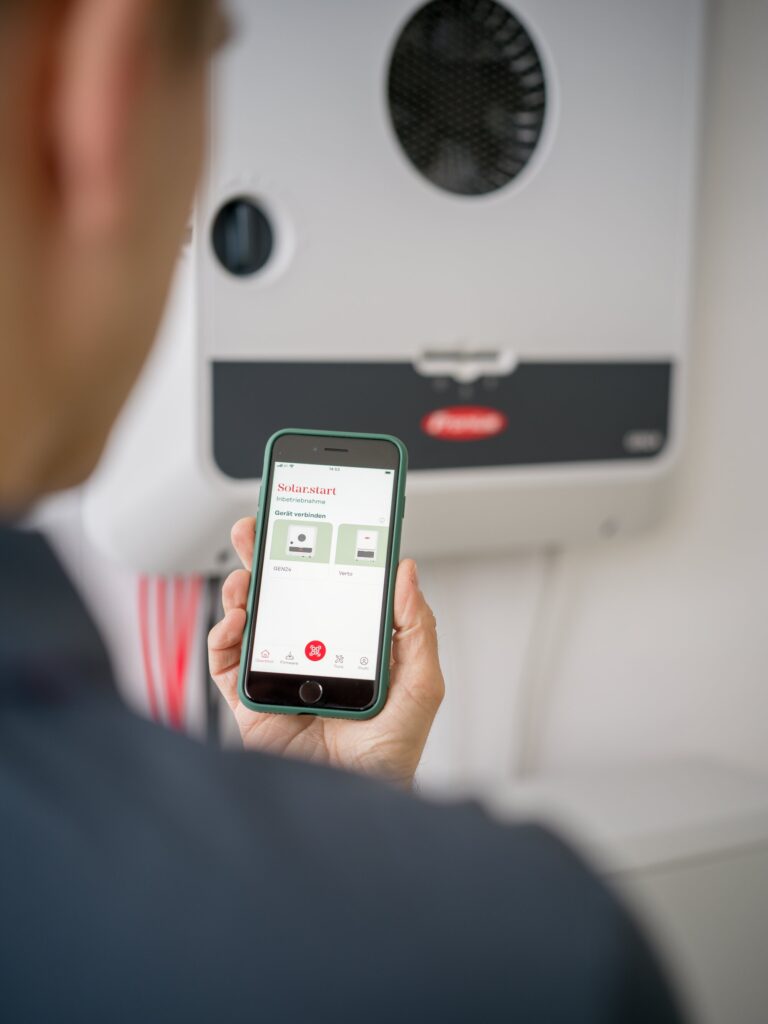
Even the best technology won’t protect you if the installation isn’t spot on, so it’s essential to ensure a secure system architecture and clear network segregation right from the planning stage. Installers play a key role here, as their work determines whether a system will function correctly and securely over the long term. In addition to professional commissioning, above all what’s needed is a forward-looking perspective that goes beyond the installation itself. The handover by the installer is therefore particularly important. Because only if you, as a system owner, have a good understanding of how your system is integrated in the grid, which updates are necessary, and how monitoring works, can you operate your system securely.
Tip: Choose an installation partner who views cyber security as an integral part of their service and takes the time to thoroughly address your questions.
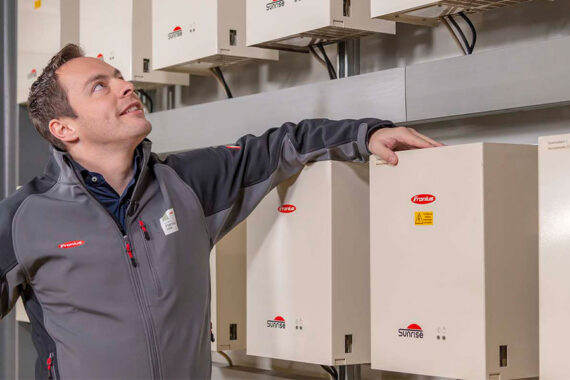
Providing a comprehensive introduction to energy monitoring is essential for ensuring secure management of photovoltaic systems.
Effective measures to enhance network security for your PV system
Cyber security remains an important issue even after your photovoltaic system has been installed. Common vulnerabilities, such as open ports or default passwords, are easy to prevent. With a few simple steps, you can significantly enhance the security of your system:
- When starting up the system for the first time, change all default passwords for inverters, monitoring portals, and router logins.
- If possible, connect photovoltaic devices to a separate network segment (e.g., a VLAN).
- Enable two-factor authentication (2FA) for the monitoring portal, if available.
- Keep your device firmware up to date.
- Disable any services you don’t require.
- Document any configurations you make yourself so that they are easier to recall when making future adjustments or performing maintenance.
- Watch out for unusual changes in behavior; unexplained fluctuations in performance or disconnections may indicate an issue.
A Virtual Private Network (VPN) encrypts your connection and protects your data online
Conclusion: best practices for long-term PV system security
The security of your photovoltaic system isn’t a given; it depends on you establishing the right foundation. By opting for certified components, ensuring a secure installation, and performing regular updates, you lay the groundwork for long-term protection. Cyber security isn’t a one-time issue, but an ongoing process from component selection and installation to regular updates during operation.