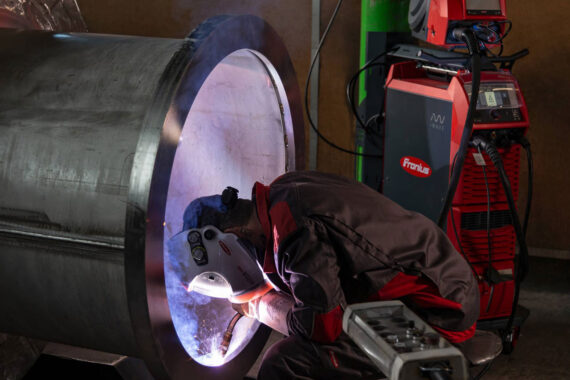
The field of welding is under immense pressure these days, with products expected to be available immediately, in top quality, and with short delivery times. At the same time, the shortage of skilled welders continues to intensify, while standards and documentation requirements are increasing. This is where it pays to automate welding with user-friendly cobots—a straightforward, flexible, and cost-efficient solution, especially for small and medium-sized companies. Discover more here!
Why manual welding is reaching its limits and how cobot welding solves it
Quality and process reliability: Consistently stable processes and reproducible welds are difficult to achieve manually. Cobot welding ensures repeatable quality and stable welding parameters.
Documentation requirements: Customers and standards require complete recording of welding data. Modern cobot welding systems automatically capture and store process data.
Shortage of skilled workers: Bottlenecks increase labor costs, extend lead times, and jeopardize deadlines. Welding automation reduces dependency on scarce skilled labor.
Volatile demand: Small batches and changing component variants require fast retooling. A welding robot enables fast retooling and easy adatiopn to new components.
Put simply, manual-only processes are reaching their limits, especially in combination with labor shortages. Cobot welding provides a scalable solution for SMEs.
How cobot welding actually helps SMEs?
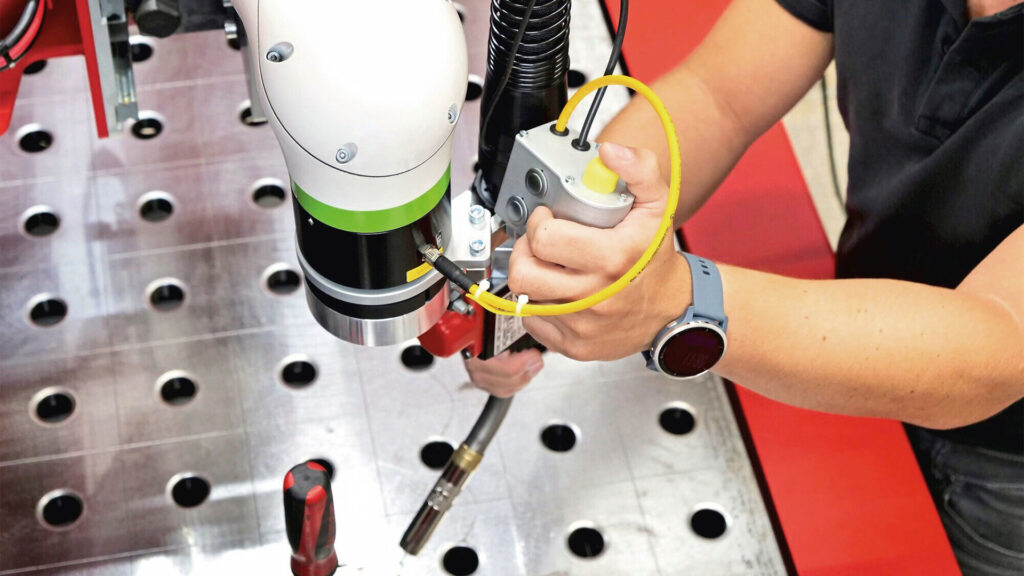
Cobot welding robots take over recurring welding tasks, ease pressure on the workforce, and boost productivity and quality. Getting started with collaborative robot welding is easiert than with traditional industrial robots. Intuitive teaching replaces classic programming, and systems are compact instead of oversized. This makes welding automation accessible and affordable for SMEs.
Advantages of cobot welding in everyday production:
Flexible for small batches: Ideal for frequently changing components and small batch production.
Simple teaching: Intuitive operation, no programming knowledge required.
Short training times: Welders can quickly learn to operate a cobot welding robot.
Expandable: Additional axes (longitudinal axes, rotilting positioners), tailstocks, robot tracks.
Offline programming (e.g., with Fronius Pathfinder): Create and test programs without interrupting ongoing production.
Compact design: Minimal space requirements and fast commissioning.
Quick ROI: Investment costs often pay for themselves in a short time.
Occupational safety: How safe is cobot welding?
When operated correctly, the risk is minimal. Modern cobot welding cells are usually fully enclosed, have extraction systems, and offer viewing windows so processes can be monitored safely. Extraction systems and protective curtains are available for mobile solutions. PPE (personal protective equipment) remains essential for protection and compliance with legal requirements. You can find detailed information about welding protection here and download our Health & Safety Manual.
Legal framework for cobot welding: CE-compliant safety
Uniform health and safety requirements apply in Europe. Machines must comply with the Machinery Directive 2006/42/EC and bear a CE marking. This ensures legal certainty and the free movement of goods within the European Economic Area. Countries such as Switzerland, Norway, and Türkiye also use this as a guide.
Our cobot welding systems for flexible welding automation
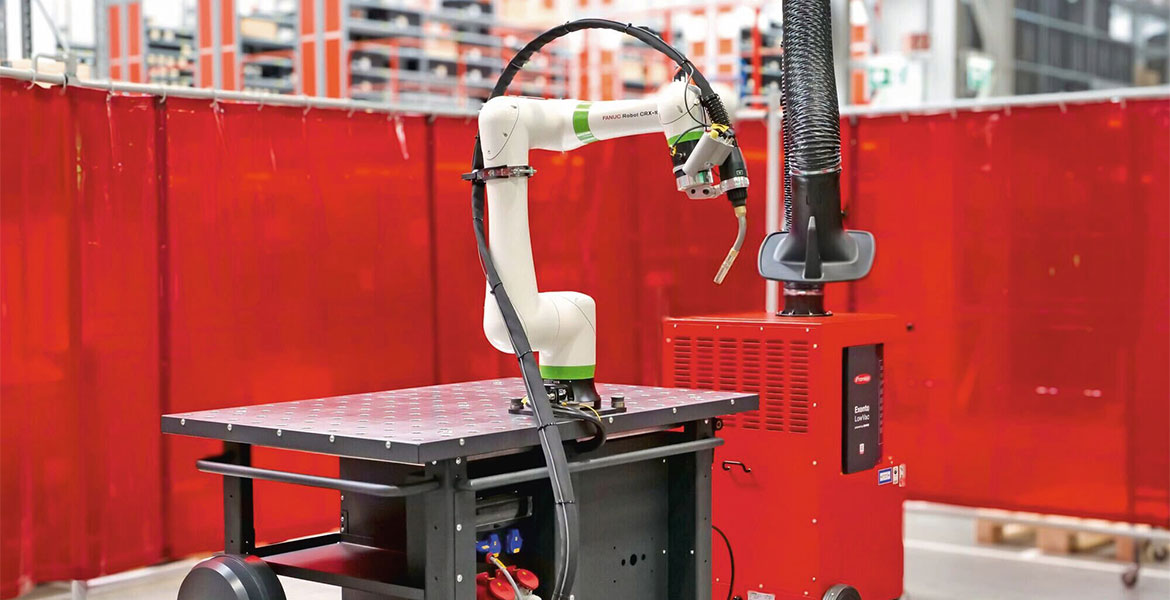
Mobile cobot welding system: CWC-mobile
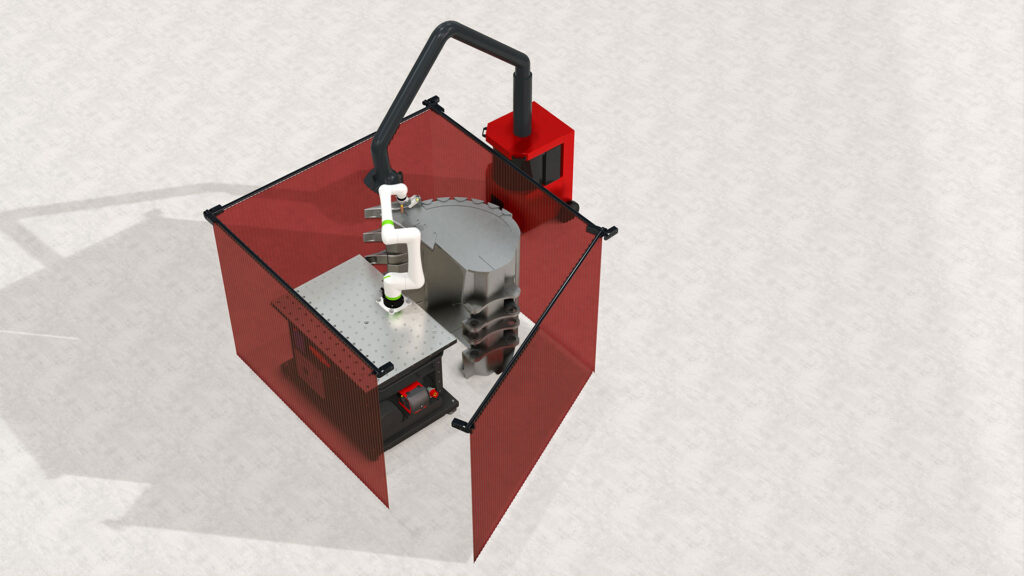
Compact, portable, and precise: The CWC-mobile can be quickly moved between large components and used wherever needed thanks to retractable rollers. Small batches can be processed directly on the existing welding table, without long downtimes.
Single-station cobot welding system: CWC‑S
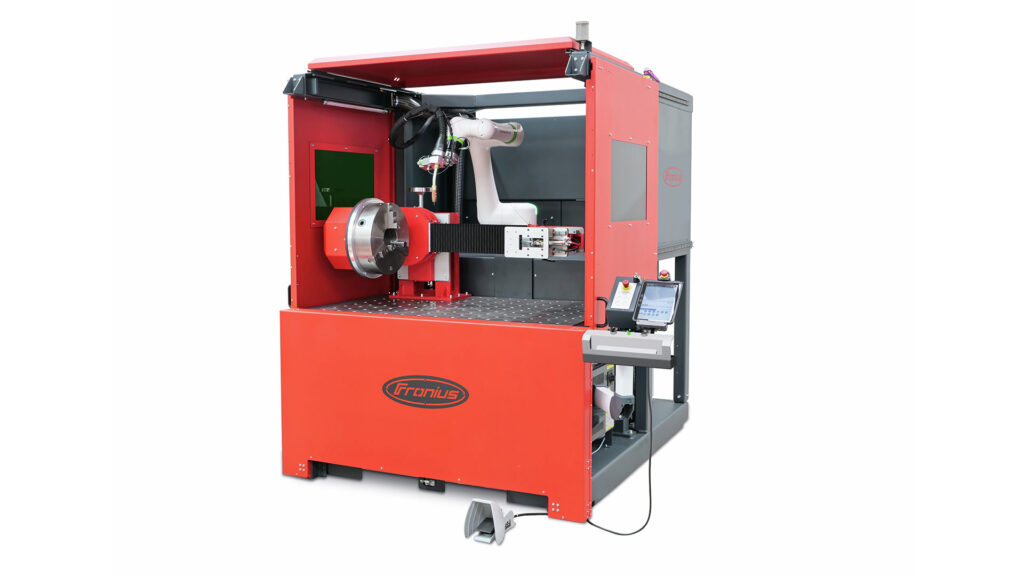
Featuring a robust, space-saving design, the single-station welding cell is ideal for small to medium-sized series: CWC‑S combines intuitive operation with the highest safety standards.
Optional extras:
- (Motorized) rotilting positioners (optionally with tailstock)
- Torch cleaning station for a stable process and high weld seam quality
Two-station cobot welding system: CWC-D
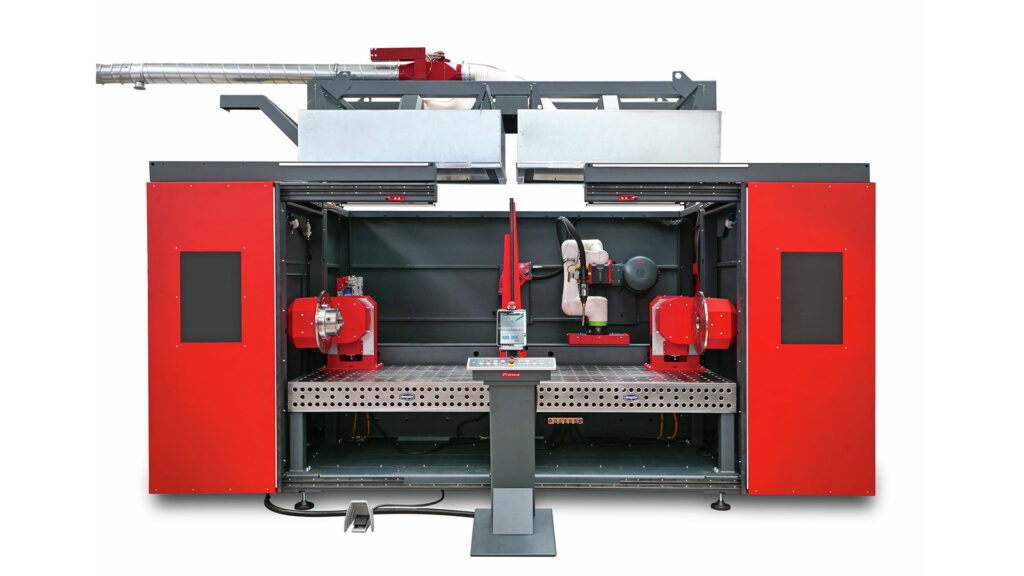
With two-station systems, such as our CWC-D, setup and welding processes can be organized in tandem. This results in less downtime, higher output, and maximum efficiency in small batches. They can also be used as single-station systems for welding longer components.
Precise welding processes: Now also available for cobots
Our Welding Packages greatly increase the cost effectiveness and quality of welding work:
LSC—Low Spatter Control
LSC is a modified dip transfer arc with extremely high arc stability.
Process advantages:
- Early detection of short-circuit incidents
- Gentle arc reignition at a low current level
- Increased deposition rate, welding up to 4.5 times faster
- Up to 75% less spatter
PMC—Pulse Multi Control
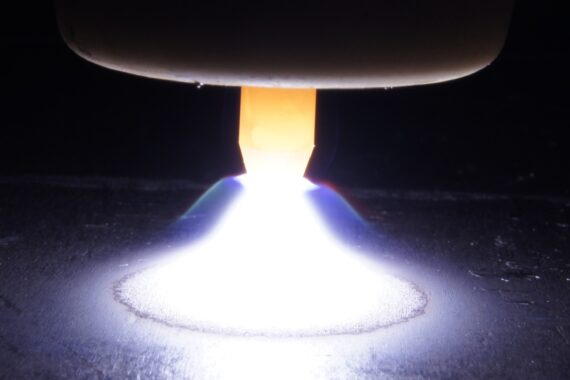
PMC is all about precisely regulated, low-spatter droplet detachment. At the same time, PMC generates a powerful, stable arc, resulting in perfect control of the weld pool.
Process advantages:
- Extra-precise control, increased process stability
- Improved pulse characteristic
- Spatter-free ignition (SFI)
- Constant penetration
- Higher welding speed, lower energy input
- High arc and weld pool control thanks to arc length and penetration stabilizers
CMT—Cold Metal Transfer
CMT has revolutionized welding technology with its reversing wire movement. The back and forth movement of the welding wire—at up to 170 Hertz—produces an exceptionally stable arc.
Process advantages:
- 33% less heat input reduces distortion—ideal for thin sheets and dissimilar material joints
- Almost twice the welding speed compared to the conventional dip transfer arc
- Spatter-free ignition (SFI)
- Extremely little spatter
- 100% CO2 welding
- Stable arc, even with high-strength steels
All our cobot systems can be combined with the TPS 400i push CMT or iWave CMT welding machines, depending on the process strategy.
FAQs about cobot welding
What is a cobot?
A cobot is a collaborative robot designed to work alongside humans. It isis particularly easy to operate and perfect for recurring welding tasks.
What specific benefits do cobots offer SMEs?
More productivity, consistent quality, seamless welding data, better planning—all with a small footprint and fast commissioning.
Do I need programming skills?
No. Teaching a welding cobot is an intuitive process. Offline programming (e.g., Fronius Pathfinder) allows programs to be prepared and validated without stopping production.
Are cobot welding systems safe?
Yes, the risk is minimal provided that the correct housing, extraction system, and PPE are used. CE-compliant systems meet European safety requirements.
Your first step toward automated cobot welding
Want to weld small batches more efficiently, guarantee the quality of your welds, and compensate for the shortage of skilled workers?
Get in touch with us today and find the right Fronius cobot solution for your welding challenges.