Modern production systems enable a level of customization that was completely unthinkable just a few years ago, fueling demand for tailor-made, one-of-a-kind solutions. Technologies such as additive manufacturing (also known as metal 3D printing) can step in where traditional manufacturing methods reach their limits, whether it’s producing urgently needed non-standard spare parts or building prototypes that save on tooling costs, materials, and development time. But how exactly does additive manufacturing work? And for which applications is metal 3D printing particularly well suited?
How additive manufacturing works
Additive manufacturing is a process in which three-dimensional objects are built up and shaped layer by layer through the additive deposition of base material. Unlike subtractive manufacturing in which material is removed, the component is created by selectively adding material exactly where it is needed.
This article primary focuses on the Wire Arc Additive Manufacturing (WAAM) process, which has become well established in metal 3D printing.
What metal 3D printing processes are available?
Metal 3D printing processes can be categorized into powder bed, binder, and extrusion processes, as well as directed energy deposition (DED). While binder and extrusion processes are particularly appealing due to their low equipment costs, powder-based and DED processes each have their own distinct strengths that should not be overlooked.
Powder-based vs. wire-based processes: key differences and benefits
With powder-based processes, the layers are built up using molten metal powder. The most common method, the powder bed process, is highly precise but relatively slow, making it suitable for smaller components. Wire-based processes build up the workpiece by melting the wire with either an electron beam, laser, or arc. Thanks to the high deposition rates, they achieve short production times and are suitable for larger components.
What is DED-Arc?
DED-Arc stands for Directed Energy Deposition Arc. In this process, a welding wire is melted by an arc and applied layer by layer. As DED-Arc uses the gas metal arc welding process (GMAW) to achieve deposition rates of up to 5 kg/h, it has the highest deposition rate of all the methods discussed here.
Special processes and multi-wire solutions could further increase this value in the future. In addition to deposition rate, the equipment and material costs also play an important role determining which printing process is the most suitable for a given application. At the heart of DED-Arc is a stable welding system, which eliminates the need for the expensive vacuum chambers associated with electron beam processes.
Applications of metal 3D printing: when to choose additive manufacturing
The applications of metal 3D metal printing are diverse, ranging from repairs and reverse engineering to prototyping and producing new, complex components. Existing components can also be modified or optimized using additive methods.
All these processes are based on precise digital instructions, with modern welding technology replacing laborious casting molds to produce complex, topology-optimized metal components. These digital “recipes” contain the individual welding instructions (Deposition Procedure Specifications, or DPS for short), the kinematic strategy for path planning and motion control, the material certificates, and ideally also the operator certifications. This means that all the information needed for the perfect “printing process” is provided as a single digital package.
Repairs & reverse engineering with metal 3D printing
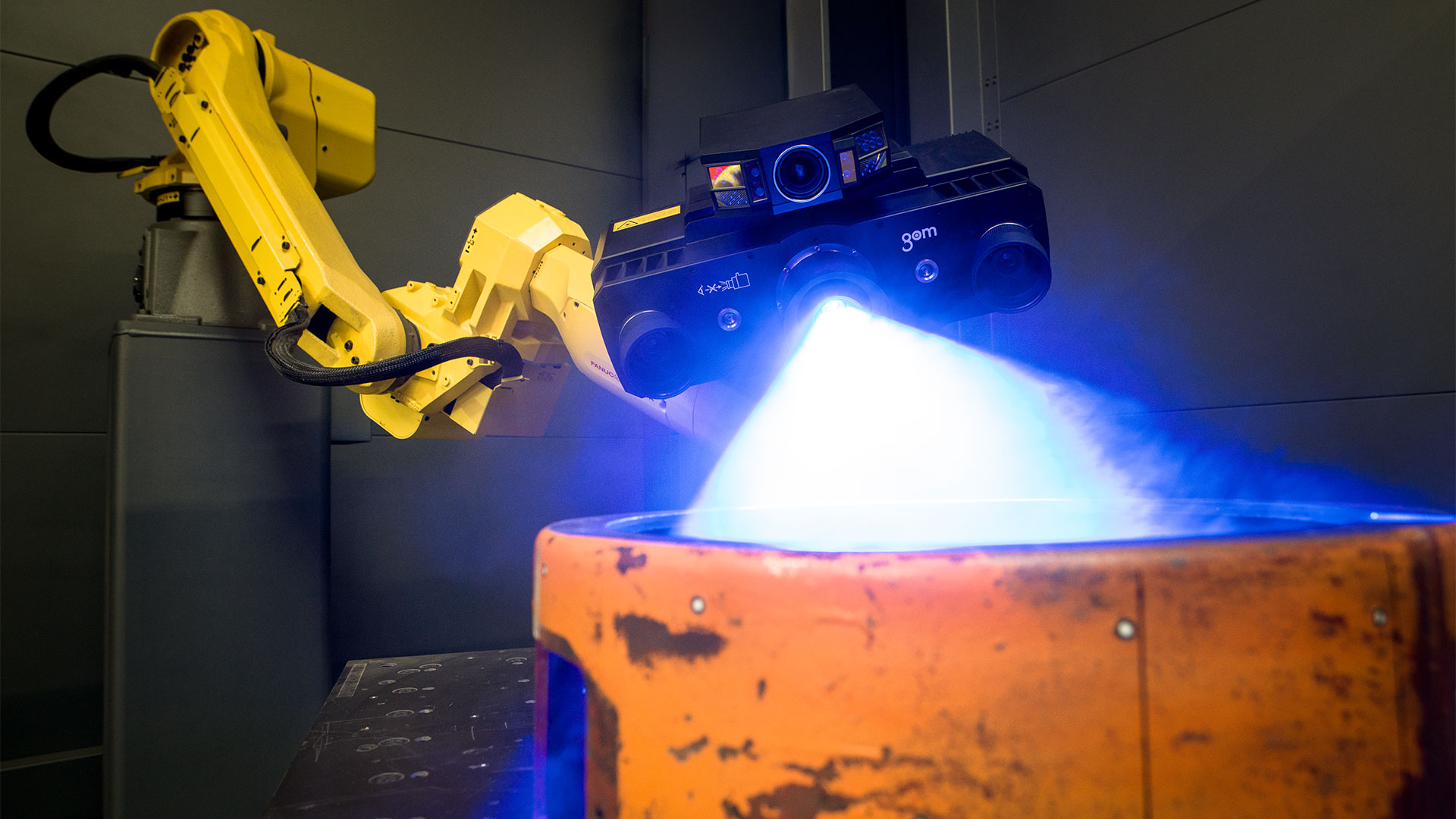
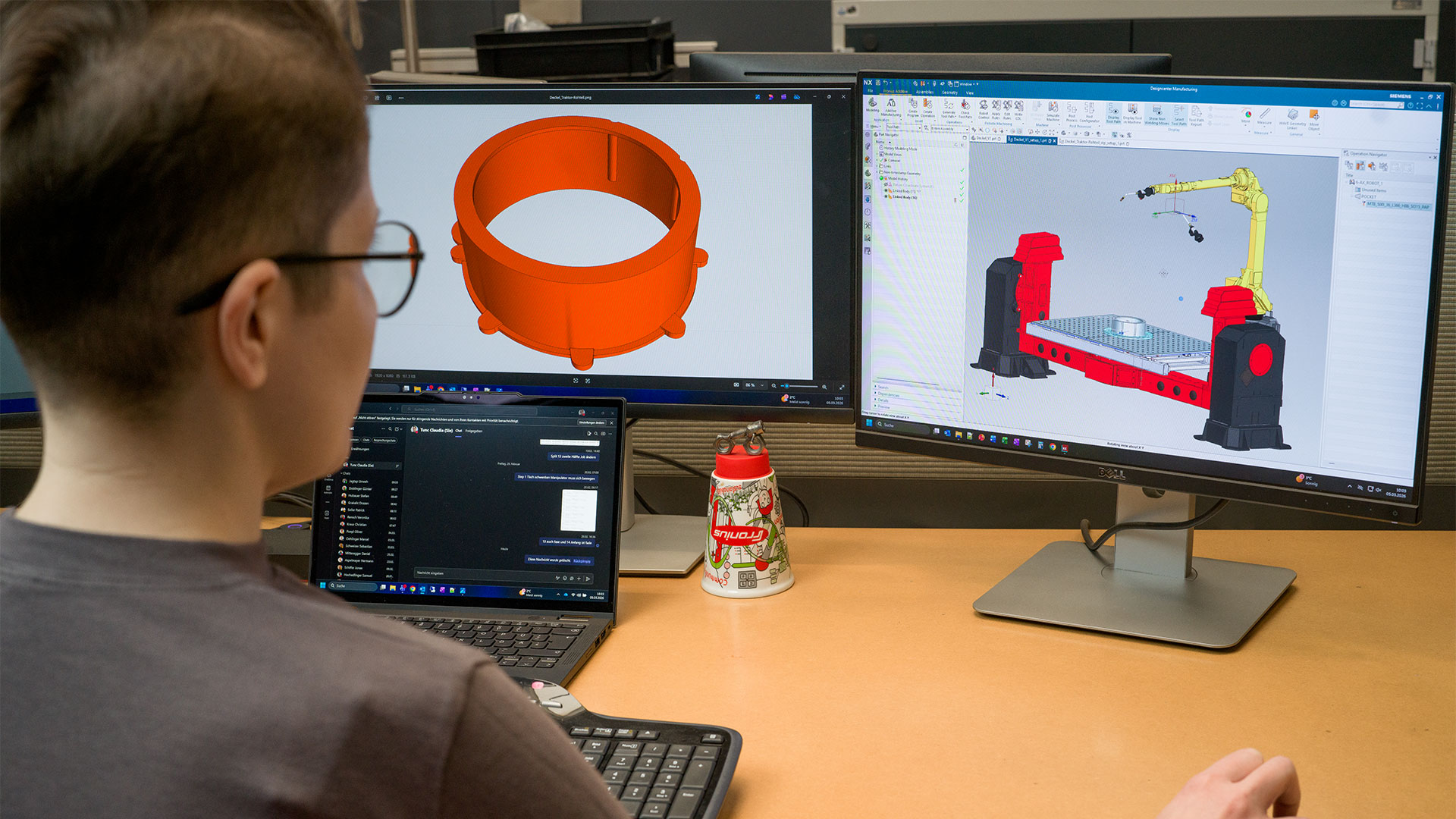
Reverse engineering in additive manufacturing involves analyzing an existing component and digitally modeling it in order to subsequently reproduce or make targeted improvements to it via metal 3D printing.
Reverse engineering process step-by-step
- Creating a 3D scan of the original component
- Reconstruction of the geometric data with an accuracy of up to one hundredth of a millimeter for a highly precise representation of the component
- Optional component optimization, such as weight reduction or reinforcement of weak points, is possible during reconstruction
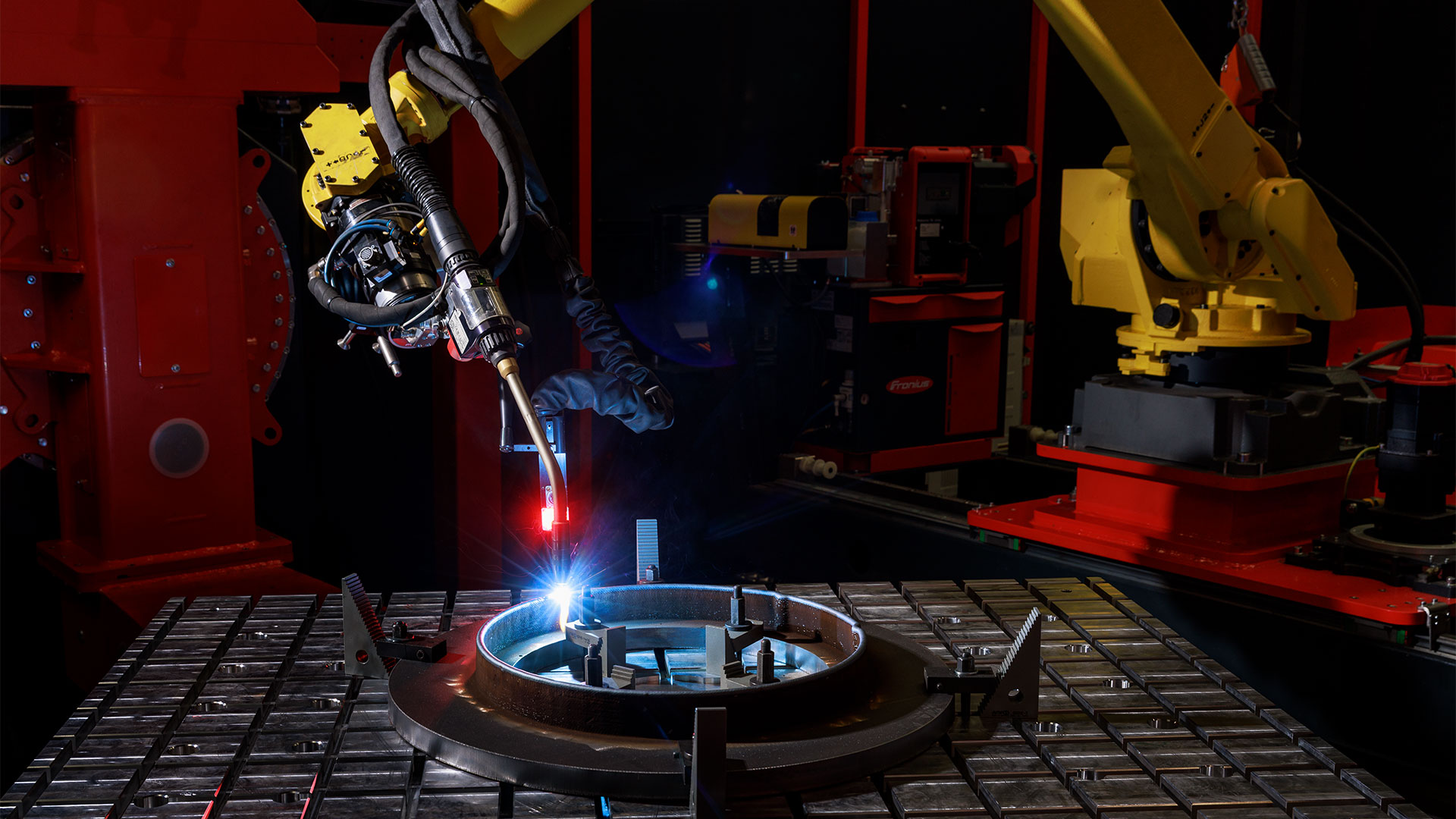
- Additive manufacturing begins as soon as the model, component design, and parameters have been determined
- Finishing of functional surfaces by milling
The advantages of reverse engineering in combination with additive manufacturing are obvious, explains Oliver Pöpl, group leader of the Prototyping and Manufacturing Center: “This excellent flexibility is evident in the wide variety of materials and the topology-optimized design, allowing high-quality materials to be applied exactly where we want them.”
Another key financial advantage lies in the reduction in storage costs, with additive manufacturing permitting individual parts and small batches to be produced as needed. Although traditional methods such as casting can also be used to manufacture individual components, high tooling costs and long lead times generally make this uneconomical, especially for small production runs.
Instead of physically stocking components, digital component archiving makes the “recipe” reusable at any time—a digital spare parts inventory that saves costs and shortens delivery times.
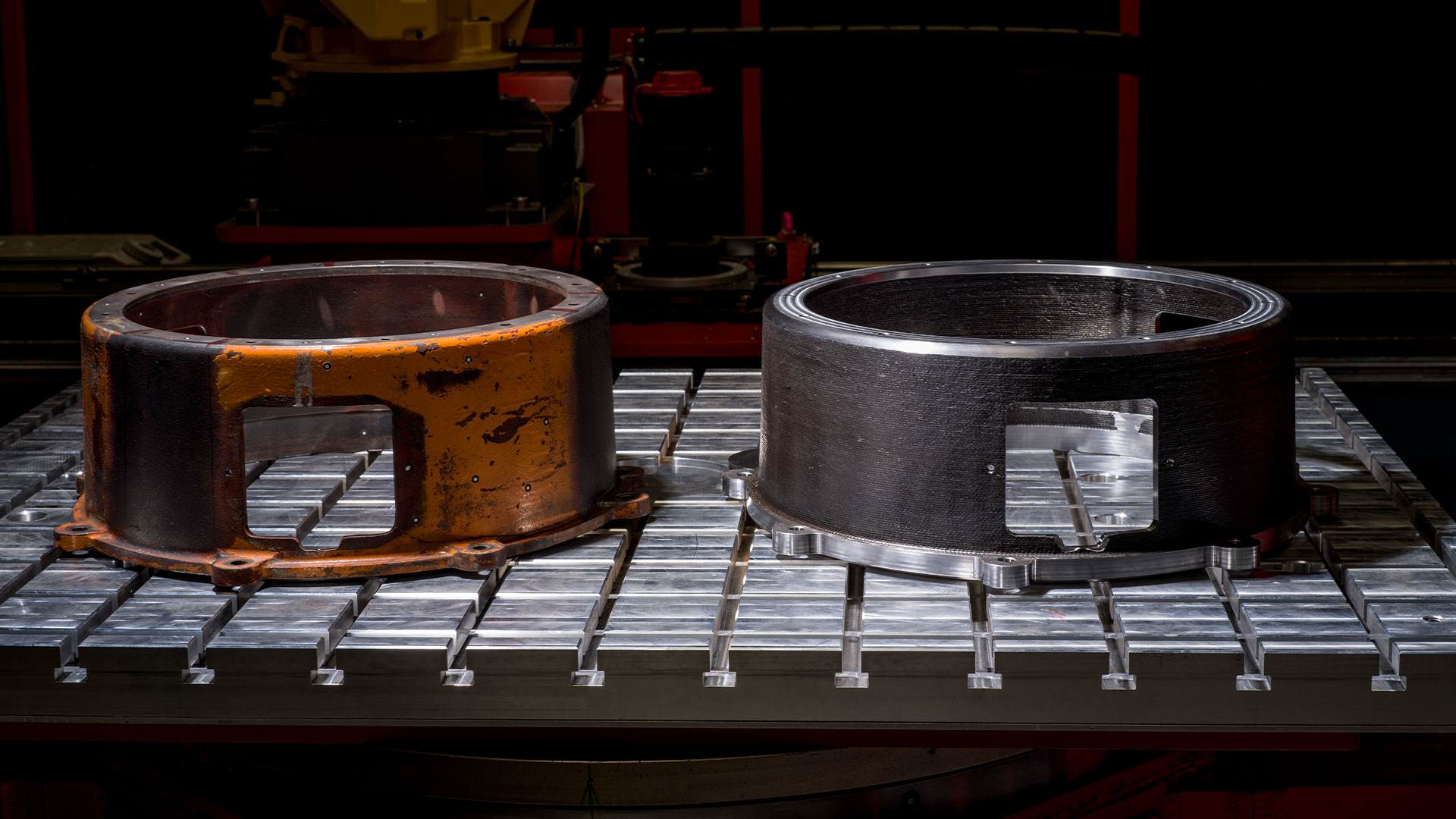
Reverse engineering: from 3D scanning to additive manufacturing
Component modification
Additive manufacturing is particularly well suited to making targeted modifications to existing components in areas subject to mechanical stress. Components can be adapted to meet new requirements at a level that would often be impossible to achieve using conventional methods. Our reference project below perfectly illustrates just how precise in nature these adaptations can be.
New production
In new production, components are built from scratch, layer by layer. This allows for a great deal of design freedom, as topology-optimized geometries are easier to implement than with traditional approaches. For example, component weight can be reduced without compromising stability. Typical applications include bionic structures inspired by nature, such as honeycomb structures commonly found in the aerospace industry.
Why cold metal transfer (CMT) is ideal for metal 3D printing
Cold Metal Transfer (CMT) has proven particularly effective for metal 3D printing. The following overview shows how CMT differs from processes such as conventional dip transfer arc and why it is so effective.
What is cold metal transfer?
In order to achieve the desired quality with additive manufacturing, we need an extremely stable welding process like CMT. CMT is a “cool” dip transfer arc process that works at higher welding speeds compared to other methods while keeping the heat input low.
This is made possible by a reversing wire electrode motion that precisely controls the detachment of each individual droplet. The virtually spatter-free material transfer that results significantly reduces errors and rework. Depending on the characteristic for the filler metal, shielding gas, and electrode diameter, this wire movement takes place within a frequency range of 50 to 170 Hz.
CMT vs. conventional dip transfer arc
With conventional dip transfer arc processes (which are not especially suitable for WAAM), the wire moves continuously toward the workpiece. A short circuit occurs when the softened end of the wire touches the weld pool, causing most of the molten welding wire to transfer into the pool (the droplet detachment). During the short-circuit phase, the welding voltage approaches zero while the current rises sharply: the short circuit breaks and the arc reignites. With CMT, the droplet detachment and arc re-ignition are much more controlled and involve less energy input .
It is precisely these qualities that are decisive for additive manufacturing: the heat input generated during CMT welding is up to 33% lower than with a conventional dip transfer arc. This is particularly advantageous when cyclically building up weld beads, as this process generally results in a high heat input. If the component temperature is too high, the material properties are impaired to the point where the welding process would have to be interrupted until the weld layers have cooled.
“This is where CMT really shines. Thanks to the significantly reduced heat input and the extremely stable arc, identical weld layers can be built up and cooling times can be reduced without introducing unnecessary heat into the component. This makes CMT one of the most efficient and reliable technologies for many WAAM applications,” explains Manuel Stinglmayr, an expert in New Business Development Welding at Fronius International. Furthermore, fluctuations in the contact tube distance are not a major concern with CMT and the arc remains stable.
CMT Additive Pro: precise layer control for consistent metal 3D printing
The CMT Additive Pro functions specially developed by Fronius for additive manufacturing enable precise control of the heat input and thus the height and width of the weld seam.
- Power correction: Enables precise adjustment of the electrical power to the respective process phase (layer build-up and heat input) without changing the deposition rate.
- Deposition Stabilizer: Ensures that the arc-on time remains constant regardless of stick-out fluctuations, without losing the characteristic CMT stability.
- Pulsed HotStart: When resuming welding after changing the wire spool, for example, Pulsed HotStart achieves sufficient penetration during the pulsed arc so that the layer height remains constant and prevents fusion defects or humping.
- CTWD measurement: Provides users with real-time feedback on the exact position of the component and allows them to make the necessary corrections in the event of deviations from the planned position.
Together these features ensure a uniform, predictable layer build-up across the entire height of the component while reducing scrap and rework in the additive manufacturing process.
How WAAM reduces material waste compared to milling
If we compare metal 3D printing with cutting processes such as milling, it is striking that Wire Arc Additive Manufacturing (WAAM) uses significantly less material. Alternative manufacturing methods generate a great deal of scrap, since the required parts are milled out of—often enormous—blocks of metal.
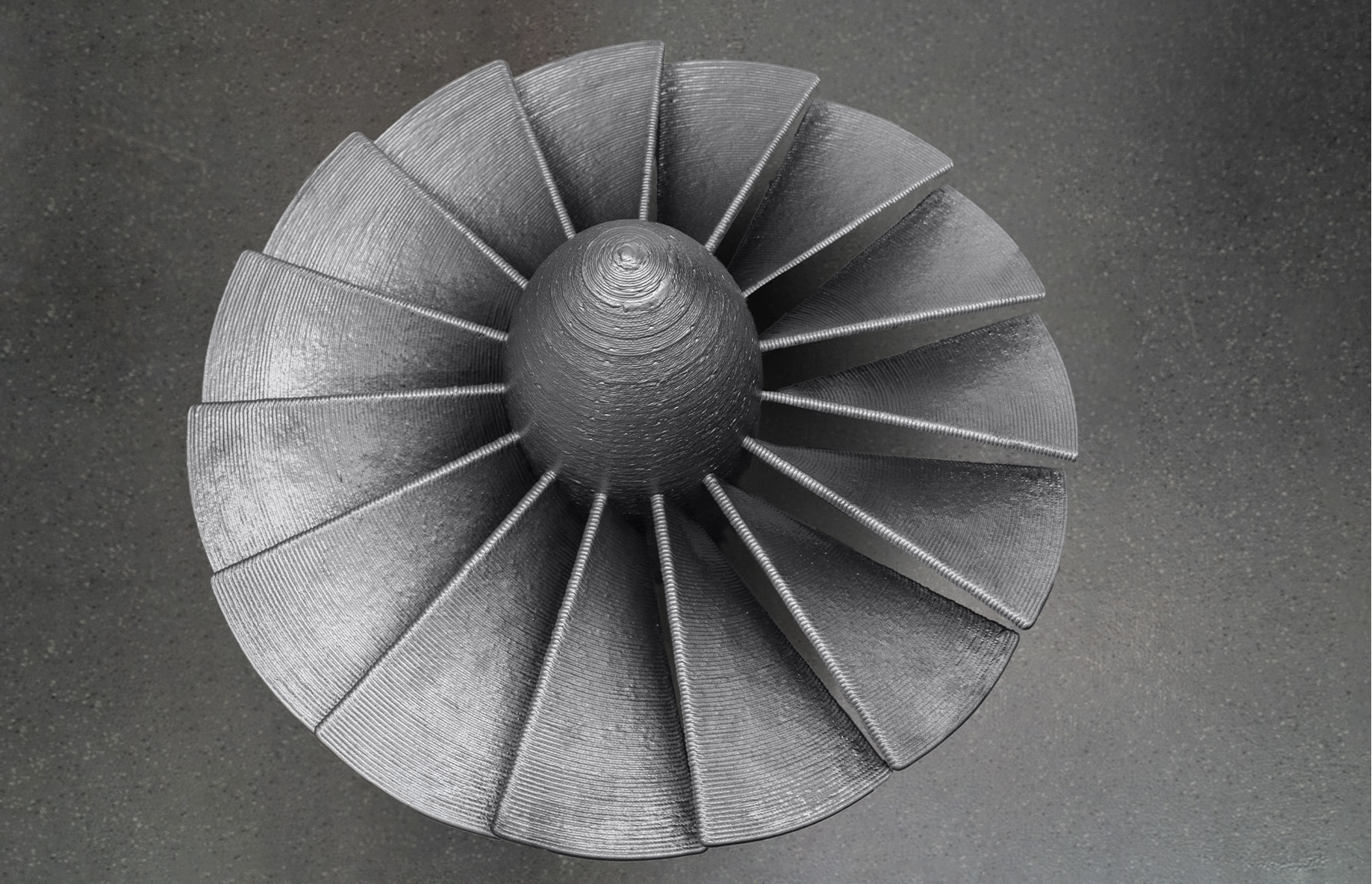
While milling certain geometries can result in up to 80% material loss, this figure is often only around 20% with additive manufacturing using DED-Arc. What’s more, this 20% is only generated when finishing the component.
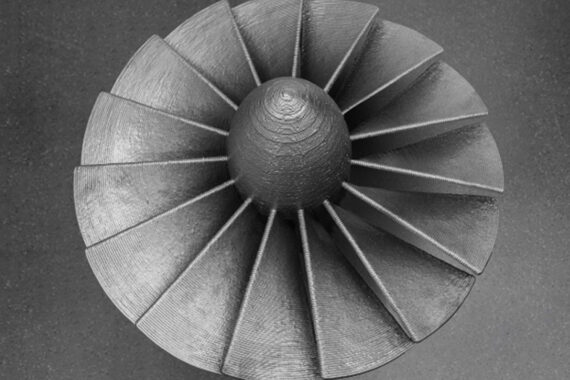
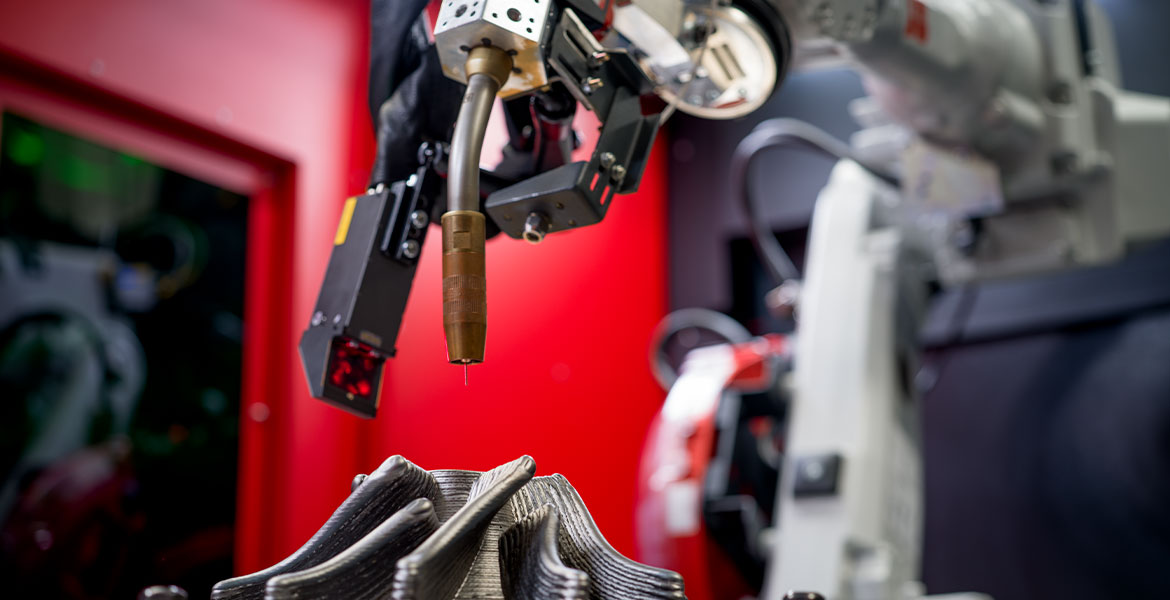
The metal propeller shown here was manufactured using this process. If it had been milled from a block, the block would have been 60 x 90 x 90 cm in size and weighed around 4 tons, while the finished component weighs just under 100 kg.
Another advantage is that metal 3D printing enables decentralized, location-independent manufacturing without the need for complex production lines. Additive manufacturing is used in applications where weight, material, and costs need to be reduced.
“WAAM’s greatest strength lies in situations where high material waste, long lead times, or complex geometries make conventional manufacturing processes economically unattractive. Instead of removing several metric tons of material through machining, we build components that are virtually identical to the final shape,” adds Stinglmayr.
Fronius Prototyping and Manufacturing Center: full-service solutions for metal additive manufacturing
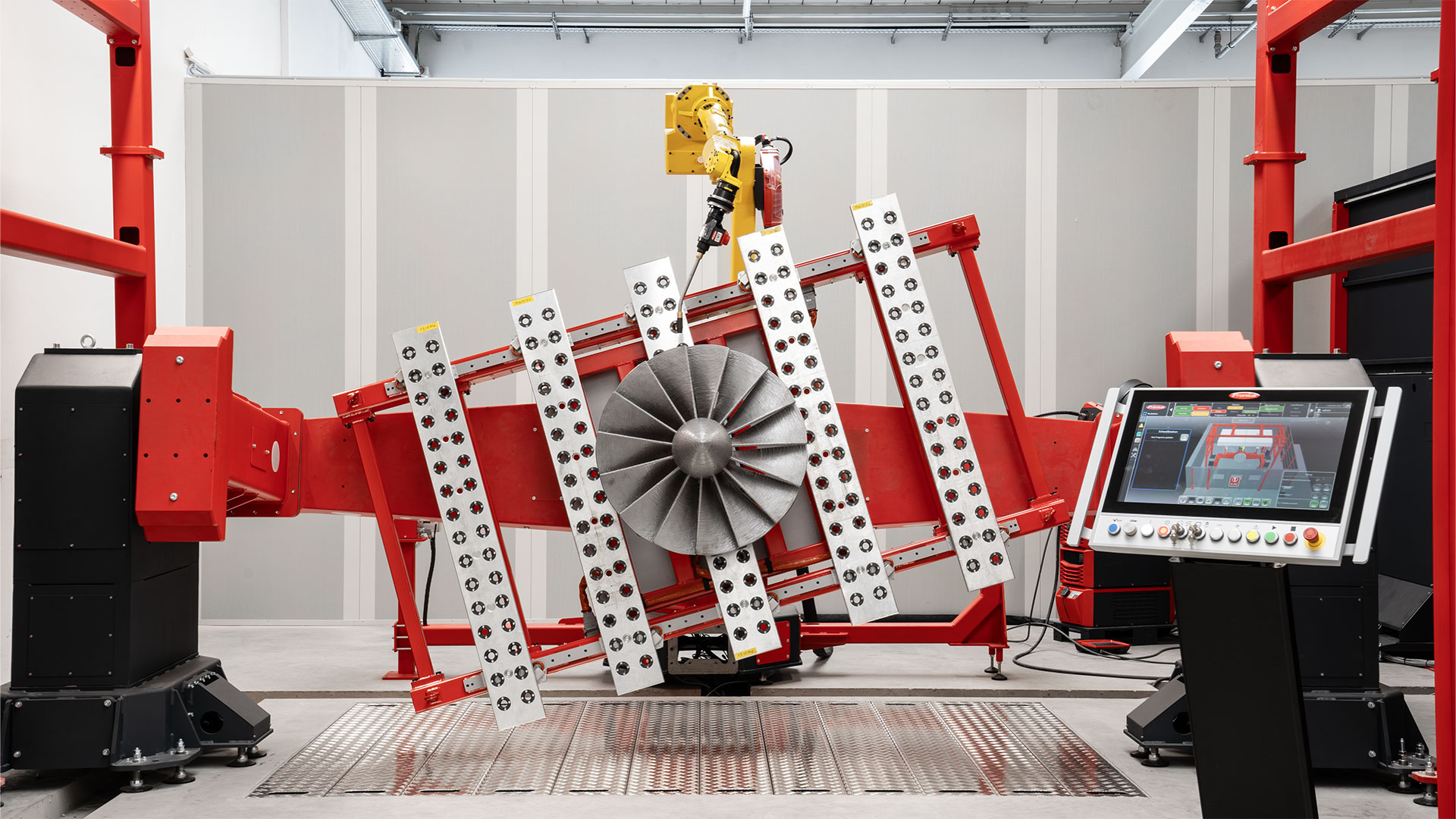
The 900 m² Prototyping and Manufacturing Center in Wels, Austria, offers a wide range of services as well as robotic systems featuring advanced welding, sensor, and measurement technology. Feasibility studies, customized solutions tailored to individual customer requirements, process optimization, and prototype manufacturing are all coordinated with our clients and handled with the utmost confidentiality. The key advantage of WAAM is that designs can be manufactured and tested directly from the 3D model, without the need for time-consuming and expensive mold and fixture construction. Design issues are identified and resolved at a very early stage.
Our goal is to keep the time from development to product maturity as short as possible. The transition to robot-assisted 3D metal printing for pre-series production can be seamless and our customers receive sound recommendations regarding welding processes, cost-effectiveness, quality, and production.
Testing and qualifying additive manufacturing models under new standards
A real-world reference project demonstrates that additive manufacturing can meet even the most stringent safety and quality requirements. Together with Linde Engineering, the wire manufacturer Migal.co, and TÜV Süd Germany, we conducted the model qualification of an additively manufactured pressure vessel.
A naturally hardening wrought aluminum alloy was chosen for the pressure vessel due to its excellent low-temperature toughness down to -273 °C, making it ideal for piping systems.
The project also included CE certification in accordance with the European draft standard preEN 13445-14 for additively manufactured pressure vessels. This draft standard covers the entire value chain for additive manufacturing, including all the necessary monitoring details. Every single aspect of the process was reviewed and documented, from the design and engineering to manufacturing, production planning, process monitoring, and the final pressure test. You can find out more about model qualification in this video:
Fronius Additive Cell: your solution for agile additive manufacturing
Classic production techniques often require complex molds and tools to be constructed, and are associated with long lead times and costly set-up. “The Fronius Additive Cell provides a perfectly coordinated end-to-end system for additive manufacturing. The combination of proven welding technology, intelligent controls, and precisely balanced system components enables a stable manufacturing process,” explains Anna Dieplinger, key product manager automation solutions at Fronius International.
The proven Fronius CMT technology, combined with CMT Additive Pro and the iWave 500i AC/DC Multiprocess, ensures a smooth workflow, while the Polaris control system coordinates all system components.
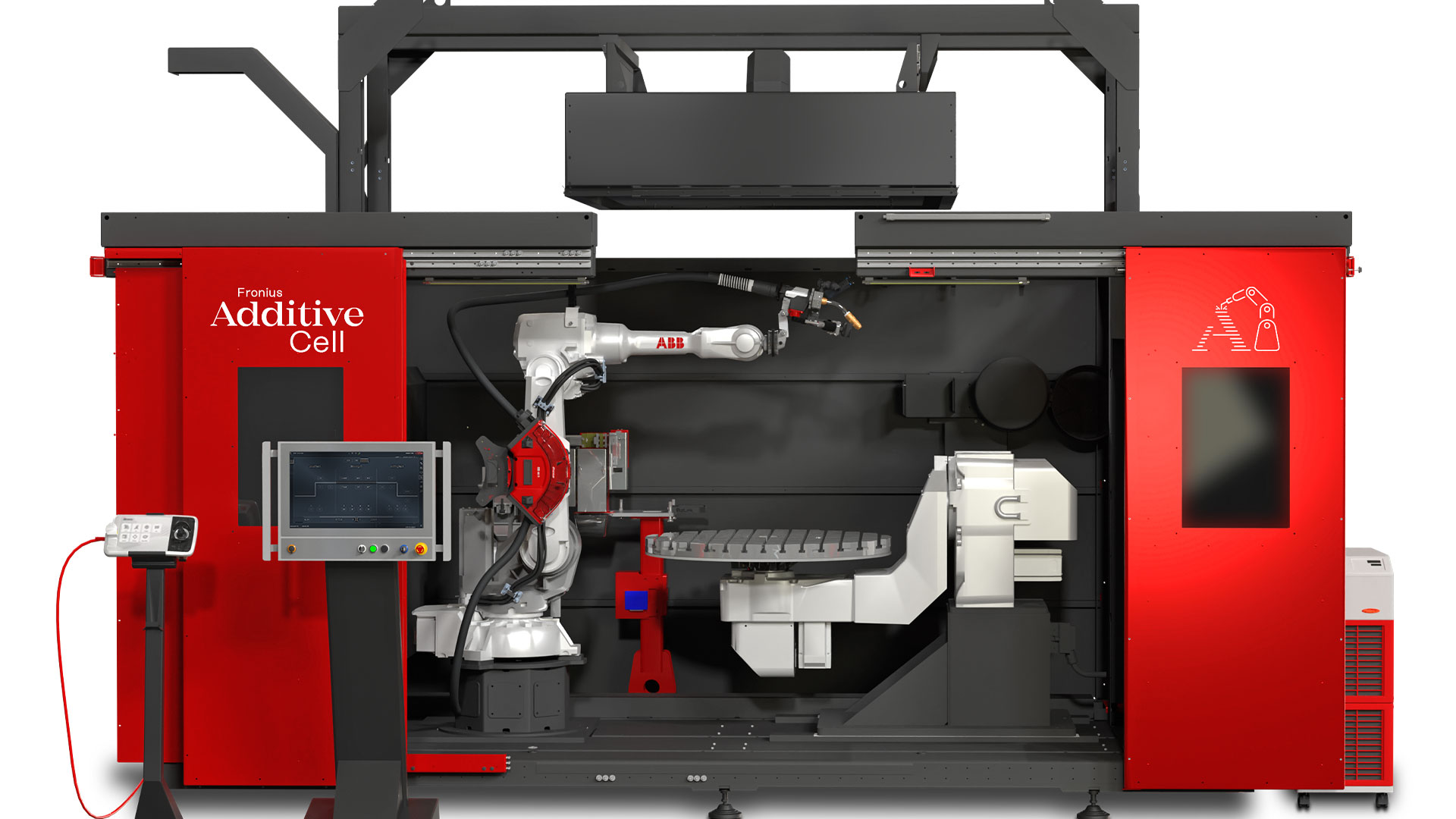
The Vectris software bundle enables a simple, stable, and process-reliable additive welding application right from the planning phase. Vectris was developed specifically for additive manufacturing and consists of the Machine Tool Service Kit (MTSK) and the postprocessor. It translates the digital component design into deposition procedure specifications and identifies different component regions. The appropriate welding parameters are then adopted by the welding robot itself.
The ArcView3 camera system provides additional process reliability. It records the component manufacturing process in real time and allows continuous monitoring of the arc at millisecond intervals from a safe distance. Whether in confined production environments or when changing locations at short notice, the Fronius Additive Cell is designed to be mobile and—thanks to its portable construction—can be easily moved using a crane or forklift.
How metal 3D printing reduces material waste and production expenses
Additive manufacturing significantly reduces material usage, weight, and costs compared to traditional methods such as milling or casting. It can be used for a wide range of applications, from repairs, modifications, and reverse engineering of individual components through to brand new parts.
FAQs
What are the advantages and disadvantages of additive manufacturing (particularly DED-Arc)?
Advantages:
- Significantly lower material consumption than with milling or casting
- No tools or casting molds required—cost-effective even for small production runs
- Complex, topology-optimized geometries can be realized
- Short lead times for repairs, reverse engineering, or prototype manufacturing
- Reduced component weight while maintaining the same level of stability
Disadvantages:
- Less cost-effective than traditional methods when production volumes are very high
- High demands on process expertise and specially trained professionals
- Thermal management required: excessively high component temperatures necessitate cooling breaks
What materials can be used in WAAM?
WAAM can process a wide range of metals, including carbon steel, stainless steel, tool steels, aluminum, titanium, nickel-based alloys, and copper alloys. The choice of material depends on the application, required mechanical properties, and industry standards. As welding and process technologies continue to evolve, the range of materials suitable for WAAM is constantly expanding.
What does the future of additive manufacturing look like in the age of Industry 4.0?
WAAM is already used across industries such as aerospace, automotive, energy, and rail. It helps companies increase flexibility, strengthen resilience, and reduce dependence on global supply chains. While metal 3D printing still requires significant expertise, growing automation and AI-driven process control are making it more accessible. Early results show improved reproducibility and reduced complexity, which could enable wider adoption and open new opportunities for smaller companies in the future.