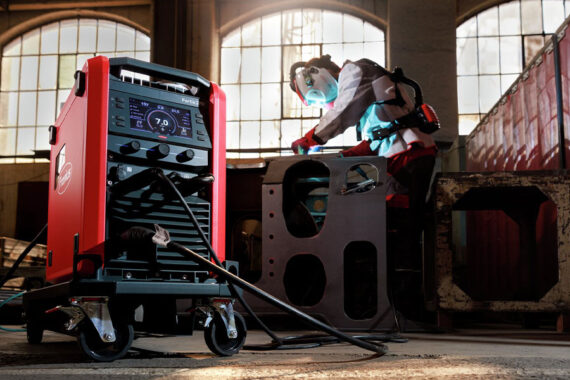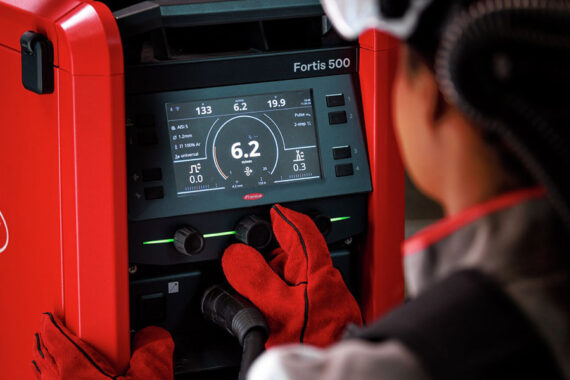
When the sparks start flying, welding spatter on the workpiece is usually not far behind. And once it’s there, it has to be removed – at the expense of both time and money. As prevention is better than cure, we need to do what we can to prevent welding spatter – or at the very least reduce it to a minimum. But how? Every welder has it in their power to help in the fight against spatter, be it by using the optimal welding equipment, preparing materials properly, handling the torch correctly, or by making minimal changes to the workplace. With these 8 tips, you too can declare war on welding spatter!
Preventing welding spatter – why is it so important?
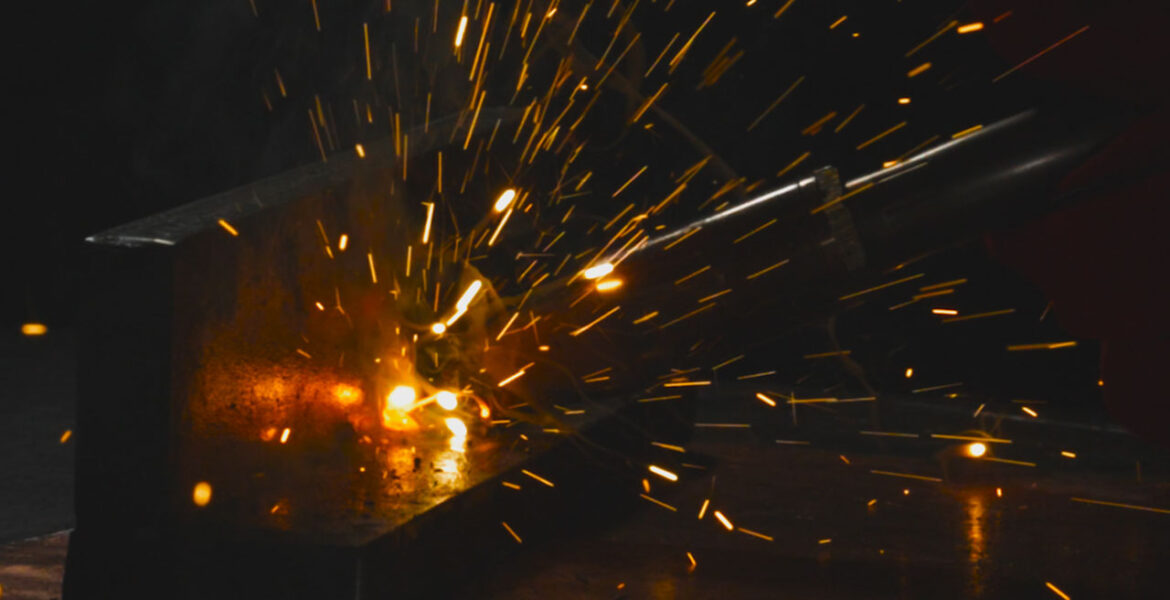
Welding spatter is the term for small droplets of metal that are sprayed out of the weld area by the power of the arc – usually landing on the workpiece, weld, or the wearing parts of the welding torch itself. In addition to lengthy and cost-intensive cleaning, weld spatter can also cause the following problems:
- Poorer weld seam quality
- Unclean and unsafe workplace
- Production downtimes
For this reason, welding spatter needs to be prevented wherever possible. And with our quick tips, you’ll be ready for everything. Let’s start with the optimal welding equipment!
1. Ensure a constant current flow
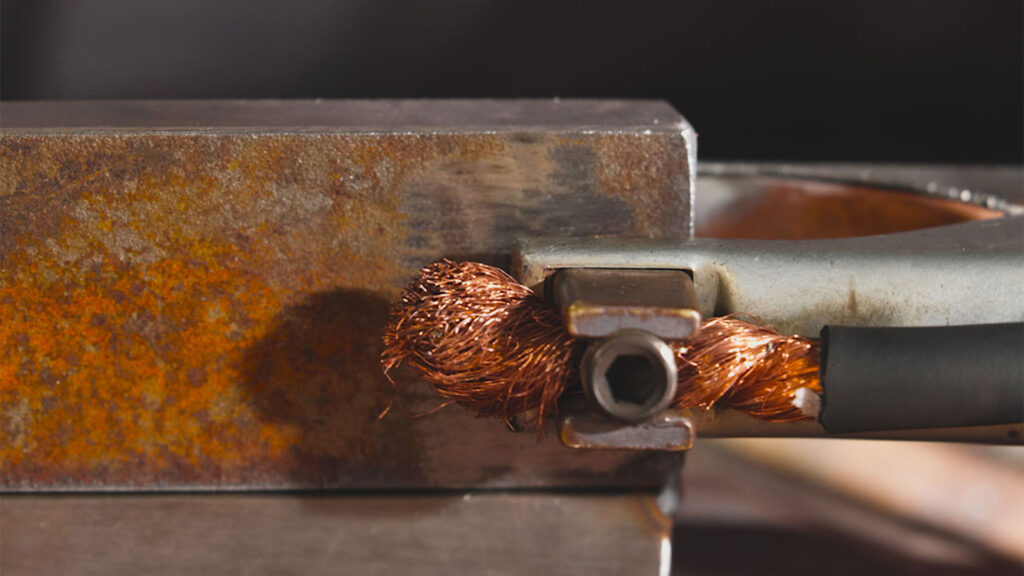
A constant current flow is absolutely critical to preventing weld spatter. It is therefore essential that the welding torch and the return lead cable are securely connected to the power source. The same applies to the grounding on the component: the fastening point and earthing clamp must be bare and highly conductive to allow the current to flow.
2. Ensure a constant wirefeed
For welding to be as low-spatter as possible, the arc has to be stable. And to have a stable arc, you need a constant wirefeed. To ensure this, three things are important:
- Ensure the welding torch is kitted out correctly (inner liner (diameter and length), inlet piece, etc.).
- Ensure as few bends as possible in the hosepack.
- Adjust the contact pressure at the wirefeeding rollers to the wire being used. “Too little pressure can allow the wire to slip through, causing a wirefeeding problem that can very quickly develop into a spatter problem,” explains expert welder Josef Sider.
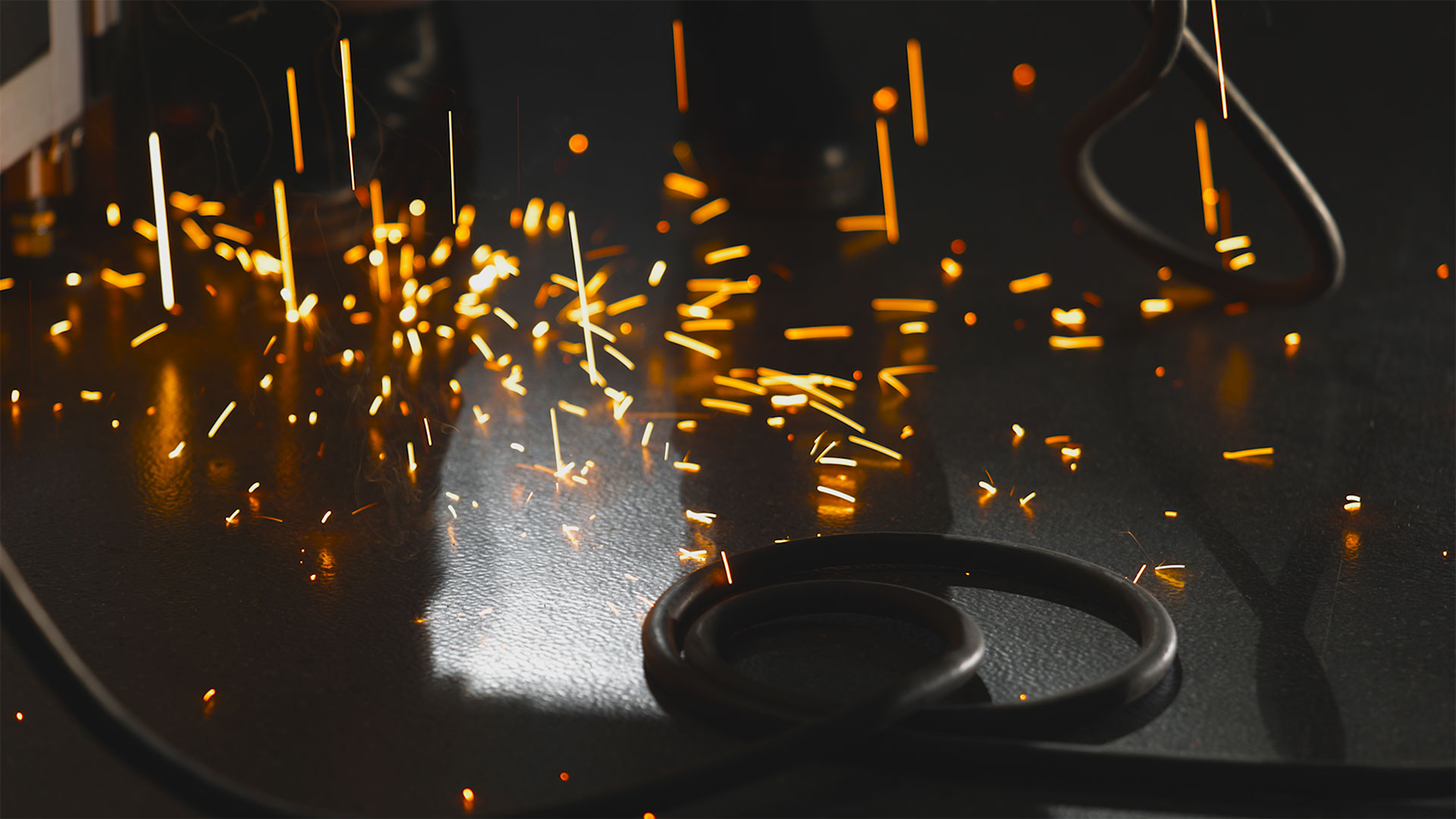 Bends in the hosepack can cause a wirefeeding problem, which in turn leads to a spatter problem | 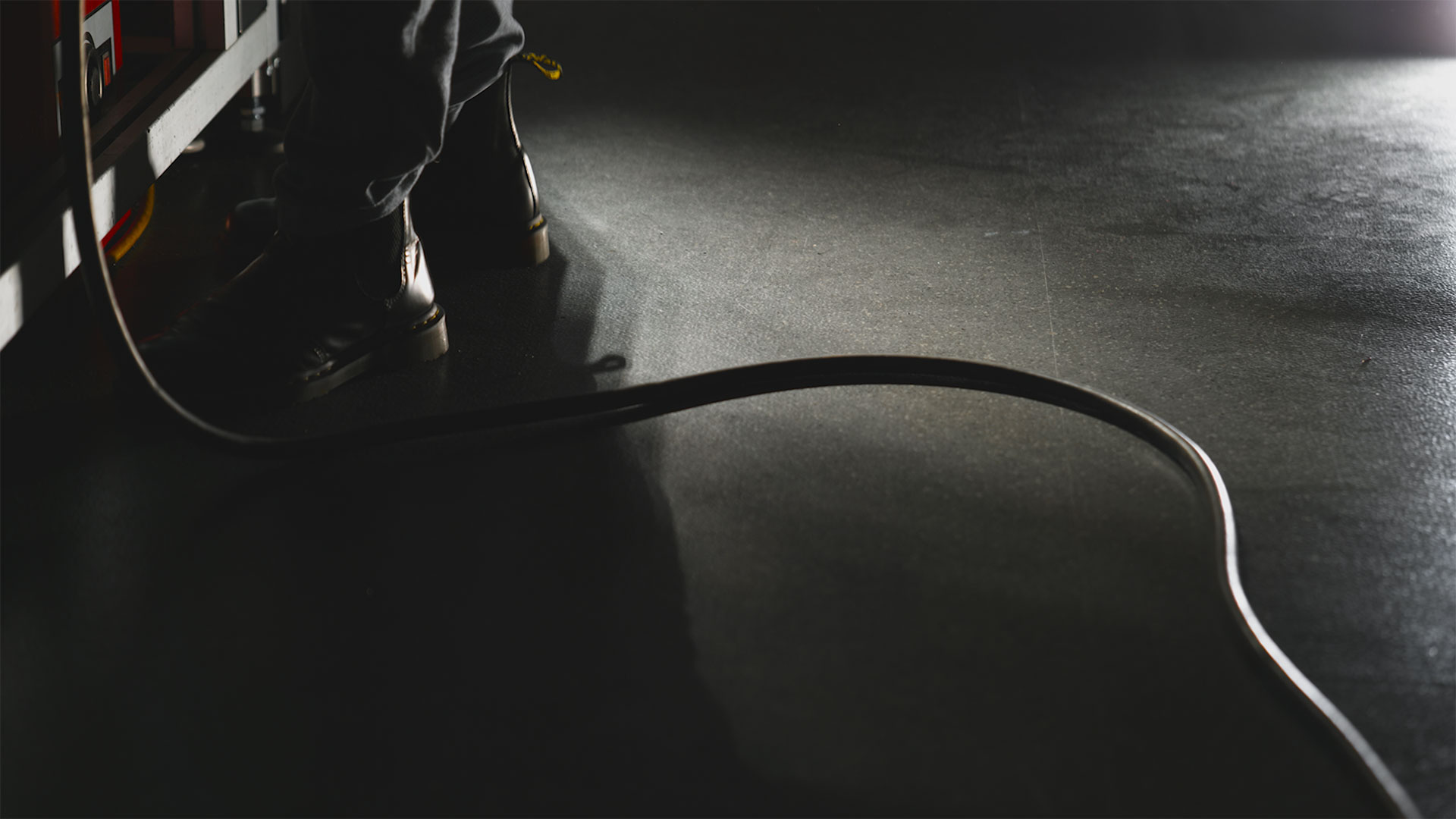 Doing it right: laying out the hosepack without any bends |
3. Choose the right shielding gas in the right quantity
An insufficient protective gas shield can cause arc instabilities, which in turn lead to welding spatter. Three factors are critical here:
- The gas quantity: as a rule of thumb, multiplying the wire diameter by 10 provides the gas flow to be set in liters per minute.
- The stickout (free wire end): this needs to be kept short enough to ensure an effective gas shield.
- The choice of gas: Welding in a normal CO2 gas atmosphere produces more spatter in the higher power range. Our tip: Use mixed gases instead of 100% CO2.
4. Select suitable wearing parts
When it comes to wearing parts and welding spatter, there are several things you need to consider. Firstly, wearing parts such as wirespools, inner liners, or contact tips need to be appropriate for the material and diameter of the welding wire. Secondly, the degree of wear has an impact on the formation of spatter. Parts that are heavily worn can cause instabilities in the welding process, which in turn generate greater amounts of welding spatter.
5. Apply the correct welding parameters
Selecting the right welding parameters is essential to preventing welding spatter as far as possible, especially when setting the power range of the intermediate arc. Depending on the situation at hand, the power should be increased or reduced to transition to the dip transfer arc or the spray arc.
6. Clean material
Thoroughly cleaning the material is another decisive factor. All dirt, rust, oil, scale, or the zinc layer must be removed from the welding location before starting to weld.
7. Correct torch handling
Also important to note is the correct position and guidance of the welding torch. The torch should be held at an angle of 15° and moved along the weld at a steady speed. “A pronounced ‘pushing’ welding technique is definitely not recommended, as this position causes a correspondingly high amount of spatter ejection,” adds Josef Sider. The distance to the component – the so-called stick out – should also be kept constant. If the distance is too great, both the protective gas shield and the penetration are harmed, resulting in more spatter when welding.
8. Avoid drafts
One practical tip that is often overlooked is to avoid drafts. “If you are welding in a garage with a strong draft, then you quickly run into problems with the protective gas shield,” explains Sider. And of course, with weld spatter too. It is not always possible to shield off the weld location when welding outdoors, but fortunately Sider has a top tip: increase the shielding gas flow rate by roughly 2–3 liters per minute to keep the ambient air away from the weld location.
Still too much welding spatter? Change the welding process
Once all these tips have been taken into account, you will have an extremely stable arc and can thereby counteract the generation of spatter during welding. But if you need even more stability and to reduce the amount of spatter generated even further, you could consider changing to an innovative welding process. The modified LSC (Low Spatter Control) dip transfer arc – also known as the ‘low-spatter’ welding process and available on the Fronius TPS/i platform – is exceptionally well-suited here, as it offers a particularly high level of arc performance. The result? High-quality weld seams with little welding spatter.
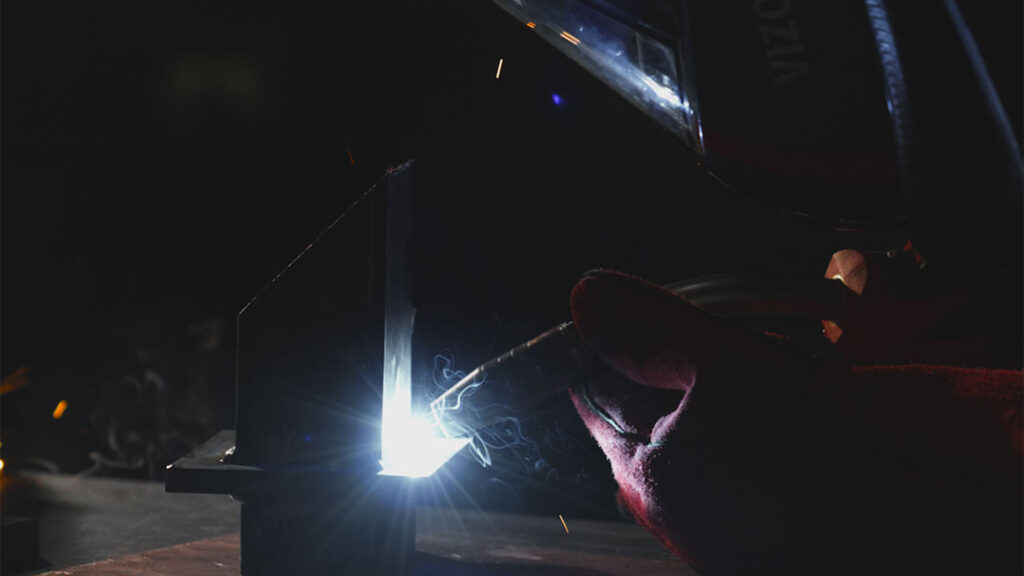
Welding protection spray: for unavoidable spatter
Even though most welding spatter can be significantly reduced by following the tips mentioned above, a certain amount of spatter is simply unavoidable in some situations. The key here is being able to quickly remove the spatter.
Welding protection spray can help by preventing welding spatter from sticking to components or wear parts. The spray is applied in a thin layer to the workpiece or wear part before welding, where it forms a protective film. This makes it easy to remove spatter afterward, significantly extending the service life of gas nozzles and contact tips.
Conclusion: the easy way to reduce welding spatter
As you can see, welding spatter can be significantly reduced by taking the right steps. You can do a lot to prevent this yourself—and if there’s no avoiding spatter, make sure it never has a chance to stick. It’s definitely worth the effort, because you’ll be saving time and money, improving weld quality, and creating a safe working environment.
If you’d like to explore this topic in more depth, we recommend our Welducator episode about reducing spatter. The video uses step-by-step explanations to clearly demonstrate our tips.