Today, galvanized sheet metal has become an indispensable part of the automotive and supplier industries. Depending on the requirements, both electrogalvanized and hot-dip galvanized versions are used. The thin layer of zinc provides reliable protection against corrosion, while also increasing the service life and cost-effectiveness of components. Although it’s generally possible to weld galvanized sheet metal, doing so compromises the quality of the weld. Ultimately, it’s not about whether you can weld galvanized metal, it’s about whether you should; especially when brazing offers a viable alternative.
Can galvanized sheet metal be welded? Fusion welding limitations
“Of course it’s possible to weld galvanized sheet metal using conventional methods. Technically, that’s not a problem,” explains Bernd Rutzinger, Bodywork Coordinator at Fronius International. However, he is keen to point out that there are a number of quality issues that come with it. These include:
- Increased spatter ejection
- Irregular seam appearance
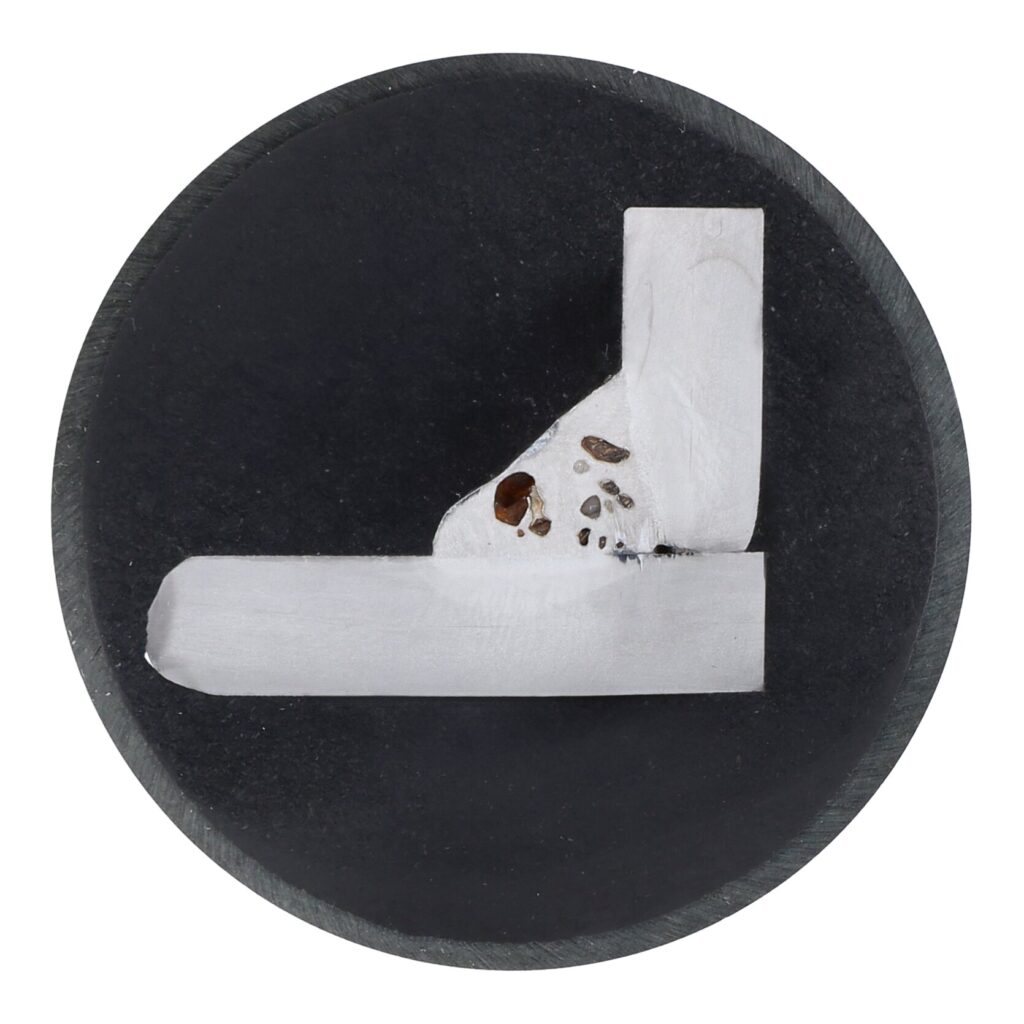
- Pore formation
Porosity in a MAG-welded fillet weld
Not only that, welding damages the zinc coating, stripping the metal of its corrosion protection. The high temperatures and thin nature of the sheet metal involved mean this often even affects the back of the component, while the weld seam itself is also susceptible to corrosion because it is produced from steel in MIG/MAG welding. A further major issue is that thin sheets are susceptible to distortion due to the high heat input.
The cause of these quality issues lies in the differing material properties of steel and zinc: the melting point of steel is over 1,500 °C, while zinc melts at around 420 °C and vaporizes at 900 °C.
In fact, it is the zinc vapor that poses the biggest problem when joining galvanized sheets, because zinc vaporizes as the arc supplies energy to melt the base material. The gaseous zinc becomes trapped in the molten mass causing pores to develop. Furthermore, the zinc vapor affects the process itself. As Rutzinger explains: “the zinc vapor that forms builds up a counterpressure that counteracts that of the arc, and the resulting forces destabilize the arc.”
Bernd Rutzinger, Bodywork Coordinator at Fronius International
Prevent metal fume fever: safety tips for welding galvanized sheet metal
Bernd Rutzinger has been working with welding and joining processes for more than 30 years and is keenly aware of the importance of occupational safety. “It’s extremely important to consider the risk posed by toxic zinc vapor. Inhaling too much of it can lead to what is known as metal fume fever and, for this reason, it is essential to use a good extraction system .” Metal fume fever causes flu-like symptoms such as severe fever, fatigue, muscle and joint pain.
How does MIG brazing work?
MIG brazing is an alternative to welding. It is also an arc welding process, but it differs in one key respect: while welding melts the base material, with brazing it remains solid. Instead, a copper-based filler metal melts to form the joint between the components.
“MIG brazing is a high-temperature version of soldering involving temperatures exceeding 900 °C,” explains Rutzinger. “Key here is that the brazing filler metal has a lower melting point than the base material. While steel melts at around 1,500 °C, the melting point of the brazing filler metal is around 1,000 °C. This results in significantly reduced heat input into the component.”
Zinc vapor is also produced during MIG brazing. Although the amounts involved are significantly lower than in welding, it’s still essential to ensure adequate ventilation and appropriate protective measures for safe brazing.
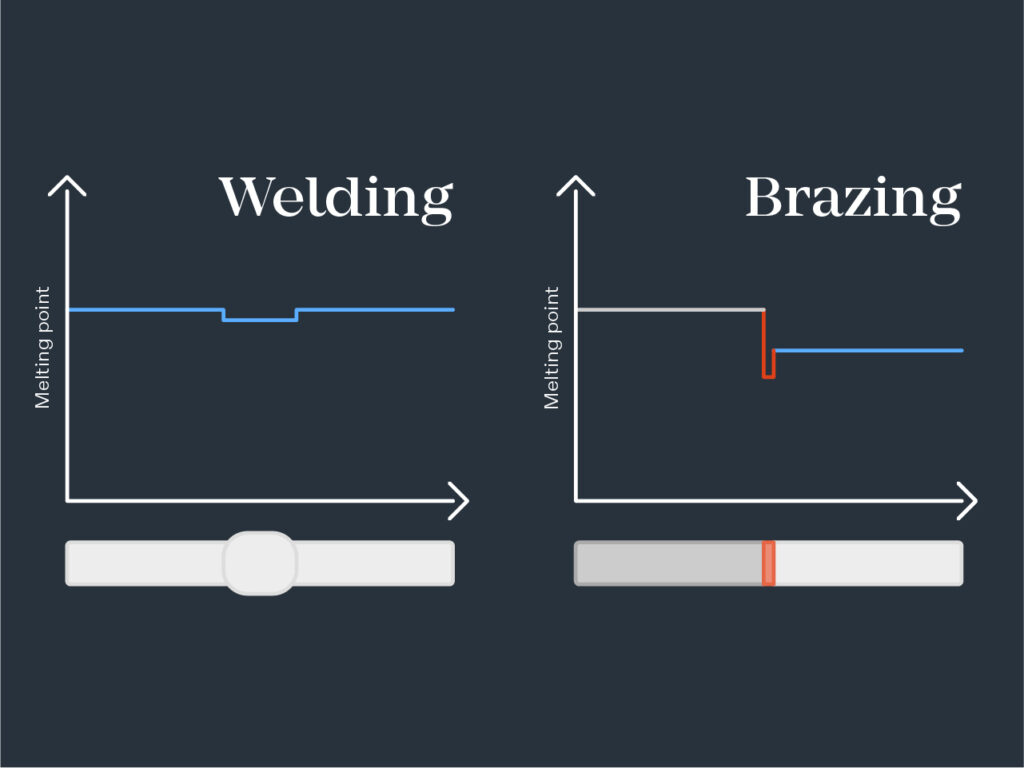
During welding, the base material itself is heated to its melting point and forms a weld pool, while in brazing, the base material remains solid. It is only the filler metal with its lower melting point that becomes liquid, joining the components by wetting them.
Why brazing is a better option for galvanized sheet metal
It is precisely this lower heat input that is a major advantage when joining galvanized sheets. “The aim is to minimize heat input insofar as possible,” explains Rutzinger.
Heat input can be described using what is known as energy per unit length, which is determined based on the current, voltage, and welding speed. MIG brazing requires less energy because it is only the filler metal that melts, not the base material.
At the same time, the process can be performed at high speeds: “With the CMT Braze+ process from Fronius, we’re looking at three meters per minute, which puts us on par with laser welding,” continues Rutzinger.
This has a direct impact on the process because less zinc vapor is produced, meaning that the arc remains stable and fewer pores form. At the same time, component distortion decreases, which is a key advantage with thin sheets in particular.
Capillary action: how the brazing filler metal fills the air gap
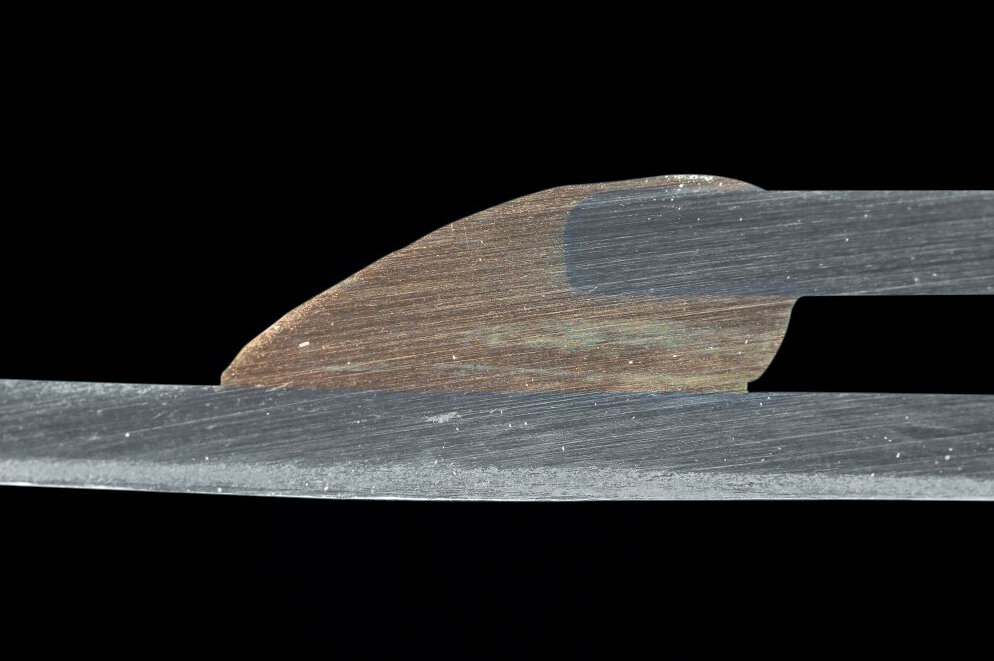
A further benefit of brazing results from capillary action: “The brazing filler metal is drawn right into the air gap,” explains Rutzinger. This is especially important in automotive engineering, because air gaps are a known issue in the sector: “Gaps measuring up to one millimeter are not unusual in automotive engineering.”
While these air gaps can quickly become problematic during welding, they are much easier to bridge when brazing. During welding, the air in the gap has an insulating effect, causing the energy to concentrate in the top metal sheet and potentially leading to burn-through.
Conversely, in brazing the air gap is deliberately utilized: the brazing filler metal flows into the cavity and spreads evenly. At the same time the resulting zinc vapor is able to escape, in this way reducing the formation of pores and maintaining a stable process.
Cathodic protection effect: how corrosion protection stays intact
The corrosion protection provided by galvanized sheet metal comes not just from the protective zinc coating, but also from what is known as cathodic protection.
Zinc acts as the less noble metal (anode) here and transfers electrons to the steel, causing the steel to act as a cathode and provide active protection against corrosion. Even if the zinc layer is broken in localized areas, this protective effect remains intact and extends up to two millimeters into the uncoated areas.
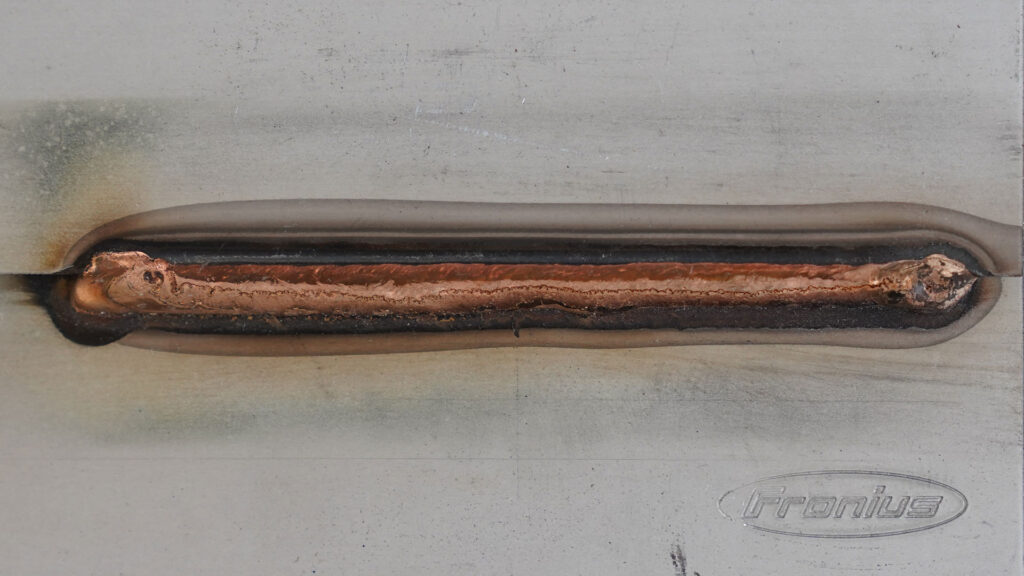
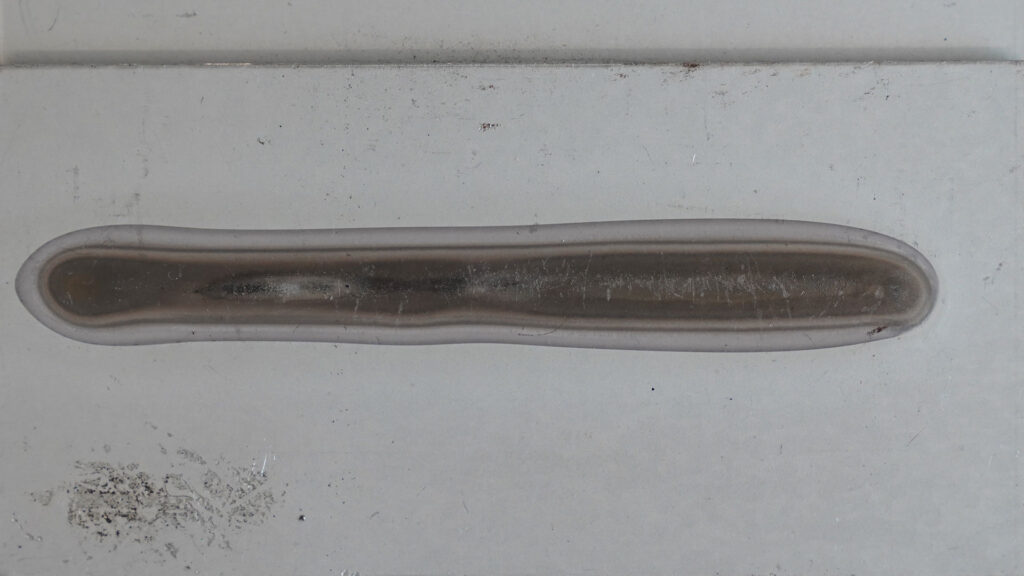
“During brazing, we burn off some of the zinc on the surface next to the joint, but this area is so small that the cathodic protection effect completely covers it. The zinc continues to protect the steel, ensuring that corrosion cannot take hold,” explains Rutzinger.
An added advantage can be seen on the back of the component:
“Here, the zinc is neither vaporized nor burned, and the corrosion protection remains fully intact. When welding with steel, however, the zinc coating on the back is completely lost.”
What are the applications for MIG brazing?
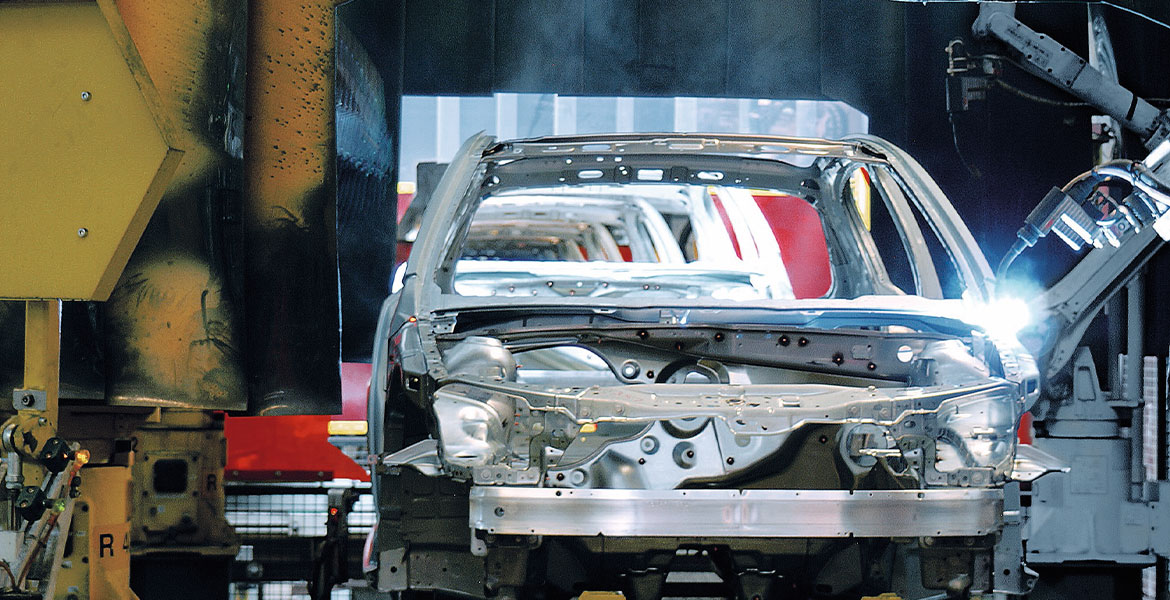
MIG brazing is primarily used in industrial manufacturing, particularly in automotive manufacturing, where thin, electrolytically galvanized sheets are predominantly processed. Corrosion protection and seam quality are both critical here.
“The automotive industry mainly uses thin sheet metal, typically around one millimeter or thinner,” adds Rutzinger describing the specific requirements. A typical application is automotive body construction, where parts such as roofs and side panels are manufactured.
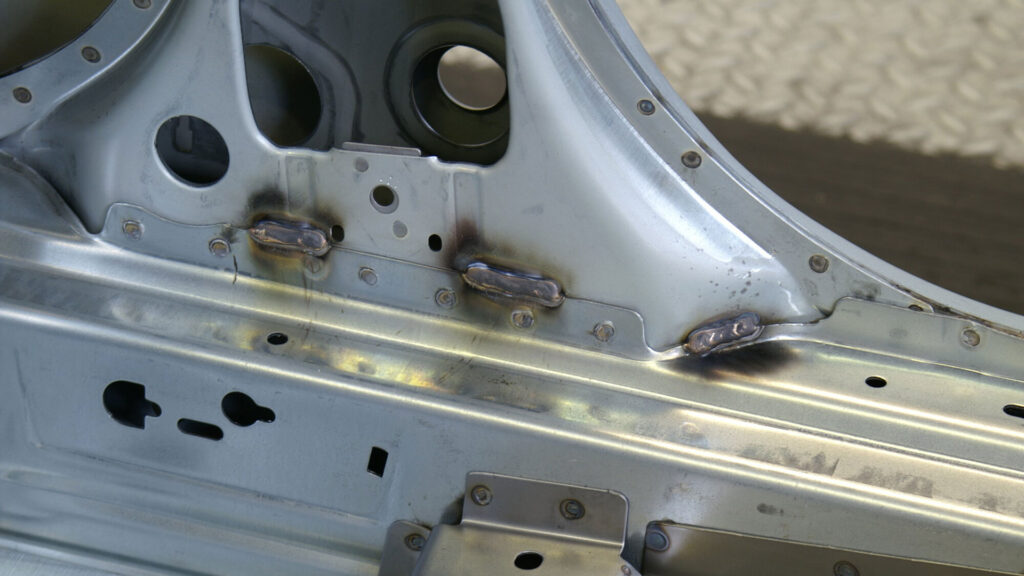
Alongside aesthetics, mechanical load capacity is also of key importance. Despite the lower heat input, the joints satisfy the strength requirements: “In tensile tests it was always the base material that cracked, never the weld,” explains Rutzinger. MIG brazing therefore fulfills a key requirement in automotive body construction: the joint is not a weak point; instead, it must be at least as strong as the surrounding component.
Technological development: why MIG brazing works today
MIG brazing itself is not a new process. As early as the 1960s, initial attempts were made to join galvanized sheet metal with copper-based filler metals. In practice, however, widespread adoption was long hindered by the limitations of the available technology.
It was not until the inverter technology of the 1980s and 1990s that stable control became possible in the lower current range; this is precisely where we work with MIG brazing. “We’re talking about 40 to 50 amperes. The welding machines simply weren’t capable of maintaining stable control back then; there was a lot of spatter and the arc was unstable. From a technical standpoint, it was virtually impossible to control. The development of inverter units was a major technological breakthrough,” explains Rutzinger recalling the challenges of that time.
It was only this technological advancement that transformed MIG brazing into a reproducible and industrially viable process.
The right welding machine for MIG brazing
All this illustrates that when joining galvanized sheet metal, the focus is less on the basic feasibility of welding and more on process reliability, quality, and maintaining corrosion protection. MIG brazing offers several major advantages:
- Low heat input
- Less zinc vapor
- Stable arc processes
- High-quality weld seams
Ensuring that these advantages can be reliably leveraged in practice requires modern inverter welding machines with precise control in the low-current range, because they form the basis for stable MIG brazing processes. In industrial manufacturing, systems from the Fronius TPS/i series are primarily used for this purpose, with the option to add CMT or CMT Braze+ processes.
Would you like to learn more about the CMT process? Visit our website now to find comprehensive background information on the technology and its applications.
FAQs about this topic
1) What is metal fume fever and what are the health risks associated with welding galvanized steel?
Metal fume fever is caused by inhaling the zinc oxide fumes released when welding galvanized materials. These fumes are harmful to health and can cause flu-like symptoms such as headaches, fever, chills, fatigue, and joint pain.
If these symptoms occur they should be taken seriously, although it’s best to avoid getting to that point in the first place: Effective fume extraction and welding helmets with a fresh air system significantly reduce exposure to fume and particles.
Take a look at this blog post to hear about the experiences of individuals affected by metal fume fever and the potential consequences of inadequate protective measures during welding.
2) Why is there so much spatter when welding galvanized sheet metal?
This is mainly because the zinc coating behaves differently to the underlying steel during the welding process, vaporizing even at relatively low temperatures and before the steel itself melts. This results in high vapor pressure in the weld pool itself. This pressure literally “blasts” the molten metal apart, resulting in more spatter, an unstable arc, and an unstable seam appearance.
In addition, the vaporizing zinc interferes with the uniform formation of the weld pool, which can lead to pores and uneven welds. The thicker and more uneven the zinc coating, the more pronounced these effects become.
In practice, it helps to remove the zinc layer in the weld seam or to use adjusted parameters and appropriate processes. CMT (Cold Metal Transfer) offers advantages due to its low heat input, in particular when working with thin, galvanized sheets.
3) What is the difference between brazing and soldering when working with galvanized sheet metal?
The main difference between brazing and soldering lies in the working temperature: while soldering is performed at temperatures below 450 °C, brazing is carried out at temperatures above 450 °C.
The equipment is also different: soldering usually only requires a simple propane torch, whereas brazing needs a more powerful gas welding torch.
Soldering is particularly suitable for galvanized sheet metal because the lower temperature largely preserves the zinc coating, while brazing is used when the joint is required to withstand higher mechanical or thermal stresses. In this case, the higher temperature results in brazed joints that are able to withstand greater loading, such as in structural joints in the automotive industry.