From rockets in space and industrial construction to artistic metalwork and everyday repairs, welding is the glue that holds them all together. But what exactly is welding? How does it work and what process is the best? In this article, we take a look at everything involved in welding and explain what you should bear in mind when embarking on your next welding project.
The fundamentals of welding
The underlying principle of welding is surprisingly simple, even if the diverse range of processes can appear overwhelming at first. Our cars, buildings, bridges and so much more are held together by welds. They’re so deeply embedded in everyday life that they’re often not even noticed.
Welding is a joining process in which workpieces are permanently joined through the application of heat, force, or a combination of both. Depending on the process, the base material is melted at the joint. As it cools or is subjected to pressure, a durable metallurgical bond is formed. Welding can be performed with or without filler metals, and either manually or automatically. These differences are reflected in the wide variety of processes used, from MMA to gas-shielded arc welding.
How does welding work?
Now that we’ve clarified what welding actually is, let’s take a look at how it works in practice. First of all, an energy source is needed to provide the heat required to melt the metal. But where does this energy come from?
Electricity from a standard socket is not suitable for welding, which is why the welding machine adjusts the voltage, amperage, and characteristic to ensure a stable welding process. These parameters can be adjusted individually, depending on the material and process.
In many arc welding processes, the arc is ignited by briefly touching the workpiece with the electrode. However, ignition can also be contactless depending on the process. It’s this arc that generates the heat required to melt the metal at the joint, causing a weld pool to form (the depth of which is referred to as the “penetration”). Once cooled, a strong, permanent bond is established.
How is an electric arc formed?
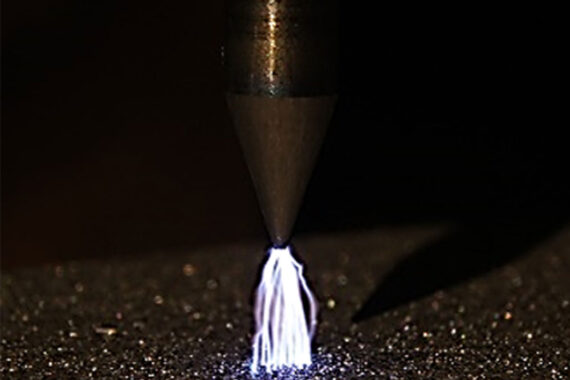
When a high electrical voltage builds up between the electrode and the workpiece, an arc is formed. The polarity of the electrode and workpiece varies depending on the welding process. The extreme heat and high voltage ionize the gas flowing between the electrode and workpiece, creating a conductive path for the flow of electricity. This electric current generates a bright, hot “electric flame” that melts the base material.
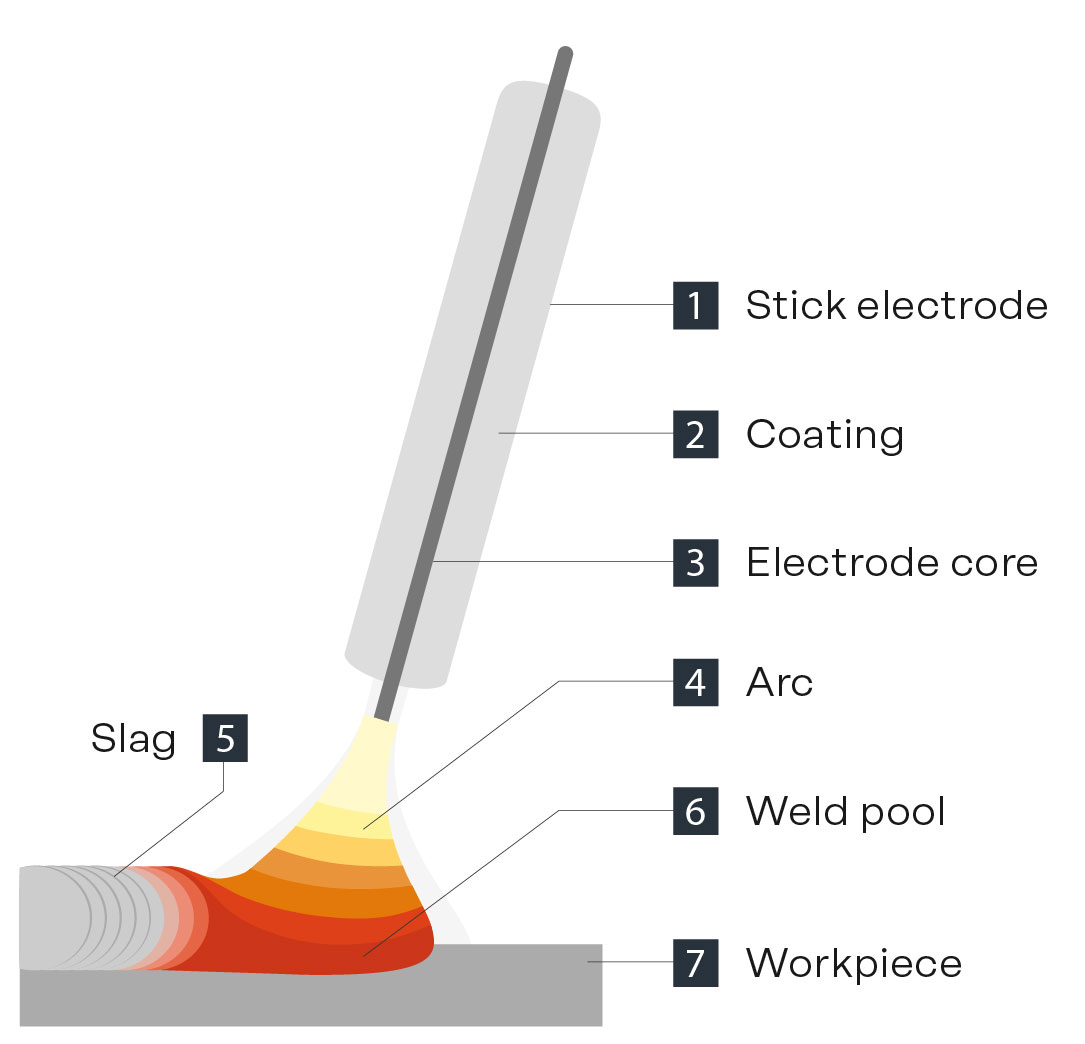 | 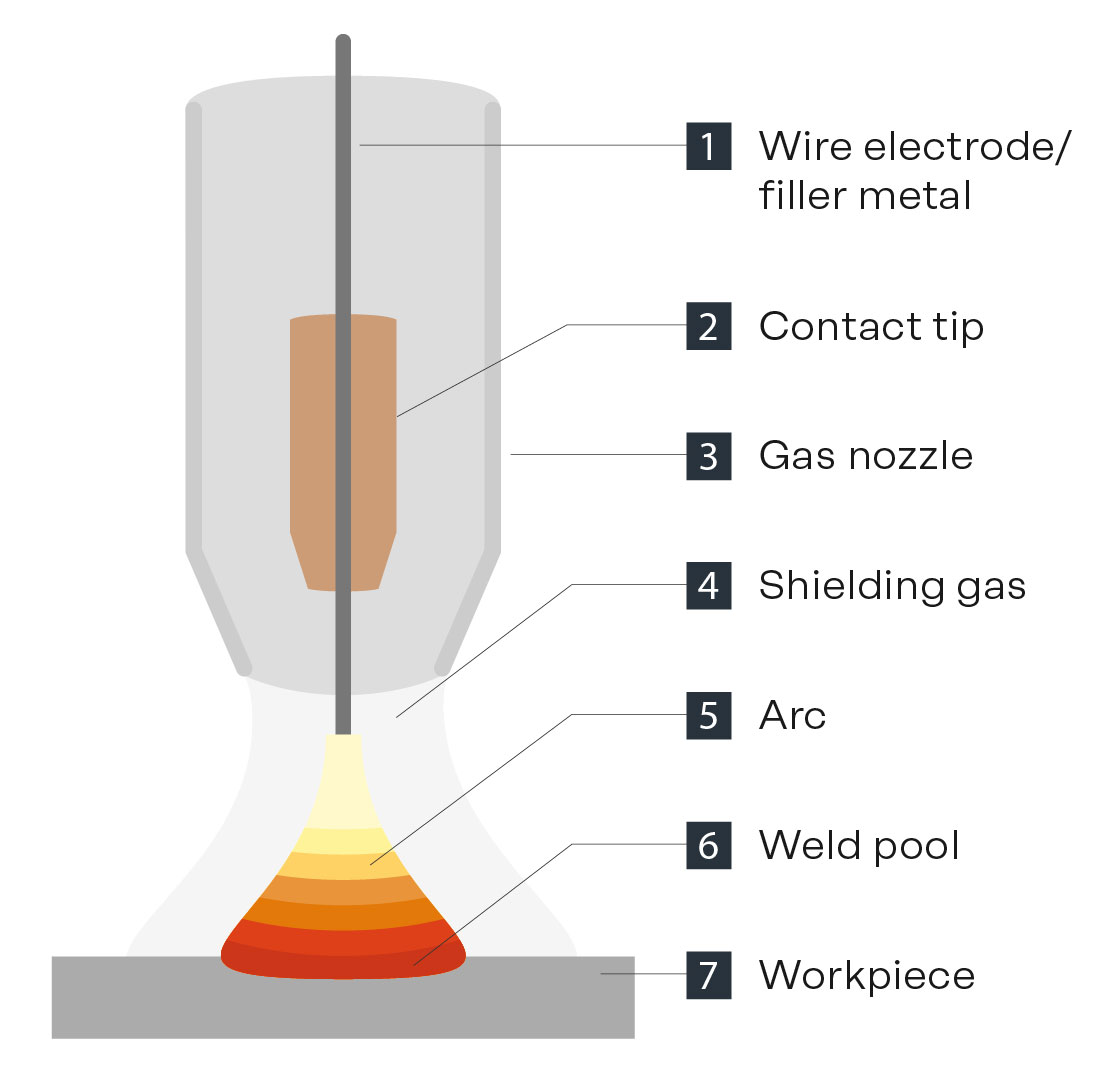 | 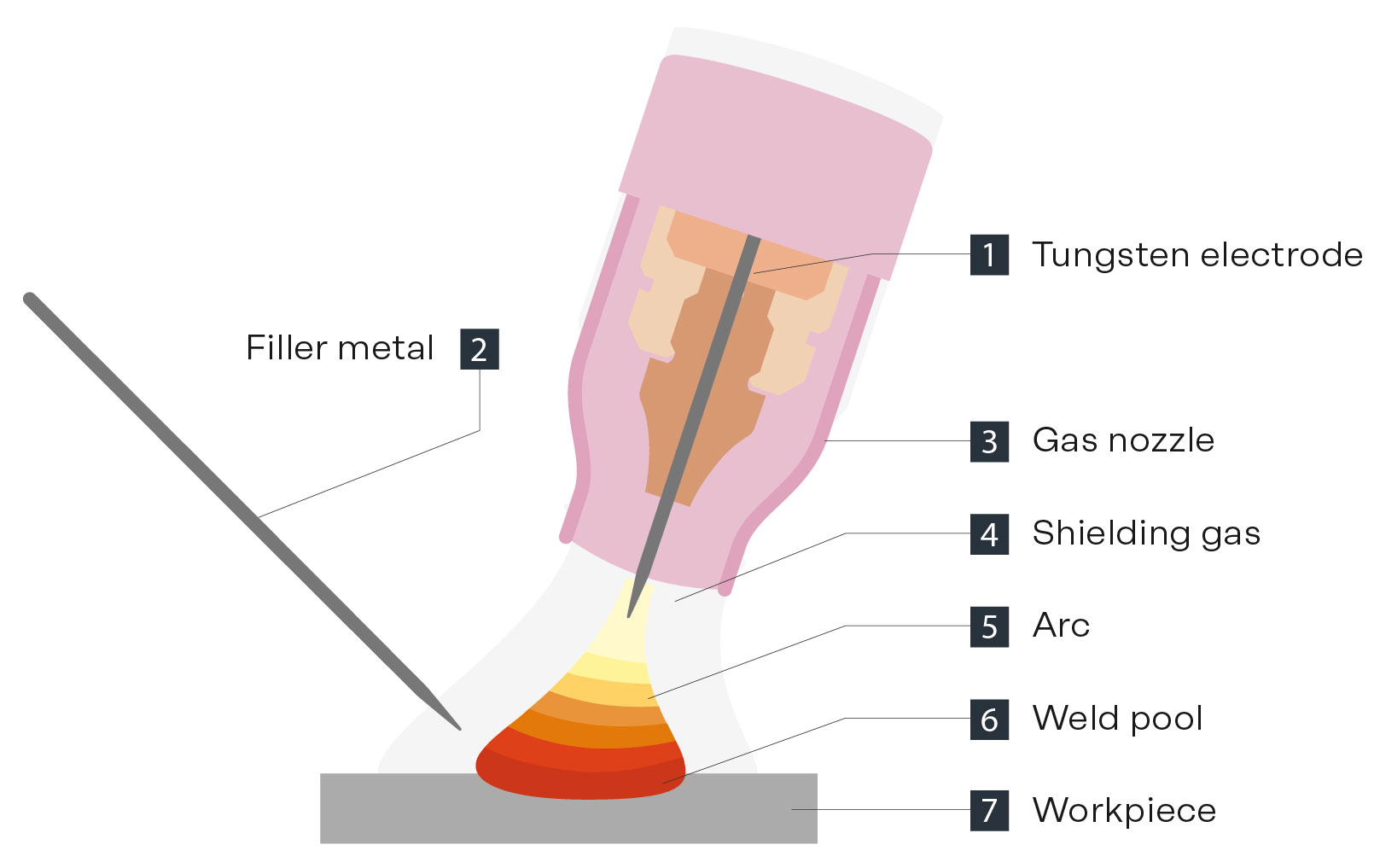 |
Most common welding processes compared: components and key differences at a glance
A basic understanding of materials and a good dose of manual dexterity are all you need to get started with welding. Having said that, it’s also helpful to know that different metals have different melting points: aluminum melts at 660 °C and requires a special shielding gas during metal inert gas (MIG) welding. Anyone armed with this basic knowledge can start producing quality weld seams with a bit of practice.
What do you need to start welding?
All forms of welding require the appropriate equipment and welding machine. The basic equipment you’ll need to weld a seam is:
- A welding machine suitable for the process and material
- The right welding torch
- A return lead cable
- Personal protective equipment (PPE) for the greatest possible safety when welding
Depending on the welding process, shielding gases and various filler metals are also required alongside the basic equipment. That’s why it’s worth choosing the right machine and accessories carefully.
The return lead cable completes the circuit by connecting the workpiece to the machine; without this connection, no current would flow and it would be impossible to produce an arc. Different welding torches are available for the different welding processes and ensure that the filler metal and shielding gas are directed precisely to the weld.
Not sure which welding machine best suits your project? Then check out our blog post about choosing the right welding machine for details about the differences between the machines and for what they are used.
The most common types of welding
Welding can be performed with or without a shielding gas, using either consumable or non-consumable electrodes. The welding process you choose depends heavily on the component to be welded, the environment in which you’re working, the appearance and quality of the weld, and the welding speed. We’ve briefly summarized the most common processes here.
MMA welding
MMA welding goes by many names—manual metal arc welding, stick welding, or manual electrode welding. And the application scenarios are as diverse as its names. This welding method is relatively weather-resistant and is suitable for many metallic materials, particularly steel, stainless steel, and cast iron.
Visit our website to find out exactly how MMA welding works.
- Application: Steel and pipe construction, building and infrastructure maintenance, shipbuilding, agricultural equipment repairs, underwater welding, and much more.
- Material: Many metallic materials can be welded using a suitable stick electrode, including structural steel, stainless steel, and cast iron. Special materials require suitable electrodes and more experience.
- Advantages: Easy to use, quiet, low initial costs, high-quality welds, not affected by weather conditions
MIG/MAG welding
MIG and MAG count among the gas-shielded arc welding processes with a consumable wire electrode. MIG welding uses inert (chemically inactive) shielding gases while MAG welding uses active gases or active gas mixtures. The choice of shielding gas is heavily dependent on the material and the desired welding result.
Click here to find out how arc welding with a consumable electrode works and which gas is used.
- Applications: Metalworking industry, steel, shipbuilding, and container construction, as well as the automotive industry
- Material: Structural steel, stainless steel, aluminum, and aluminum alloys. Depending on the process and shielding gas, it can also be used to weld special materials such as copper, titanium, or nickel alloys.
- Advantages: Easy to learn, high welding speed, high deposition rate, low filler metal costs, easy to ignite the arc
TIG welding
TIG welding is a fusion welding process that uses inert shielding gases. Welders need a high level of technical skill for this process, as the filler metal is usually added by hand.
We have summarized the most important details of the TIG welding process for you here.
- Application: Pipeline and container construction, medical technology, aerospace, automotive industry
- Material: Stainless steel, aluminum and nickel alloys, thin sheets of aluminum and stainless steel
- Advantages: No welding spatter, high-quality weld seams (in both quality and appearance), can be performed in all welding positions, filler metal is not always necessary
What type of shielding gas is used for welding?
A wide range of shielding gases and gas mixtures are available. The welding process and material you intend to weld determine which shielding gas is appropriate.
| Process | Shielding gas | Gas mixtures |
| Metal Inert Gas (MIG) | Argon Helium | Argon-helium |
| Metal Active Gas (MAG) | Carbon dioxide | Argon-carbon dioxide Argon-oxygen Argon-carbon dioxide-oxygen Special mixtures: e.g., argon-carbon dioxide-helium-hydrogen |
| Tungsten Inert Gas (TIG) | Argon Helium | Argon-helium Argon-hydrogen |
A common mistake in welding is using the wrong or unsuitable shielding gas for the welding process, leading to oxidation, porosity, or spattering. When used correctly at the right flow rate, shielding gases are totally safe and help produce a more stable and defect-free weld.
Other welding and thermal joining processes explained
There are many other thermal joining processes that are employed in a variety of applications.
| Laser welding | A focused laser beam delivers a highly concentrated thermal input, creating narrow, precise seams with minimal distortion. This process is commonly used in the automotive, aerospace, and mass production industries. |
| Plasma welding | Plasma welding is similar to TIG welding, however a cooled gas nozzle through which the plasma gas flows narrows the arc significantly and concentrates the energy into a small area. Plasma welding is therefore particularly well-suited for precise weld seams and small components. |
| Electron beam welding | In electron beam welding, a high-speed electron beam in a vacuum strikes the workpiece, at which point its kinetic energy is converted into heat. This creates a highly precise welded joint entirely without shielding gas or an electrode. |
| Press welding | Workpieces are joined together through a combination of pressure and heat. Depending on the method, heat is generated by friction, electrical resistance, or ultrasound. The base material is not fully melted. Typical methods include resistance, friction, and ultrasonic welding. |
| Brazing and soldering | Unlike in welding, the base material is not melted with these processes. Instead, a filler metal (the solder) is heated and flows into the space between the cleaned components by capillary action to bond the parts together. These processes are particularly suitable for thin components, printed circuit boards, and delicate electronic components. |
How to achieve the perfect weld seam
The quality of a welded joint is evident in the seam. A clean, uniform weld seam can only be achieved when the welding process, machine, and materials are correctly matched with each other. It is equally important to set the right welding parameters including amperage, voltage, and wire speed, as these factors have a significant impact on the weld structure, penetration, and appearance. Different weld seam profiles are selected depending on the application and stresses on the components.
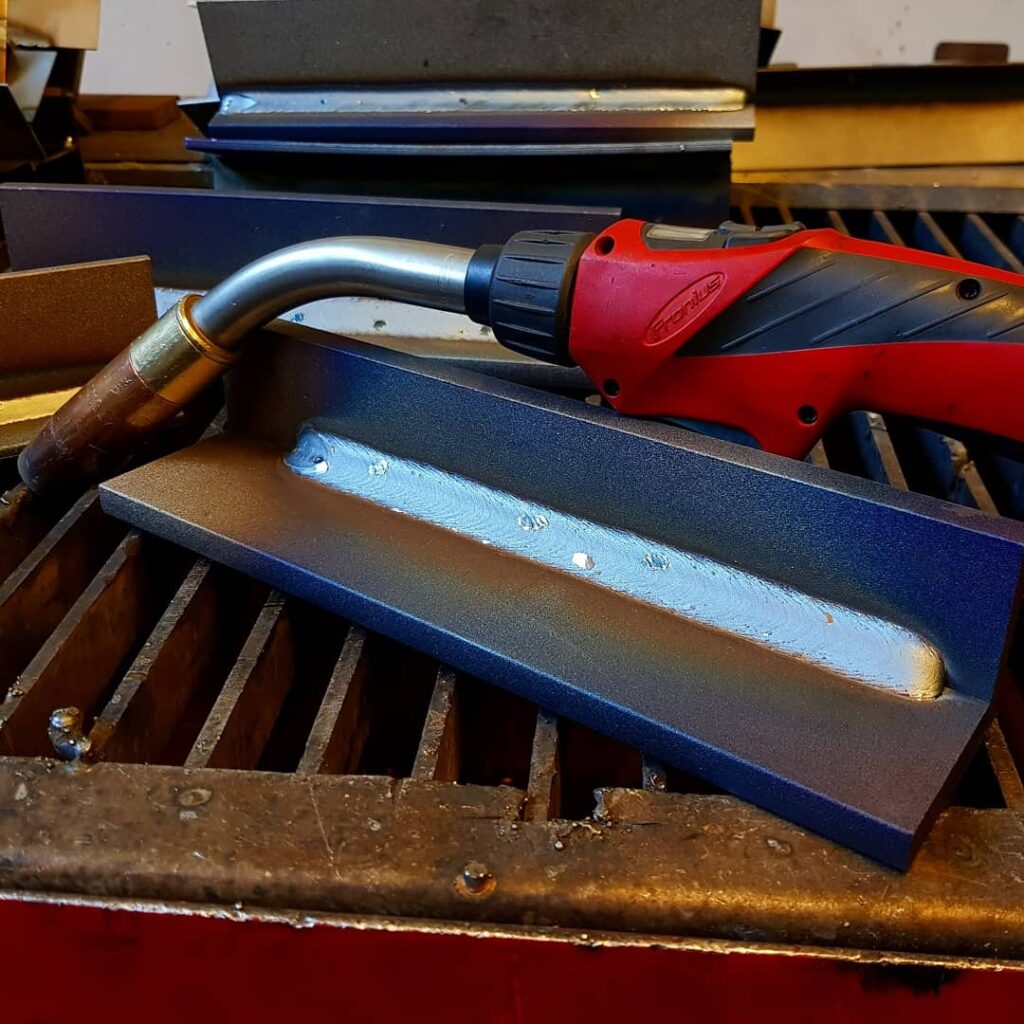
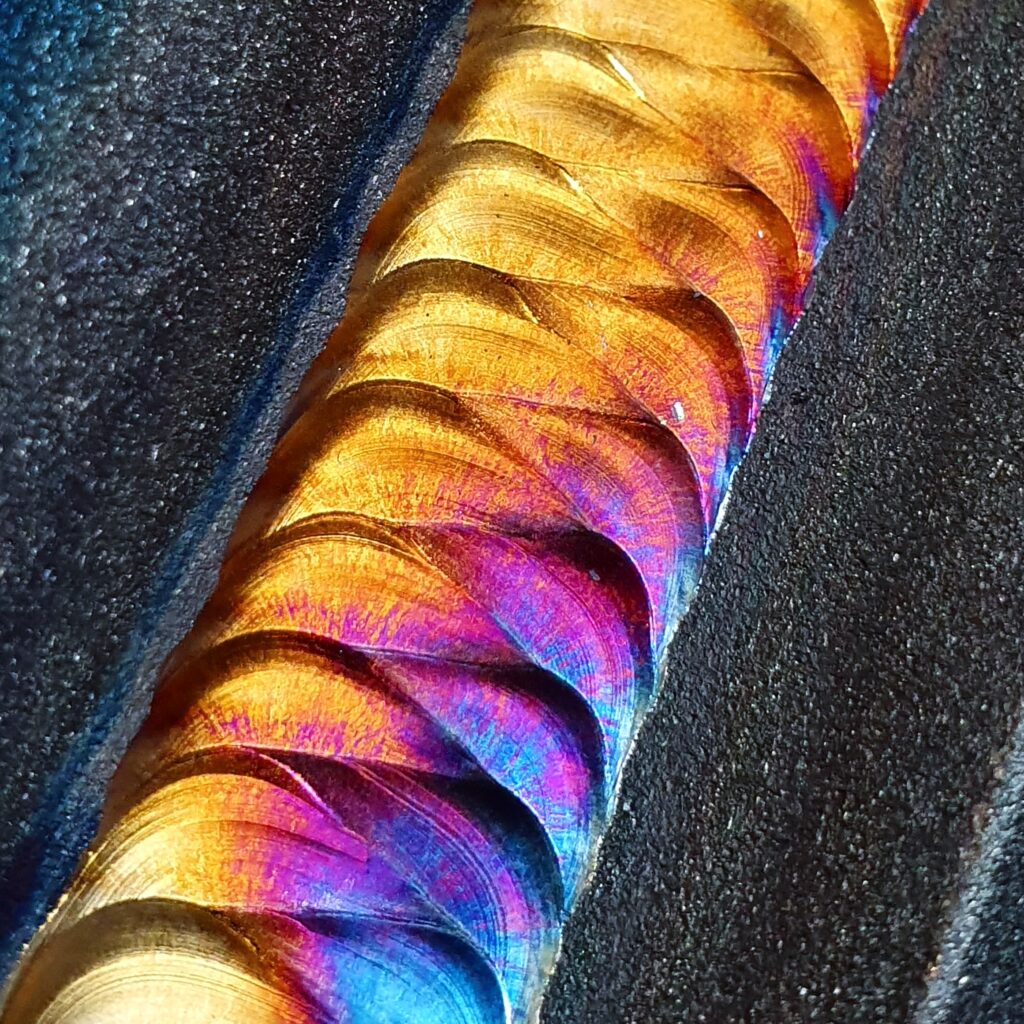
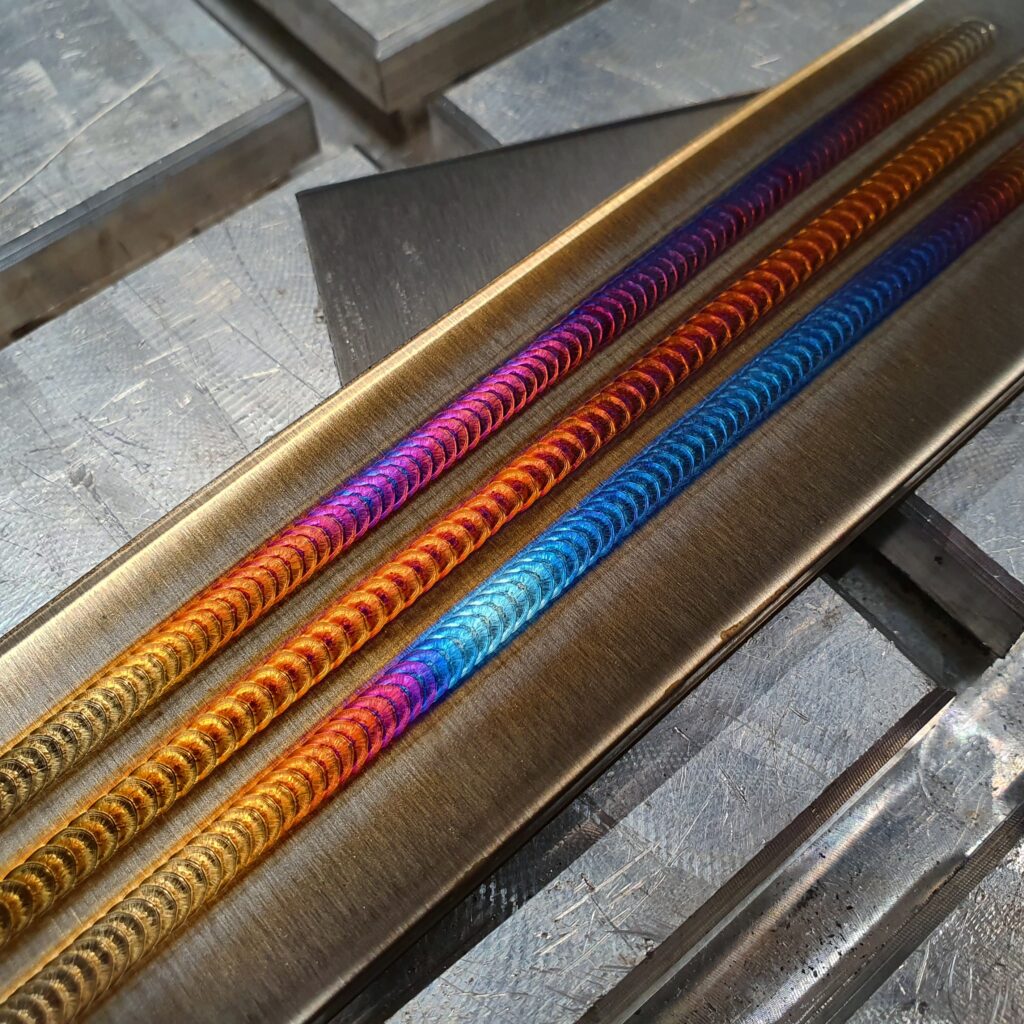
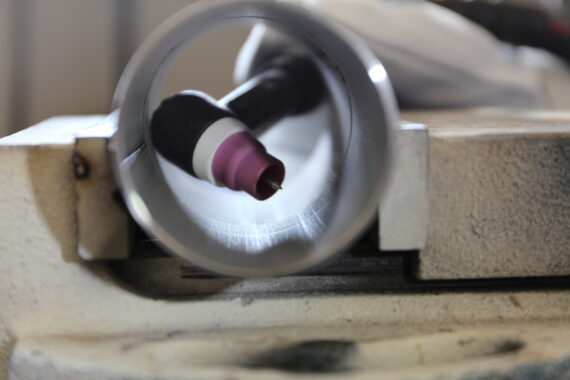
Perfect weld seams: the clean results of MIG/MAG and TIG welding
Welding vs. alternatives: bolts, rivets and adhesives compared
Welding is by no means the only way of join two materials together. With bolted or riveted connections, components are not permanent and can be disassembled more easily and are ideal for applications where it’s necessary to avoid any thermal distortion of the materials. Adhesive bonding is primarily used when joining different, lightweight structures made of thin materials.
Despite these alternatives, the advantages of welding are clear. The use of less material is reflected in the overall weight of the structure, while selecting different welding processes allows you to achieve smoother and cleaner surfaces. Drilling holes for bolts and rivets also weakens the structure of the base material, meaning constructions with welded joints are more stable, instantly ready for use, and do not require lengthy curing times.
Welding safety: why it is important to use proper personal protective equipment
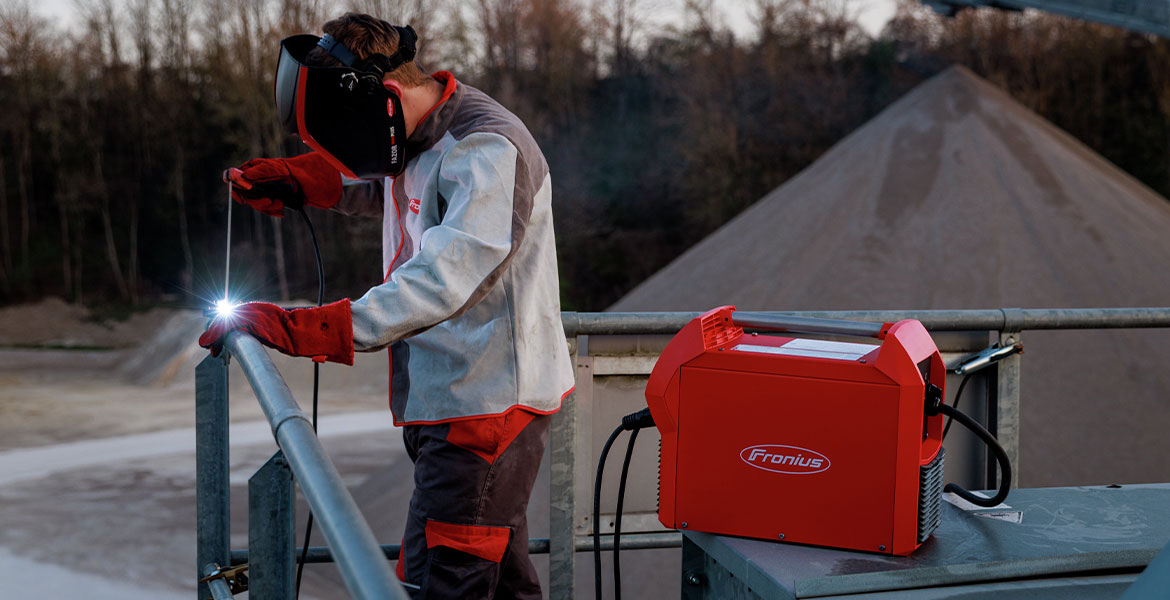
If you’re keen to protect yourself from the potential risks of welding, it’s essential to select the right welding accessories. Preparing the working area and choosing appropriate protective equipment are also part of a welder’s responsibilities. Welding gloves, safety footwear, an appropriate screen for the eyes, and a fire-resistant jacket are some of the essential items you’ll need.
 |  |  |
| It’s also essential to effectively capture and remove welding fume using suitable extraction systems. Welding produces harmful fumes that must be avoided, for example by wearing a welding helmet with fresh air system. In addition, adjusting the parameters on the welding machine to the optimal setting allows you to reduce the amount of fumes produced. | If proper precautions are not taken, the intense UV radiation from the arc can cause swollen, red eyes and sensitivity to light. Repeated exposure of the eyes to the arc can lead to long-term damage. The right welding helmet is therefore essential in order to work safely. | To protect yourself from the dangers posed by the electric current, you should regularly inspect all the cables— especially the return lead cable. Even low amperages can be dangerous. |
Conclusion: why welding is the best joining technology
Welding is much more than simply joining two pieces of metal together. It is a process that requires knowledge of materials, techniques, and heat input, as well as manual dexterity and a good deal of practice. Whether you’re welding structural steel, stainless steel, or aluminum, understanding your materials and processes is the foundation of sound decisions and the first line of defense against costly errors.
When done correctly, welding offers a decisive advantage over other joining techniques by producing durable and strong connections that are simply irreplaceable in many applications.
Still have questions? Visit our Welding Help Center for everything you want to know.
Welding FAQs
Welding basics for beginners
Welding is a joining process in which materials are permanently bonded together. Unlike brazing or soldering, fusion welding involves melting the base material itself. Depending on the process, a long-lasting metallurgical bond is formed with or without a filler metal.
How is a strong bond formed during welding?
A permanent joint is created through welding either by applying heat (fusion welding) or by applying force (press welding). A filler metal is often added to the molten base material (weld pool) to improve its metallurgical properties. Once cooled, a strong and durable bond is formed.
What are the 3 most common types of welding?
Not every process is suitable for every application. The right welding method depends on the welding environment and speed, as well as the appearance and quality of the weld seam. We have summarized the most important welding processes here and use specific examples to illustrate when each one is used.
What’s the difference between welding and brazing?
In fusion welding, the base material is melted by the high heat input. Filler metals can be added to the weld pool to build up the weld seam and specifically influence the properties of the joint. In brazing or soldering, however, the base material remains solid; only the solder is melted and applied to the surface of the workpiece. The parts are joined by the targeted heating of the filler metal. Our blog explains why this can be advantageous, such as when working with galvanized sheet metal.
Which welding machine is the best choice for DIY enthusiasts?
The type of welding machine you need depends entirely on your project and the material you’re using. Check out the following blog posts for a summary of the most important questions and answers: